














Food Cost Management Software to Control Costs & Maximize Profits
Software that gives foodservice businesses the real-time insight, automation, and financial clarity they need.
Ingredient prices are rising, menus are evolving, and operators are expected to deliver more with fewer resources. Buyers Edge Platform Food Cost Management Software gives foodservice businesses the real-time insight, automation, and financial clarity needed to control costs and protect profitability.
Why Food Cost Management Software is a Must-Have
Food cost volatility can wipe out margins overnight. Manual spreadsheets and guesswork often hide the truth about ingredient performance, usage trends, waste, and substitution impact.
Food Cost Management Software replaces manual effort with automated cost calculations, ingredient mapping, real-time price updates, and centralized data accuracy. Operators get a single source of truth for purchasing, inventory, and menu profitability, empowering faster, smarter decisions that keep the business financially sound.
Key Benefits for Foodservice Operators
Ingredient prices update automatically to keep plate costs and menu decisions accurate.
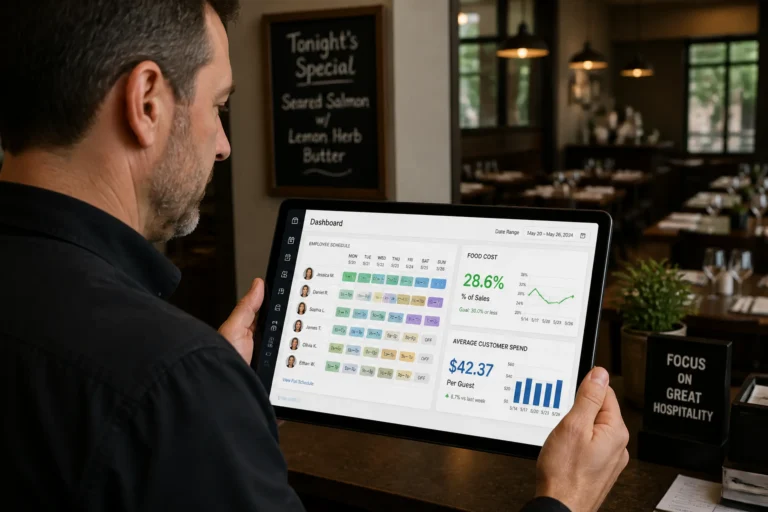
See current cost-of-goods percentages without spreadsheet maintenance or manual entry.
Upload invoices, digitize line items, and let technology handle organization and reporting.
Evaluate recipes and menu items to find high-cost drivers and low-margin performers.
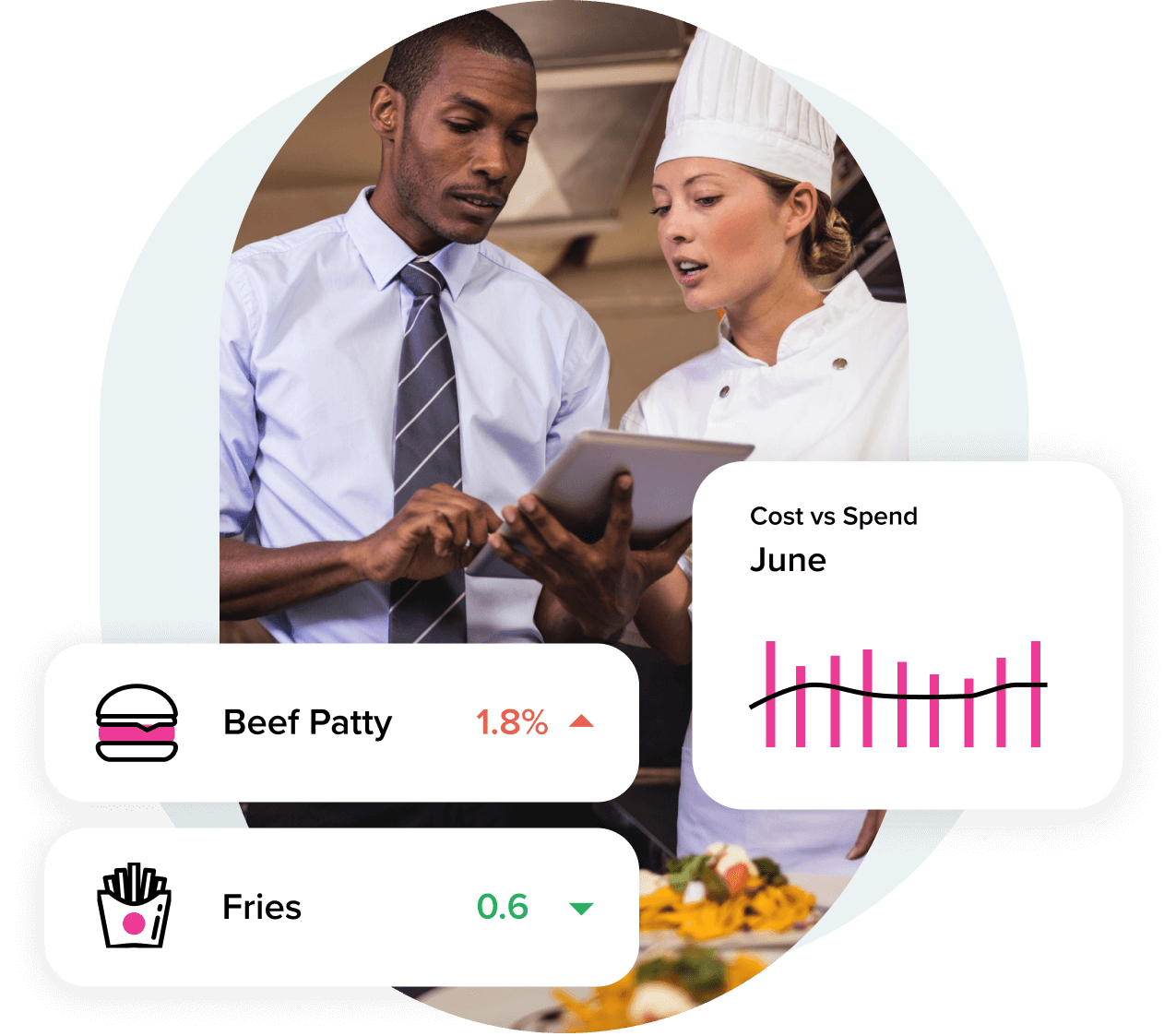
Compare actual vs. theoretical usage to reduce waste and protect margins.
Single-unit or multi-unit organizations can unify data and reporting across every location.
Core Features of Our Food Cost Management Software
Recipe & Menu Costing Tools
Calculate plate costs in real-time using live ingredient and supplier pricing.
Automated Ingredient Mapping
Standardize product data across suppliers, substitutions, and categories.
Invoice Capture & Line-Level Digitization
Upload invoices and convert them into clean, organized data automatically.
Inventory & Ordering Intelligence
Track on-hand counts, reorder timing, and depletion rates to avoid overbuying.
Historical & Predictive Cost Analytics
Study trends that influence profitability and build forward-looking plans.
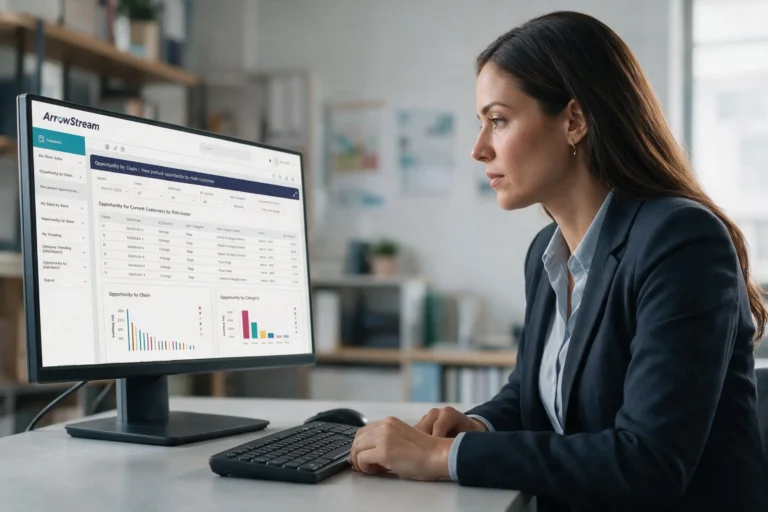
COGS Reporting Dashboards
Monitor food cost percentages and compare performance over time.
Advanced Features for Cost Control & Optimization
Centralized Corporate Menu Oversight
Control menu and recipe standards at the enterprise level to ensure location consistency.
Store-Level Cost Comparison
Analyze cost variation outlet by outlet to uncover improvement opportunities.
Ingredient & Vendor Benchmarking
Compare spending and pricing across suppliers to strengthen contract decisions.
Replacement Product Mapping
Keep menus stable even when suppliers rotate or ingredients change.
Variance & Waste Tracking
Identify usage patterns that signal spoilage, theft, or inefficiency.
Industry Segments We Work With
Independent Restaurants
Gain fast cost accuracy and recipe visibility without complex system training.
Multi-Location Chains
Consolidate cost controls across properties and evaluate store-level performance.
Hotels & Resorts
Analyze ingredient impact across restaurants, bars, banquets, and high-volume operations.
Bar and Clubs
Track beverage and food costs with precision to protect margins.
Colleges and Universities
Manage high-volume dining, menu variety, and inventory control from one platform.
Hospitality
Casinos, entertainment venues, food halls, and stadium outlets access enterprise-grade oversight.
Testimonials
O’Reilly Hospitality, Procurement Manager
Firekeepers Casino
Caesars Entertainment
FAT Brands, QSR Division, VP Purchasing & Supply Chain
“They make you a better company.”
Hot Table, Co-Owner
“It’s freed up a lot of bandwidth for us allowing us to provide more value to our franchisees.”
FAT Brands, QSR Division, Chief Supply Officer
Cowboy Chicken
Fizz Drinks, VP Operations
Insights & Resources
Read the latest insights that our data has uncovered about the industry.
Bar Inventory Management: Techniques to Protect Liquor Profits
Hotel Management: A Complete Guide 2026
The Power of the Right Partners Behind Menu Innovation
Sustainability in Food Service: Eco-Friendly Practices That Pay Off
The Top Financial Metrics Investors Actually Care About
Food Inventory Management: Reduce Waste and Boost Profitability
Why Multi-Unit Foodservice Operators Benefit from Partnering with a Produce Management Company
Restaurant KPIs: The Most Important Metrics to Track
How Technology is Transforming the Hospitality Industry
Buyers Edge Platform and Entegra Renew Long-Term Partnership to Deliver Enhanced Value for the Foodservice Industry
Frequently Asked Questions
A software platform that tracks ingredient pricing, analyzes usage, and calculates recipe and menu costs to improve financial outcomes.
The software calculates recipe costs by pulling in the current price of each ingredient used in a dish. Once those ingredients are mapped to a recipe, the system adds everything together and shows the total plate cost. If a supplier price changes or an ingredient is swapped out, the recipe cost updates automatically so operators always see the real number.
Yes—operators can centralize data, monitor outlets individually, and standardize recipes across locations.
Built-in intelligence aligns menu profitability with purchasing and supplier strategy.
Yes, and that’s one of the best things about using food cost software. Prices for ingredients can change a lot, especially for things like dairy, proteins, and fruits and vegetables. The system remembers those price changes and shows them in reports and recipe calculations. This way, operators don’t have to change the prices in spreadsheets by hand every time a vendor does.
It can. When operators know how much each menu item really costs, they can make better choices about how to set prices. The software tells you which dishes have high margins and which ones might be costing more than you thought. Teams can change the prices on the menu, the ingredients, or the portion sizes to keep the menu profitable with that information.
Yes. The system can check the prices of food based on recipes and sales against what was actually bought or used. If there is a difference between those two numbers, it usually means that there is something wrong that needs to be looked into, like waste, too much food, or problems with the inventory. Seeing that difference helps operators quickly find where margins might be getting smaller.
Yes, in a lot of cases. The software can automatically update the costs of ingredients when invoices or supplier price lists are brought into the system. That means that operators don’t have to go through each line of a spreadsheet to change the prices. The system just shows the most recent prices from vendors in recipes, reports, and cost calculations.
It helps by making it easier to see and manage food costs. Operators can quickly tell when the price of an ingredient goes up, when a recipe becomes too expensive, or when there is more waste. Instead of finding problems at the end of the month, teams can find them earlier and make changes that keep margins on track.
Begin Your Food Cost Optimization Journey
Food costs define profitability. With Buyers Edge Platform Food Cost Management Software, operators gain the visibility, automation, and pricing intelligence to reduce waste, protect margins, and run stronger businesses.
Whether you manage one concept or dozens, your team will make smarter menu decisions with actionable financial clarity at their fingertips.