
Growing sales in foodservice has never been as simple as making a great product and getting it onto a distributor’s truck.
Manufacturers are selling into a market made up of thousands of operators, multiple distributor networks, shifting menus, regional preferences, contract relationships, and individual purchasing decisions. A product can be available to an operator and still never make it onto the order. It can be on contract but lose cases to a competing item. It can perform well in one market and barely move in another.
That complexity is exactly why foodservice sales growth increasingly comes down to visibility.
Manufacturers need to understand more than how much product shipped. They need to know where products are gaining traction, where opportunities are being missed, how operators are actually buying, and what is happening between the contract, distributor, and end caustomer.
With better purchasing data and the right technology behind it, manufacturers can turn those answers into a much more focused sales strategy.
Why Is Foodservice Sales More Complex Than Retail Sales?
Retail gives manufacturers relatively clear signals. Products move through defined stores and channels, point-of-sale data can reveal what consumers purchased, and performance is often measured at the SKU and store level.
Foodservice takes a different path.
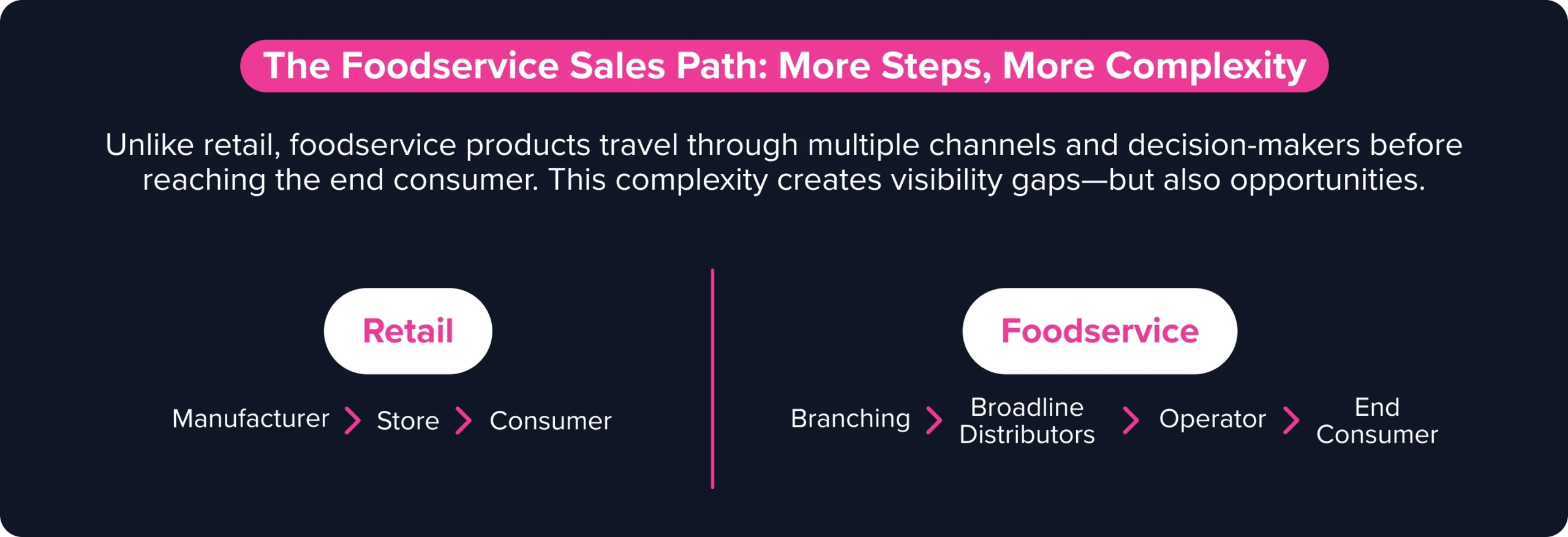
A manufacturer may sell through broadline distributors, specialty distributors, regional partners, GPO contracts, or direct relationships before a product ever reaches an operator. That creates more steps between the manufacturer and the person ultimately making the purchasing decision.
Fragmented Operator Purchasing
Foodservice is an enormous market, but purchasing is spread across a highly fragmented operator base.
A national restaurant chain may have centralized purchasing and tightly managed order guides. An independent restaurant may rely heavily on its distributor sales representative. A hospitality group could have purchasing decisions occurring at the corporate, property, and kitchen levels.
Even within the same organization, buying behavior can vary by location.
That fragmentation makes it harder for manufacturers to answer what should be fairly simple questions: Who is buying our products? Who could be buying more? Which locations have stopped buying? Where are competitors gaining ground?
Without operator-level visibility, those answers can remain buried inside transaction data.
Limited Visibility Across Distributor Networks
Distributors are essential to foodservice, but a manufacturer selling through several distributor networks can quickly end up with a disconnected view of performance.
One distributor may report data differently from another. Product descriptions and item numbers may vary. Reporting schedules may not line up. Some information may arrive at the distributor level when the sales team really needs to understand what is happening at the operator level.
The result can be plenty of data without a particularly clear story.
Bringing those different sources together helps manufacturers see where products are moving, where distribution is strong, and where potential sales opportunities exist.
Longer Sales Cycles and Multiple Decision-Makers
Getting a product onto a restaurant menu or into an approved purchasing program can take time.
Depending on the customer, a sale may involve procurement, culinary, finance, operations, supply chain teams, distributor representatives, and executives. New products may need to be tested. Pricing has to work. Distribution needs to be available. Operational requirements have to be considered.
Winning the business is only part of the job.
Once a product is approved, manufacturers still need to make sure operators can find it, distributors stock it, DSRs understand it, and locations actually purchase it.
What Prevents Manufacturers from Growing Foodservice Sales?
Manufacturers do not always lose sales because demand is weak. Sometimes the opportunity already exists, but no one can see it clearly enough to act on it.
Limited Visibility into Operator Buying Behavior
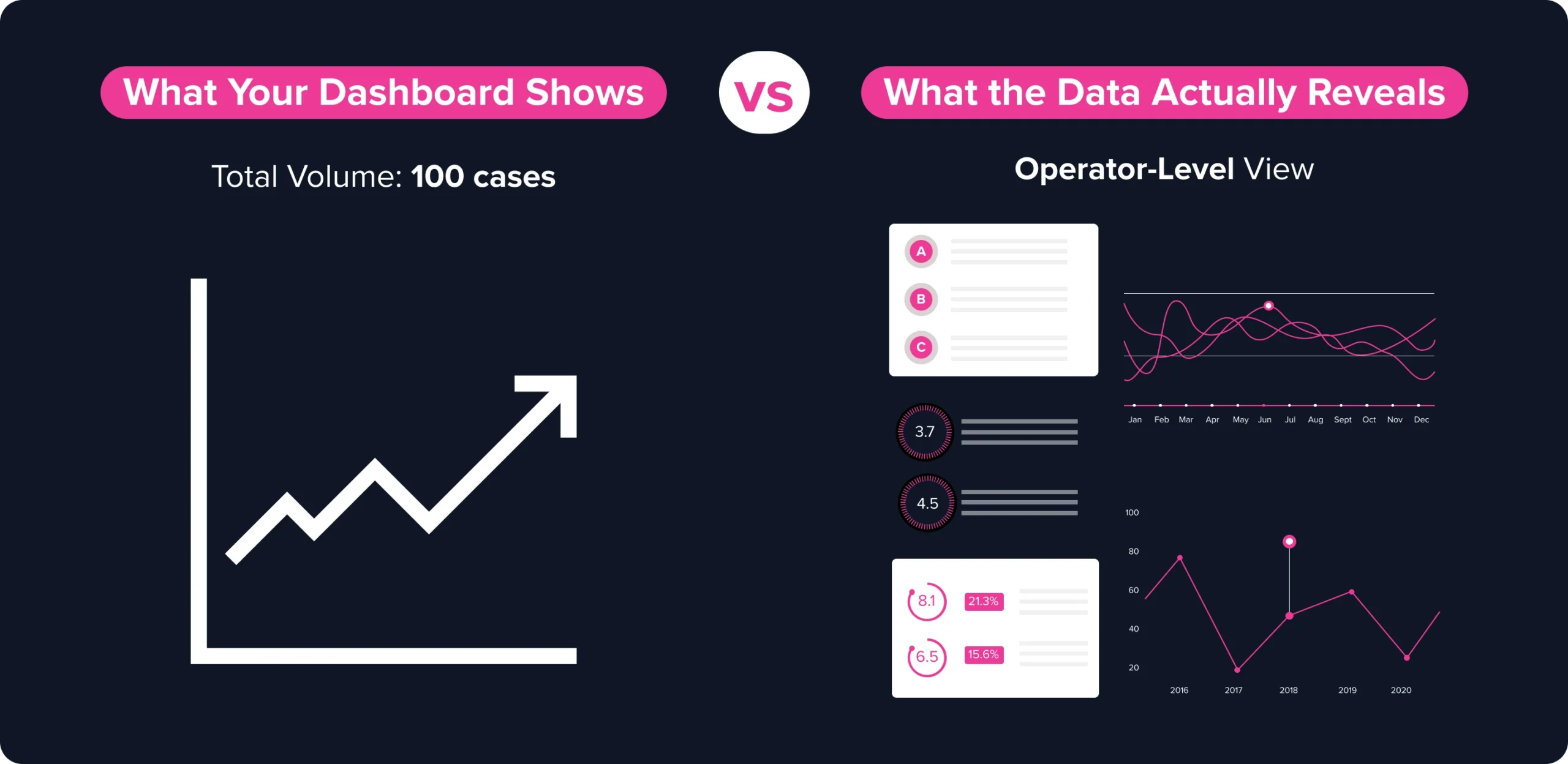
Shipment totals can show what was sold. They do not always explain what happened inside the account.
Consider a manufacturer that sees steady overall volume with a large restaurant group. At first glance, the account looks healthy. Operator-level data may tell a different story: several locations are increasing purchases while another group of locations has stopped buying altogether.
Those are two very different sales situations hiding inside the same total.
Understanding buying behavior at the operator and location level gives sales teams a better way to decide where to focus their time.
Non-Contracted Competitive Spend
One of the most valuable opportunities for manufacturers may already be sitting inside accounts they serve.
An operator could have access to a contracted product while continuing to purchase a comparable non-contracted item. Without visibility into that spend, the manufacturer may never know those cases are available to win.
Identifying non-contracted competitive spend allows teams to look beyond traditional prospecting and ask a more immediate question: Where should we already be capturing more business?
That can uncover opportunities to improve contract utilization, convert competitive volume, and grow sales within established relationships.
Product Substitution and Lost Sales Opportunities
A lost sale does not necessarily mean an operator intentionally switched brands.
Products can be substituted because of availability, distributor recommendations, pricing, order-guide changes, or temporary supply issues. The problem comes when a temporary substitution quietly becomes the operator’s new normal.
If sales teams can identify changes in purchasing patterns early, they have a better chance of understanding what happened and determining whether the business can be recovered.
Gaps in Contract Compliance
Signing a foodservice contract creates an opportunity. It does not guarantee the volume.
Locations may purchase outside the agreement, use alternate SKUs, or simply fail to adopt the contracted product. In a large organization, relatively small compliance gaps across dozens or hundreds of locations can add up to significant unrealized sales.
Tracking utilization helps manufacturers understand how much of the available contract opportunity is actually being captured.
Inconsistent Distributor and DSR Engagement
Distributor sales representatives have tremendous influence at the operator level. They know their customers, understand local needs, and are often the first people operators call when they need a product recommendation.
But manufacturers cannot expect every DSR to know every item in a large portfolio.
The more specific manufacturers can be about where an opportunity exists, the easier it becomes to engage distributor partners around it. “Sell more of this product” is a broad request. “These accounts are buying within the category but not purchasing this item” gives a sales team somewhere to start.
How Can Manufacturers Increase Foodservice Sales?
Growing foodservice sales starts with understanding where the opportunity actually exists.
That can be harder than it sounds. Distributor reports may arrive weeks after purchases occur, indirect sales can make it difficult to identify the end operator, and topline numbers do not always reveal where volume is being gained or lost.
A better approach is to connect operator and distributor purchasing data so sales teams can see true sell-through, understand buying behavior, and focus their efforts on accounts with real growth potential.
Using Purchasing Data to Identify Growth Opportunities
Purchasing data gives manufacturers a much clearer view of what is happening beyond shipments into the distributor network.
Operator-specific data can reveal who is buying a product, how much they are purchasing, how frequently they order, and whether volume is increasing or declining. It can also uncover operators purchasing a manufacturer’s products indirectly through distributors that the sales team may not have previously identified.
Looking at case volumes and purchasing patterns over time adds another layer. Manufacturers can identify accounts gaining sales velocity, spot declining volume before it becomes a larger loss, and find operators purchasing heavily within a category but not yet buying their products.
Instead of treating an entire market as a potential target, sales teams can prioritize the accounts where purchasing behavior points to a stronger opportunity.
Expanding Sales Within Existing Operator Accounts
Some of the best opportunities to grow foodservice sales are already inside the customer base.
An operator may purchase one product line from a manufacturer while buying competing products in another category. A multi-unit customer may have strong adoption across some locations but little or no volume across others. There may also be products on contract that are not being purchased as consistently as expected.
Looking at purchasing behavior by operator, location, product, and category helps expose those gaps.
That gives account teams something much more useful than a general cross-sell goal. They can enter customer conversations knowing where additional opportunity exists, how current purchasing patterns compare across locations, and which products may make sense to introduce.
Recovering Lost Sales and Sales Voids
Lost volume is much easier to address when manufacturers can see where it is happening.
An account that regularly purchased 20 cases may suddenly purchase five. A location may stop buying altogether. Another customer may continue purchasing within the category while volume shifts to a competing brand.
Those changes can easily disappear inside aggregate sales reporting.
More granular purchasing visibility helps manufacturers identify declining accounts, sales voids, off-contract activity, and potential competitive encroachment earlier. Sales teams can then investigate what changed, whether the issue involves availability, pricing, substitution, distributor activity, or customer preference, and determine whether the volume can be recovered.
Not every sales void represents recoverable business. But manufacturers have a much better chance of protecting revenue when they know the void exists.
Strengthening Distributor and DSR Relationships
Distributors and DSRs are critical to reaching foodservice operators, especially when manufacturers sell across both direct and indirect channels.
The challenge is giving those partners something actionable.
Rather than asking a distributor team to broadly increase sales of a product, manufacturers can use purchasing insights to identify specific accounts where an opportunity exists. That might include an operator buying heavily within the category, a customer showing declining volume, an account purchasing a competitive product, or an operator already buying the manufacturer’s products through another channel.
These insights make distributor conversations more focused and give DSRs better information to use with their customers.
They can also help manufacturers understand which distributor relationships are driving growth, where operator coverage could be expanded, and where additional sales support may have the greatest impact.
Aligning Product Innovation with Operator Demand
Product development should not happen in a vacuum.
Operator purchasing behavior can give R&D and marketing teams another source of insight into what is gaining traction in the market. Changes in case volume, category performance, product formats, pack sizes, regional demand, and purchasing patterns can all help manufacturers understand where operator needs may be shifting.
The value becomes even greater when manufacturers can look beyond their own product performance and understand what is happening within the broader category.
Are certain products gaining share? Are operators shifting toward a different format? Is demand stronger in particular segments or regions? Are competitive products beginning to gain ground?
Those signals do not replace culinary expertise, market research, or direct customer feedback. They add real purchasing behavior to the conversation, helping manufacturers make product and portfolio decisions with a clearer view of actual foodservice demand.
Running Targeted Sales and Marketing Campaigns
Sales and marketing become more effective when they know exactly who they are trying to reach and why.
Purchasing data can help manufacturers segment operators based on actual behavior rather than broad demographic or firmographic characteristics alone.
A campaign might focus on operators purchasing within a category but not currently buying the manufacturer’s brand. Another could target existing customers with clear cross-sell opportunities. Marketing could also support accounts showing seasonal purchasing patterns, locations with declining volume, or operators whose buying behavior suggests a strong fit for a particular product.
That same intelligence gives sales teams more context when they follow up.
Instead of approaching an account with a generic product pitch, they can enter the conversation with a clearer understanding of the operator’s business and the opportunity they are trying to win.
Improving GPO Contract Performance
A GPO contract creates access to potential volume, but access alone does not mean that volume is being captured.
Operators may purchase competitive products, buy outside the contract, or use the contracted product inconsistently across locations. Even relatively small amounts of non-compliant spend can become meaningful when multiplied across a large operator network.
Manufacturers need visibility into what is happening after the contract is established.
Looking at operator-level purchasing and contract utilization can show which eligible customers are buying, where adoption is strong, where volume is being lost to competitors, and which locations represent an opportunity for greater penetration.
That allows manufacturers to work more strategically with GPO and distributor partners to improve utilization, protect existing revenue, and capture more of the business already available within the contract.
How Does Technology Improve Foodservice Sales Performance?
Foodservice manufacturers have no shortage of data. The bigger challenge is turning millions of transactions into information a sales team can actually use.
Technology helps organize, connect, and analyze that information at a scale that would be nearly impossible to manage manually.
Operator-Level Purchasing Visibility
Operator-level visibility helps manufacturers move beyond broad shipment totals and understand where demand originates.
Sales teams can evaluate performance by operator, location, product, distributor, category, or market. That makes it easier to identify high-performing accounts, whitespace opportunities, declining purchases, and changes that require attention.
For a salesperson preparing for an account conversation, that level of detail can be far more useful than another spreadsheet showing total cases shipped.
AI-Driven Buying Pattern Analysis
The amount of purchasing data available in foodservice makes manual analysis increasingly difficult.
Artificial intelligence and machine learning can help identify patterns across large datasets, including unusual changes in volume, comparable purchasing behavior, potential product opportunities, and accounts that may warrant additional attention.
The point is not to replace the judgment of a sales team.
It is to help that team find the signal faster.
A salesperson still needs to understand the customer, the product, and the relationship. Technology can help show where that conversation may be worth having.
Sales Performance Dashboards and KPI Tracking
Sales teams need a shared view of performance.
Dashboards can bring important measures together so leaders and account teams can track case movement, account penetration, contract utilization, distributor performance, and other KPIs without piecing together multiple reports.
More importantly, teams can see changes as they happen rather than waiting until the end of a quarter to discover an account moved in the wrong direction.
Predictive Insights for Sales Planning
Historical data tells manufacturers what happened. Predictive analytics can help them think about what may happen next.
Past purchasing patterns, seasonality, commodity conditions, account behavior, and other variables can provide useful context for sales planning.
No forecast eliminates uncertainty. Foodservice has too many moving pieces for that. But better signals can help manufacturers plan inventory, prioritize accounts, prepare promotions, and allocate sales resources with more confidence.
Which Metrics Measure Foodservice Sales Success?
Revenue matters, but it does not tell the whole story.
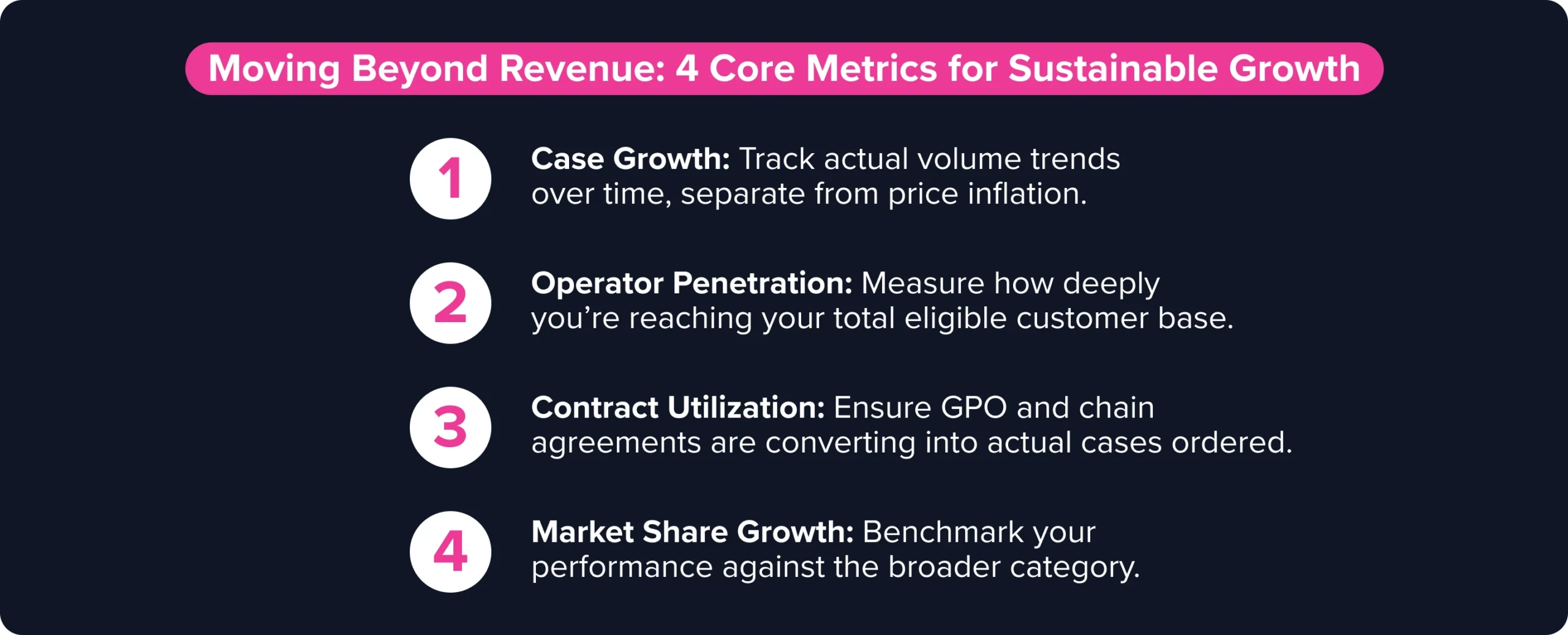
Manufacturers looking for sustainable foodservice growth should monitor the measures underneath that revenue as well.
Case Growth
Case growth shows whether product volume is increasing over time.
It can be evaluated across the entire business or broken down by product, account, distributor, market, or segment. Looking at case movement alongside revenue can also help distinguish true volume growth from sales increases driven primarily by price.
Operator Penetration
Operator penetration measures how deeply a manufacturer’s products are reaching the available customer base.
A brand may have a contract covering hundreds of eligible locations but only be selling into a portion of them. Tracking penetration helps expose that gap and gives teams a clearer picture of the remaining opportunity.
Contract Utilization
Contract utilization looks at whether eligible operators are actually purchasing contracted products.
Strong utilization suggests the agreement is translating into real volume. Low utilization may point to awareness issues, competitive purchases, distributor availability, product fit, or other barriers that require attention.
Market Share Growth
Market share helps manufacturers understand performance relative to the broader category.
Sales may be increasing while the category grows even faster, which can mean a manufacturer is still losing share. On the other hand, relatively modest topline growth could represent a strong performance in a flat or declining category.
Context matters.
Sales Growth by Distributor
Distributor-level performance can reveal where manufacturer strategies are working particularly well and where additional support may be needed.
Comparing case growth, operator adoption, and product performance across distributor relationships can help manufacturers identify strong markets, engagement gaps, and opportunities to replicate successful approaches elsewhere.
What Is the Future of Foodservice Sales?
The future of foodservice sales will be less about having more data and more about knowing what to do with it.
Manufacturers already have access to enormous amounts of information across shipments, operators, distributors, contracts, products, and markets. As technology improves, the advantage will come from connecting those data points quickly enough to influence real sales decisions.
AI will play a larger role in that process, particularly in finding patterns and surfacing opportunities that would be difficult for a person to identify across millions of transactions. Sales teams will be able to spend less time searching for opportunities and more time acting on them.
At the same time, relationships will remain central to foodservice.
Operators still need partners who understand their businesses. Distributor teams still influence what gets sold. Manufacturers still need people who know how to turn information into a relevant conversation.
The technology gets smarter. The business stays human.
Final Thoughts
Growing foodservice sales is not simply a matter of finding more prospects.
There may already be untapped growth inside existing accounts, distributor relationships, GPO contracts, and operator networks. The challenge is being able to see it.
That requires a connected view of what operators are buying, where products are gaining or losing ground, how contracts are performing, and where competitive spend is slipping through.
Buyers Edge Platform sits at the intersection of operators, manufacturers, distributors, purchasing data, and technology across the foodservice ecosystem. By turning purchasing activity into actionable intelligence, we help manufacturers uncover opportunities, strengthen channel relationships, and build smarter strategies for sustainable growth.
Ready to uncover more opportunities within your foodservice business? Click here to learn more about how Buyers Edge Platform helps manufacturers turn data into growth.
FAQs
What is foodservice sales?
Foodservice sales refers to the sale of food, beverage, supplies, and related products to businesses that prepare or serve food away from home. This can include restaurants, hotels, healthcare organizations, senior living communities, schools, colleges and universities, convenience stores, and other commercial and non-commercial foodservice operations.
Manufacturers often reach these customers through distributors, GPOs, brokers, and other channel partners rather than selling directly to every operator.
How do manufacturers increase foodservice sales?
Manufacturers can increase foodservice sales by identifying new operator opportunities, expanding product adoption within existing accounts, improving contract utilization, recovering lost volume, strengthening distributor relationships, and using purchasing data to focus sales resources where they are most likely to drive growth.
The key is knowing where the opportunity exists before deciding how to pursue it.
What role does purchasing data play in foodservice sales growth?
Purchasing data helps manufacturers understand what operators are actually buying.
When analyzed at the operator, location, product, and distributor level, that data can reveal whitespace opportunities, declining volume, competitive purchases, contract utilization gaps, and changes in buying behavior. Those insights give sales teams a more precise way to prioritize accounts and opportunities.
How does seasonality affect foodservice sales?
Seasonality can significantly change demand across foodservice categories.
Weather, holidays, sporting events, travel patterns, limited-time menus, school calendars, and regional differences can all influence what operators purchase throughout the year.
Historical purchasing data can help manufacturers understand when those changes typically occur and prepare sales, inventory, and promotional strategies accordingly.
Why is non-contracted spend important for manufacturers?
Non-contracted spend can represent sales that a manufacturer has an opportunity to capture but currently does not.
For example, an operator may have access to a manufacturer’s contracted product but continue purchasing a competing item. Identifying that spend gives the manufacturer and its channel partners an opportunity to understand why the contracted product is not being used and potentially convert that volume.
How can emerging brands compete in foodservice?
Emerging brands do not necessarily need the largest sales force to compete effectively. They need to know where their products have the strongest fit.
Purchasing intelligence can help growing brands identify operators buying within relevant categories, markets where similar products perform well, distributor relationships worth developing, and accounts with unmet needs.
Instead of trying to reach everyone, emerging brands can focus limited sales and marketing resources on the operators and opportunities most likely to matter.