Sports season has a way of turning an ordinary shift into a full-house event. A table orders wings for the game. A family grabs dinner on the way home from practice. At a hotel, fans want something quick before kickoff. In healthcare and senior living communities, fall menus bring chili, soup and other comforting favorites back into rotation.
The menus may look different from one foodservice operation to the next, but the packaging challenge is often the same: food needs to be packed quickly, carried confidently and enjoyed the way the kitchen intended.
That makes packaging more than a last-minute supply decision. It is part of the guest experience and the flow of service, especially when volume climbs. A little planning now, including a look at options such as Pactiv EarthChoice soup cups and hinged-lid containers, can help teams move through the sports-season rush and stay ready for the colder months ahead.
Why Sports Season Puts Packaging to the Test
Game days can bring large orders, tight pickup windows and a wave of tickets arriving at once. Even operations without televisions or traditional game-day promotions can feel the impact through catering, delivery, takeout and grab-and-go demand.
When the pace picks up, small packaging problems become much harder to ignore. A lid that takes too long to secure can slow the line. The wrong container can lead to leaks, soggy sides or an order that no longer looks appetizing when it reaches its destination. If the team has to search for the right package or transfer an item into a different container, precious time disappears during the busiest part of the shift.
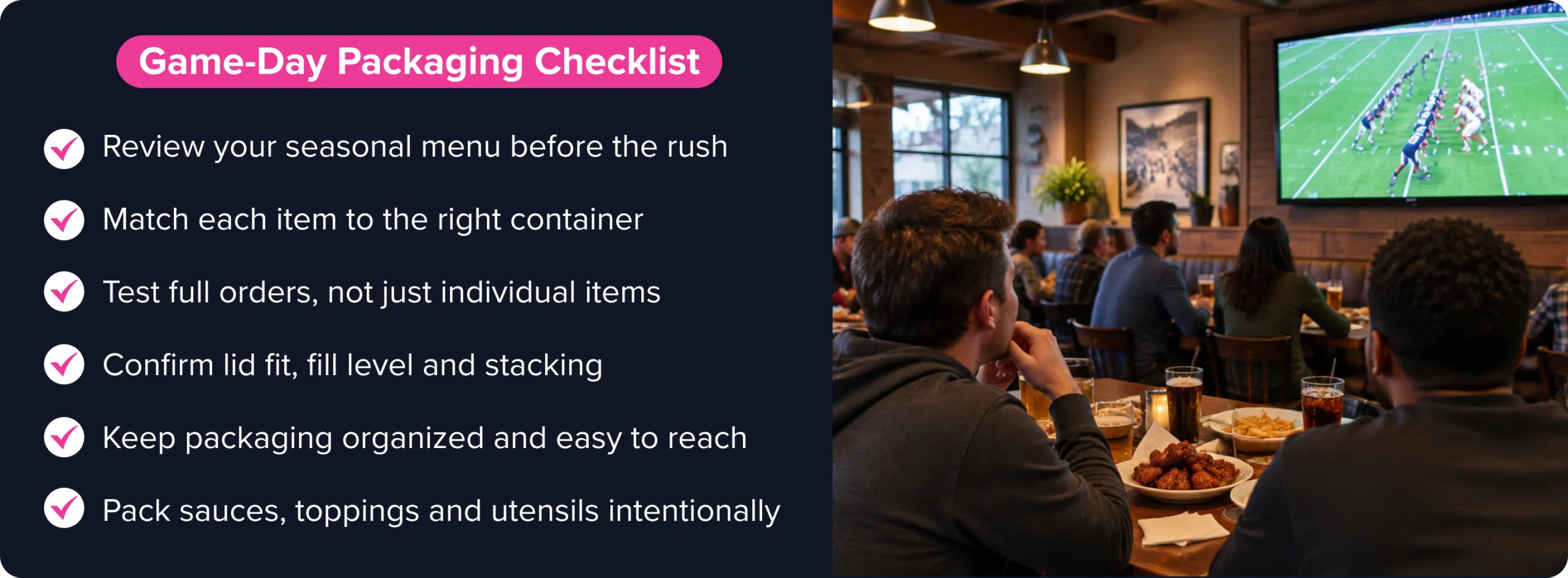
The best time to think through those details is before the first big order lands in the kitchen. Operators can review their seasonal menu, match each item with appropriate packaging and make sure employees know what to reach for. That simple preparation can remove guesswork when there is no time for it.
Choose Packaging That Can Handle Your Game-Day Menu
There is no single package that works equally well for every dish. A better approach is to start with the menu itself. Consider the temperature, texture, portion size, sauce level and expected travel time of each item. Then think about how it will be filled, closed, stacked and handed to the guest.
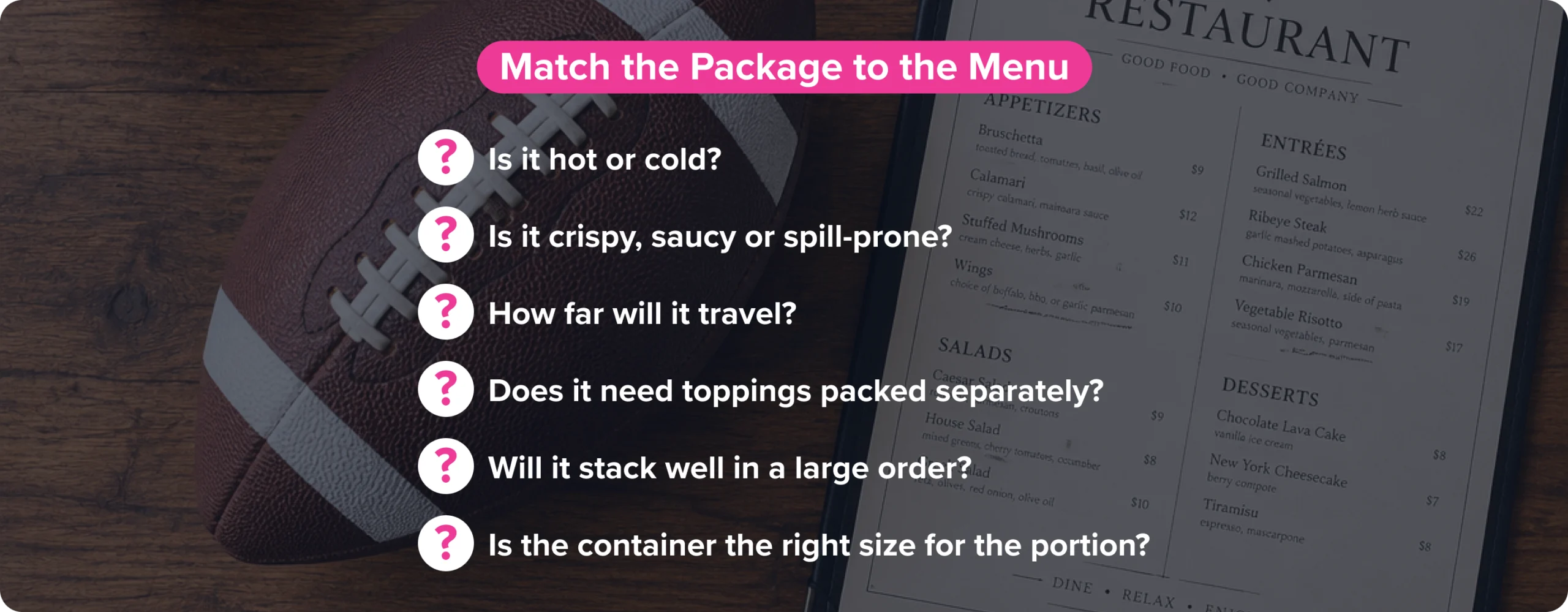
It is also worth testing a complete order rather than one item at a time. Wings, fries, soup, condiments and utensils may each perform well on their own, but can the full order be packed and carried without creating a balancing act? A quick trial run can expose issues before game day does.
Soup Cups for Chili, Soups and Cold-Weather Favorites
Few foods signal fall quite like a hot bowl of chili or soup. They are natural fits for seasonal menus, but they need packaging that can handle movement from the kitchen to the table, pickup shelf or delivery vehicle.
Pactiv EarthChoice soup cups give operators a practical option for chili, soups and other warm menu items. Using a cup and compatible lid suited to the product can help keep the contents contained during handling and transport. The familiar format also makes portioning straightforward for employees and convenient for guests.
Before service, test the cup with the actual recipe. A light broth, thick chowder and fully loaded chili will not behave the same way. Confirm the appropriate fill level, lid fit and holding process. If toppings such as cheese, onions, crackers or herbs are part of the experience, pack them separately so guests can finish the dish when they are ready to eat.
Hinged-Lid Containers for Game-Day Classics
Wings, sandwiches, burgers, loaded fries and shareable appetizers are built for sports-season menus. They are also a reminder that the container has to do several jobs at once. It must be easy for the team to fill and close, offer enough room for the portion, and help the food arrive in a presentable way.
Pactiv EarthChoice hinged-lid containers can simplify packing by keeping the base and lid together in one piece. During a rush, that means employees are not searching for a matching lid or managing two separate stacks of inventory. The format can work across a variety of familiar game-day foods, giving operators a versatile choice for takeout and grab-and-go service.
Match the size and style to the item instead of automatically choosing the largest container. Too much empty space can allow food to shift during travel, while an overfilled package may be difficult to close. Sauces and dressings should also be considered. Packing wet components separately when appropriate can help protect the texture and presentation of the main dish.
How the Right Packaging Supports High-Volume Service
Packaging decisions affect more than the moment an order leaves the building. They can influence kitchen organization, employee movement, order accuracy and the guest’s impression of the meal. During peak periods, the right setup helps the entire handoff feel more controlled.
Faster Packing During Peak Periods
Speed comes from removing unnecessary decisions. If every menu item has an assigned package and packing method, employees can work with more confidence. Keep the most-used containers within easy reach, stage compatible lids and portion cups together, and label storage areas clearly. For large catering or group orders, pre-stage packaging before the expected rush when food-safety and operational procedures allow.
A short packing guide can also help. It might show which container to use, where condiments belong and what needs to be included before the order is closed. This is particularly useful for seasonal employees or team members moving between stations.
Convenience matters at the purchasing level, too. Streamlining the number of packaging formats used across similar menu items may make storage and replenishment easier, provided each package still performs for the food inside it.
Better Food Quality and Presentation
Guests judge an off-premise meal when they open the package, not when it leaves the pass. That distance matters. Steam, sauces and movement can quickly change a dish that looked perfect in the kitchen.
Operators should test how food holds up after a realistic travel period. Pack the meal exactly as the guest would receive it, let it sit for the typical delivery or commute time, and open it at the end. Look at temperature, texture, leakage and presentation. The result may point to an easy adjustment, such as using a different container size, packing a sauce on the side or changing how items are arranged.
The package should also make the meal feel intentional. Clean presentation, appropriate portions and secure closure all reinforce the care that went into the food.
Dependable Performance for Off-Premise Orders
Takeout and delivery create conditions the dining room does not. Orders may be stacked on a shelf, carried through a crowded lobby or placed in a vehicle with several other meals. The packaging needs to fit that journey.
Review how containers stack, how much space they take up in pickup areas and how clearly employees can identify each order. Keep heavy items below lighter ones, separate hot and cold foods when possible, and avoid placing liquid items where they can tip. A final handoff check can catch a loose lid, missing label or forgotten condiment before the order leaves the operation.
For multi-location businesses, documenting these standards can create a more consistent off-premise experience across the system. For single-site operators, the same process helps every shift follow a reliable routine.
Consider Sustainability Alongside Performance
Many operators are looking for packaging choices that support their sustainability goals without overlooking the realities of foodservice. Performance still matters. If a package fails and food must be remade, both the meal and the resources used to prepare it may be wasted.
Start by defining what sustainability means for your operation and your guests. Consider the materials used, the disposal options available in the local market, the food each package must hold and any applicable regulations. Product names and broad material categories do not tell the entire story, so review the specifications and disposal guidance for the exact item being purchased.
The EarthChoice portfolio gives operators packaging options to consider as they balance menu performance, operational needs and sustainability priorities. A Buyers Edge Platform representative can help members explore available products and identify options suited to their operation. Claims and disposal instructions should always be confirmed for the specific product and local waste infrastructure before they are shared with guests.
Prepare Your Packaging Playbook for Fall and Winter
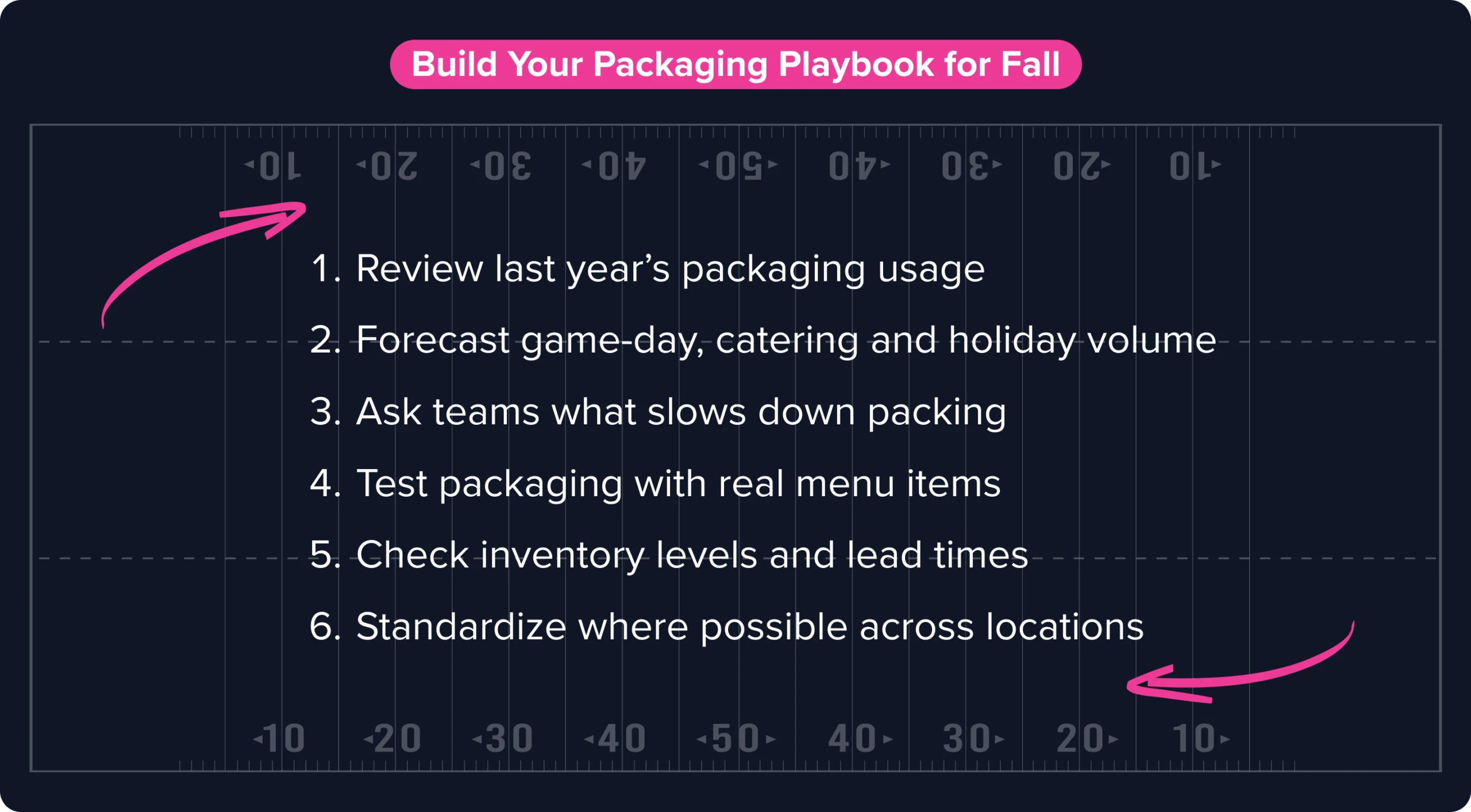
Sports season may create the first rush, but demand for reliable takeout and grab-and-go packaging does not end with the final whistle. Fall gatherings, holiday events, catered meals and cold-weather menus will keep many of the same products in use for months.
Now is the time to review last year’s usage, forecast upcoming promotions and talk with the people closest to the work. Ask kitchen employees which packages slow them down. Check with front-of-house teams about leakage or handoff issues. Review guest feedback for recurring comments about temperature, texture or missing components. Those details can help purchasing teams make better decisions before seasonal volume builds.
It is also smart to check inventory levels and lead times early. Build in room for planned promotions, catering orders and unexpected traffic spikes rather than relying only on an average week. If several locations use the same products, align ordering and usage standards so one store is not short while another is overstocked.
Pactiv EarthChoice hinged-lid containers and soup cups offer practical options for many of the foods that define fall and sports season, from wings and sandwiches to soups and chili. Members can learn more about the products available through their program and learn how they perform with their own menus. Because the best packaging test is not on a spec sheet. It is during a real shift, with real food and a line of real orders waiting to go.
Packaging that performs all season long starts with a plan. Explore available Pactiv EarthChoice packaging solutions before the rush arrives:
- Dining Alliance members can click here to learn more.
- Consolidated Concepts clients can click here to learn more.
- Source1 members can click here to learn more.
- Prime Services members can click here to learn more.