
A product substitution can affect a recipe. A pricing discrepancy can affect a location’s margins. A change in purchasing volume can affect a supplier’s planning. Across foodservice, decisions made by one organization have consequences for the people and businesses around it.
That makes the quality of those relationships a business priority. Operators need partners who understand how their businesses run. Suppliers and distributors need visibility into what their customers need. Internal teams need reliable information and clear responsibilities to keep everyone moving toward the same goals.
Those connections provided the focus for Building the Next Generation of Foodservice Relationships at Prosper Forum. Moderated by Jeff Dorr, Division President of SaaS at Buyers Edge Platform, the session featured John Davie, CEO of Buyers Edge Platform, and Stacy Peterson, President and COO of Jersey Mike’s. The session centered on strengthening partnerships, improving decision-making, and using technology to support efficiency and transparency.
The questions raised during the session offer a useful starting point for foodservice leaders to examine their own relationships and operations. How can partners work together more effectively? What makes data useful? And how should organizations evaluate the value of their technology investments?
Build Partnerships Around Shared Business Goals
Trust gives business partners a foundation for working together. It creates room to understand one another’s priorities, discuss challenges openly, and build a relationship that can grow over time.
Reflecting on the relationships he built early in his career, John Davie described how those connections came first.
“You had to build a relationship first… it’s not about really what I could deliver, because I was a 21 year old kid. I didn’t have anything.”
His reflection puts the relationship itself at the starting point. For foodservice organizations, taking time to understand the people involved and their businesses creates a foundation for finding opportunities together.
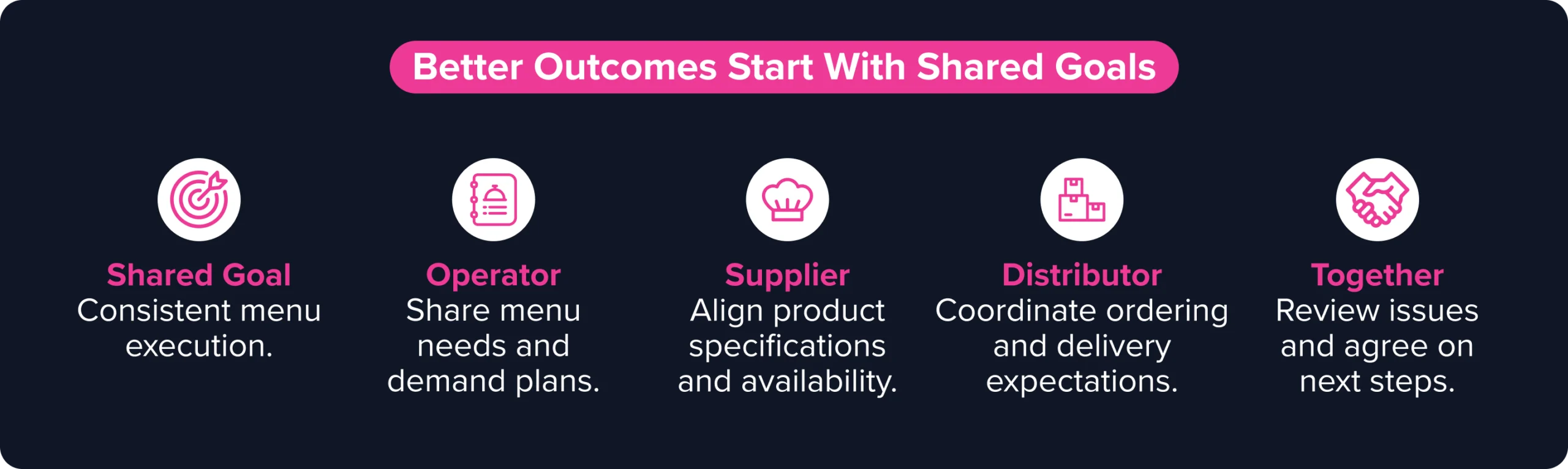
In practice, those conversations can begin with an operator’s priorities. An organization preparing to expand may need support maintaining product consistency across new locations. A supplier may need earlier visibility into a promotion to plan production. A distributor may need clearer forecasts to support changes in demand.
When partners discuss those needs early, they have more room to plan, identify potential problems, and agree on a response.
Consider a menu item that has become more expensive to produce. Partners can examine yield, portion size, preparation time, waste, product availability, and case price together to understand the item’s overall value to the operation.
Making business goals clear gives those conversations direction. What is the organization trying to improve? What does success look like? Where can each partner contribute?
Trust provides the foundation. Shared goals give partners something concrete to work toward.
Give Data a Clear Role in Decision-Making
Useful information needs to reach the people who can act on it, in a form that supports their responsibilities.
Stacy Peterson emphasized the importance of making data useful to the person receiving it.
“It’s really about getting the right information to the right audience… it’s about creating the right view into data that is actionable depending on your role or your perspective.”
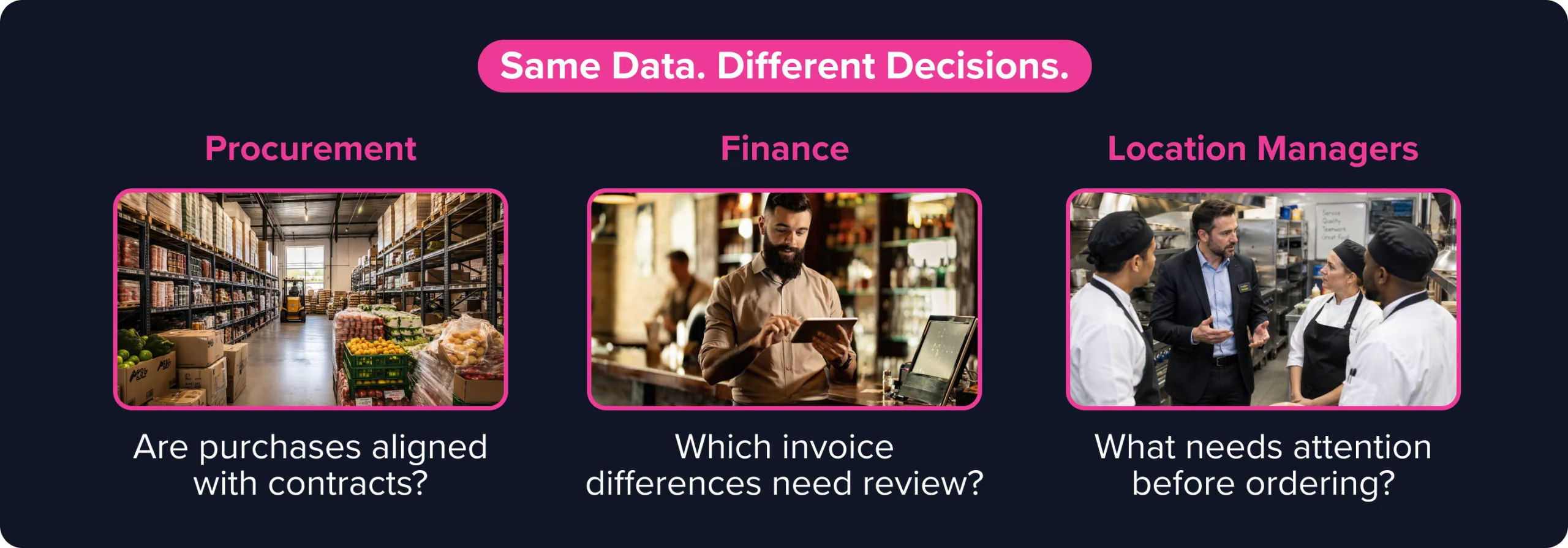
That distinction matters across a foodservice organization. A procurement leader may need visibility into purchasing patterns and contract compliance. A finance team may need to understand cost changes and invoice discrepancies. A location manager may need specific information about ordering or inventory.
These teams can draw from the same underlying information while needing different views to make decisions.
Purchasing data, for example, can help an operator identify differences in pricing, product selection, or buying patterns across locations. But a difference alone does not explain its cause. One location may be buying an alternative product because of availability. Another may be following an outdated order guide. A third may have a legitimate operational need.
The next step is to bring the right people into the conversation, confirm the circumstances, and decide whether a change is needed.
Consistent product descriptions, comparable units of measure, and current information can make that process easier. Clear responsibility for reviewing findings and following through helps connect the information to action.
For operators, suppliers, and distributors, the practical goal is to give each person enough context to understand the issue and make an informed decision.
Evaluate Technology Through Operational Results
The session’s focus on technology and return on investment raises an important consideration for foodservice organizations: how will an investment improve the way the business works?
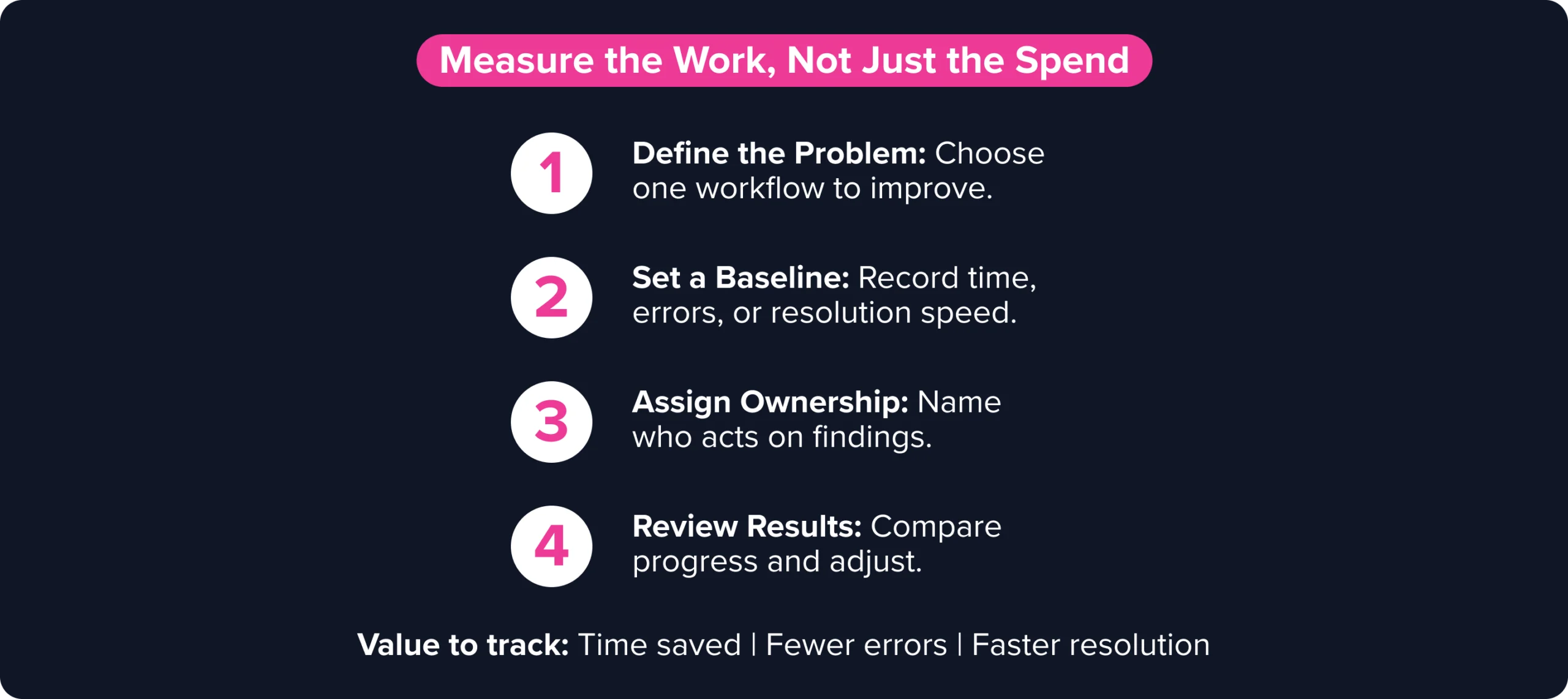
A practical approach begins with a specific problem and a clear way to measure progress.
If teams spend hours entering invoice information, the objective might be to reduce that workload and improve accuracy. If pricing discrepancies are difficult to identify, the goal might be to flag exceptions earlier and shorten resolution time. If leaders struggle to understand purchasing across locations, success might mean having a consistent view they can use to guide decisions.
Those outcomes provide a basis for evaluating whether an investment is delivering value.
Implementation matters just as much as selection. Teams need to know how the tool fits into their work, what information it requires, and how to respond to its findings. Connections with existing systems also deserve attention, particularly when employees would otherwise need to enter the same information in multiple places.
Financial value can include savings, but it can also come from time returned to employees, fewer errors, and more consistent execution.
Before adding a tool, leaders should define the workflow it will improve, establish a starting point, and decide how results will be reviewed. That makes it easier to demonstrate progress and adjust when something is not working as expected.
Make Transparency Useful to the People Involved
Trust grows when people understand expectations and follow through on them. Technology can support that process by making relevant information easier to access and issues easier to track.
The session’s questions considered transparency across customer relationships, vendor relationships, and internal teams. Each has different needs.
For customers, clarity may involve accurate information about availability, pricing, or service. For vendors, it may involve agreed product specifications, purchasing expectations, and a consistent process for addressing discrepancies. Internally, it may mean giving procurement, finance, culinary, and operations a common understanding of a decision and its impact.
A pricing issue illustrates how those connections work. The operator needs to understand the agreed price. The supplier or distributor needs enough detail to investigate. Finance needs to know whether an adjustment is expected. Clear records and an agreed resolution process help everyone move the issue forward.
Transparency also requires conversation. A report can identify a variance, but the people involved still need to understand the circumstances and agree on what happens next.
Useful systems support that exchange and make accountability easier to maintain.
Strengthen One Relationship at a Time
The session closed with a question about the practical priorities leaders should focus on over the next 12 months. For organizations considering their own next steps, one manageable place to begin is a recurring challenge that requires people to work together.
Choose an issue that affects performance, such as inconsistent purchasing, repeated substitutions, or a slow invoice resolution process. Bring together the internal team and external partners involved. Agree on the information needed, assign responsibilities, and establish a measure of success.
That measure could be fewer substitutions, faster resolution, less manual work, or better purchasing consistency. A regular review gives everyone an opportunity to assess progress and address new concerns.
Small improvements can establish habits that carry into larger decisions: sharing information earlier, raising concerns clearly, and following through on commitments.
For Buyers Edge Platform, the connection among purchasing, technology, data, and industry relationships is central to helping foodservice businesses improve performance. Each becomes more valuable when it supports the others.
The next generation of foodservice relationships will take shape through that everyday work. Partners who understand one another’s goals, use information thoughtfully, and take responsibility for results can build a stronger foundation for the decisions ahead.