
Restaurant budgeting is not just about controlling costs, it’s about creating the financial clarity that turns daily operational decisions into long-term profitability.
That’s why a well-built budget matters. It gives you a clear picture of where money is coming from, where it’s going, and where you have opportunities to improve. Whether you operate one restaurant or oversee dozens of locations, budgeting helps turn everyday decisions into a more intentional financial strategy. Better purchasing, smarter labor planning, and tighter cost controls all start with understanding your numbers.
At Buyers Edge Platform, we work with operators every day who want greater visibility into purchasing and spend. With the right data, budgeting becomes less about making educated guesses and more about making confident decisions backed by real information.
What Is Restaurant Budgeting?
Restaurant budgeting is the process of planning revenue and expenses over a specific period, whether that’s a month, quarter, or full year. Think of it as the financial roadmap that helps guide spending, allocate resources, and keep profitability on track.
A budget isn’t something you build once and forget about until next year. It’s a working plan that should help answer questions like:
- How much revenue can we realistically expect?
- What can we spend on food, beverages, and supplies?
- How should labor be scheduled based on projected demand?
- Which expenses stay the same each month, and which ones fluctuate?
- Where are we overspending, and what’s driving those costs?
Restaurant Budget vs. Restaurant Forecast
People often use these terms interchangeably, but they serve different purposes.
- Restaurant Budget: Your financial game plan. It establishes revenue, labor, and cost targets based on historical performance, business goals, and expected operating conditions.
- Restaurant Forecast: A living projection that changes as your business changes. Forecasts take current sales, seasonality, local events, weather, supplier pricing, and other real-world factors into account so you can adjust before small issues become bigger ones.
A budget gives your team direction. A forecast helps you stay flexible when reality doesn’t match the original plan.
Fixed vs. Variable Costs
Not every expense behaves the same way, and understanding the difference is one of the foundations of restaurant budgeting.
Fixed Costs are expenses that stay relatively consistent from month to month, such as rent, insurance, salaried management, software subscriptions, and equipment leases.
Variable Costs rise and fall with business activity. Food purchases, hourly labor, utilities, packaging, and other operating supplies all fluctuate based on sales volume.
Separating these expenses makes it much easier to see where you have immediate control and where long-term planning is more important.
What Should a Restaurant Budget Include?
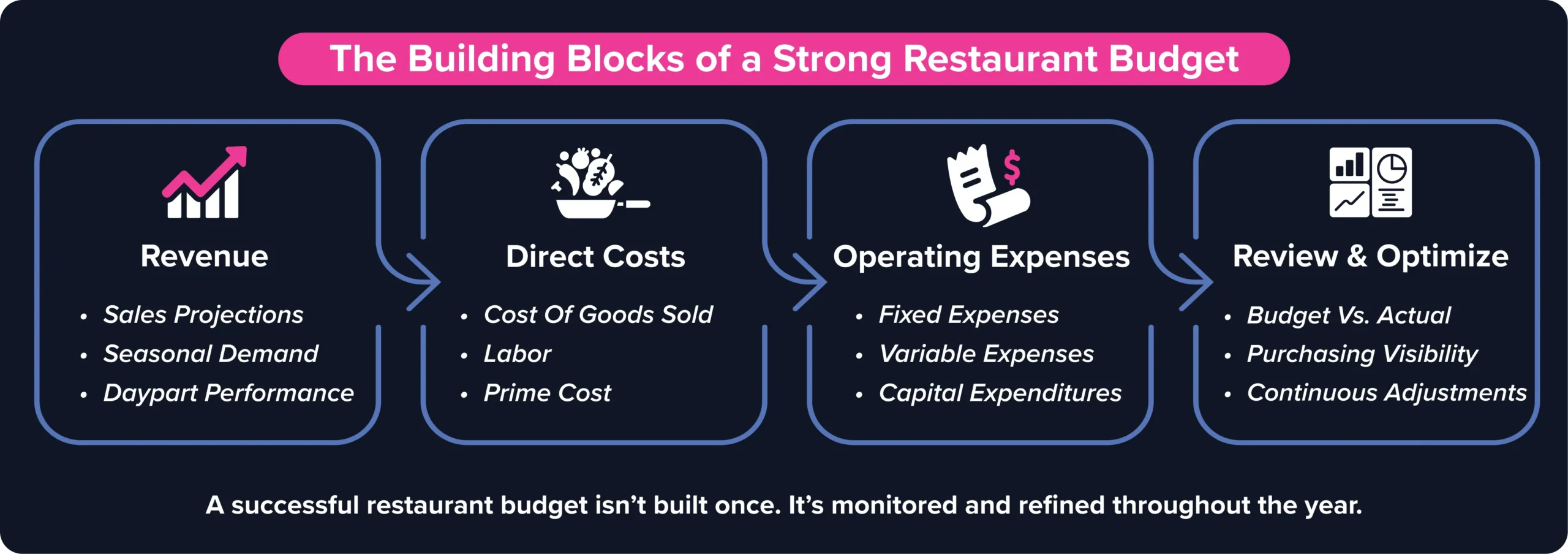
A strong restaurant budget goes well beyond estimating sales and food costs. It should account for every major expense that affects profitability, giving operators a complete picture of where money is coming from and where it’s going. The more accurate your budget is upfront, the easier it becomes to make confident decisions throughout the year.
Sales and Revenue Projections
Every budget starts with revenue. Use historical sales, seasonal trends, promotions, daypart performance, and your dine-in, takeout, and delivery mix to build realistic projections. The goal isn’t to predict every dollar perfectly. It’s to create a practical baseline you can adjust as conditions change.
Cost of Goods Sold (COGS)
COGS includes the direct cost of the food, beverages, and ingredients you sell. Since supplier pricing can change quickly, this is often one of the first areas operators need to monitor closely.
Having better visibility into purchasing makes a real difference. Buyers Edge Platform helps operators understand where costs are changing, identify purchasing trends, and make more informed decisions that support long-term profitability.
Labor Cost
Labor is one of the largest controllable expenses in any restaurant budget. It includes hourly wages, salaried employees, payroll taxes, overtime, and benefits.
Building realistic labor budgets starts with expected guest counts and operational needs. When staffing aligns with projected demand, restaurants are better positioned to control costs without sacrificing service.
Prime Cost
Prime cost combines your food costs and labor costs into one metric, making it one of the clearest indicators of restaurant profitability. Because these are typically your two biggest expenses, even small improvements can have a meaningful impact on margins.
Keeping prime cost in check gives operators a better chance of maintaining healthy financial performance over time.
Fixed Operating Expenses
These are the recurring expenses you can generally count on each month, including rent, equipment leases, internet service, insurance, software subscriptions, and permits.
Because fixed costs don’t change much from month to month, they’re easier to plan for and provide a stable foundation for the rest of your budget.
Variable Operating Expenses
Variable operating expenses fluctuate as your business changes. Items like credit card processing fees, cleaning supplies, linen service, smallwares, maintenance, and packaging often rise and fall alongside sales volume.
Planning for these expenses helps prevent unexpected costs from quietly eating away at your margins.
Capital Expenditures
Capital expenditures, or CapEx, are larger investments that support the long-term operation of your business. That could include replacing kitchen equipment, upgrading POS systems, renovating dining rooms, or making HVAC improvements.
These purchases don’t happen every month, but they shouldn’t come as surprises either. Setting aside funds for future investments helps protect cash flow when those bigger expenses inevitably arise.
Restaurant Budget Percentages: Recommended Cost Ranges
While every concept is unique, operators often use these standard industry benchmarks as financial guardrails during restaurant budgeting:
| Cost Category | Target Revenue Percentage |
| Cost of Goods Sold (COGS) | 28% – 35% |
| Labor Cost | 25% – 35% |
| Prime Costs (COGS + Labor) | 55% – 65% (lower is better) |
| Occupancy / Rent | 5% – 10% |
| Marketing | 2% – 6% |
| Net Profit Margin | 5% – 15% |
How to Build a Restaurant Budget
The best restaurant budgeting process is structured, repeatable, and grounded in actual operating data.
Start With Historical Purchasing and Sales Data
Begin with what has already happened. Pull your past 12 to 24 months of sales reports and distributor invoices to establish a baseline for trends, inflation, and seasonal patterns.
Project Sales by Daypart and Location
Break revenue down by day of the week, shift (lunch vs. dinner), and sales channel. For multi-unit operations, building location-specific projections prevents blended averages from hiding localized issues.
Set COGS and Prime Cost Targets
Establish target percentages and dollar amounts for food and labor based on your concept, menu mix, and supplier costs.
Plan Labor Against Forecasted Volume
Build your labor schedules around expected guest counts and prep requirements rather than gut instinct, mapping hours by role to maintain service levels without overspending.
Budget Fixed and Variable Operating Expenses
Map out recurring invoices carefully, setting budget caps for variable operational supplies tied directly to sales volume projections.
Build In Seasonality and Contingency
Account for natural business swings—such as slow winter months or patio seasons—and reserve a small contingency buffer for unexpected repairs or commodity price spikes.
Review Budget vs. Actual Every Period
A budget only works if it is reviewed consistently. Set a regular cadence (monthly or every four-week period) to compare your plan against actual performance.
Choosing a Budget Model: Fixed vs. Flexible
- Fixed Budget: Sets rigid targets at the beginning of the period and keeps them unchanged. Great for tracking discipline against overhead, but struggles when traffic swings unexpectedly.
- Flexible Budget: Automatically adjusts variable cost targets based on actual sales volume achieved. If sales come in higher than expected, your allowable spend on inventory scales proportionally. Many successful operators blend the two approaches.
Budget vs. Actual: Turning Variance Into Action
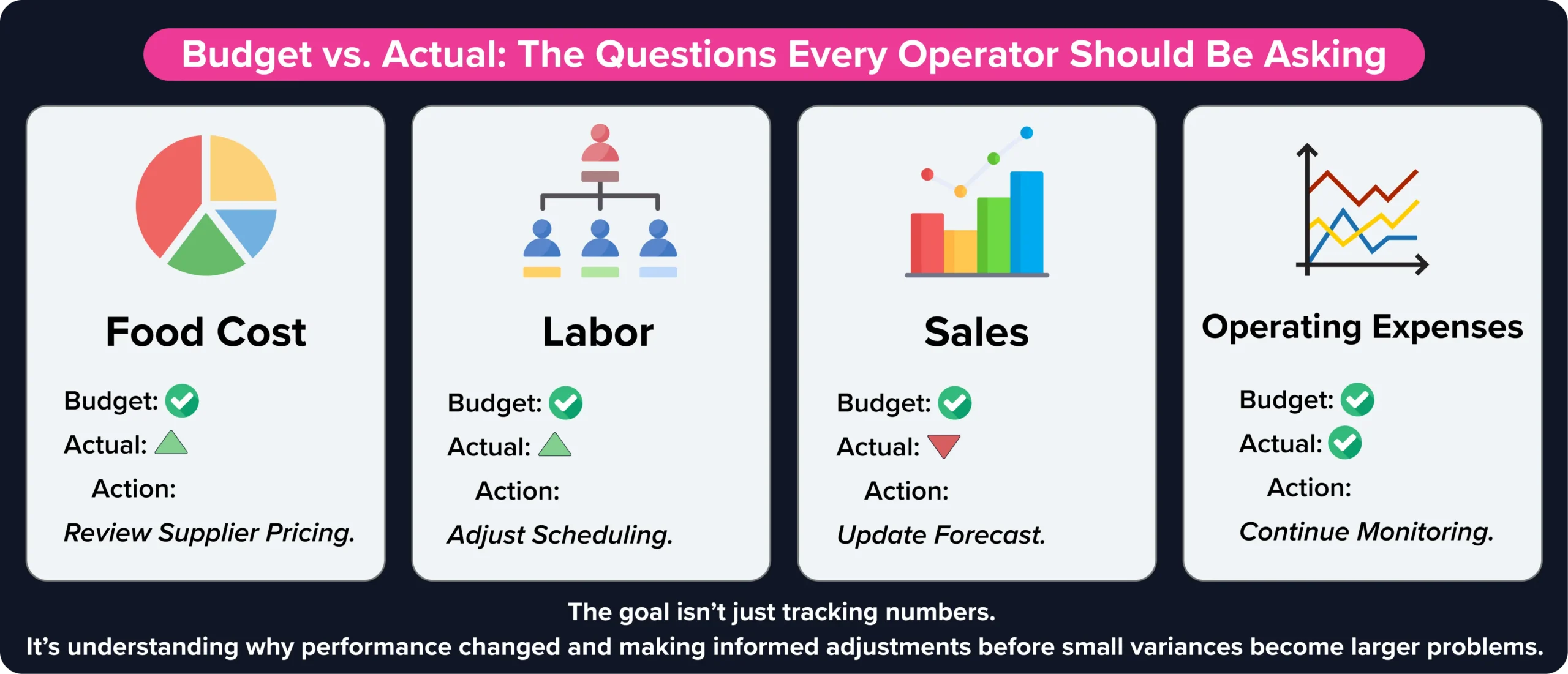
Variance analysis is where restaurant budgeting turns into real profit management. When actual results differ from your plan, the goal is not to assign blame, but to investigate why:
- If food cost runs high, check distributor pricing, prep waste, portion control, or menu mix.
- If labor spikes, examine overtime, scheduling efficiency, or unexpected sales drops.
With better reporting and purchasing visibility, operators can move from reacting late to adjusting sooner.
Common Restaurant Budgeting Mistakes to Avoid
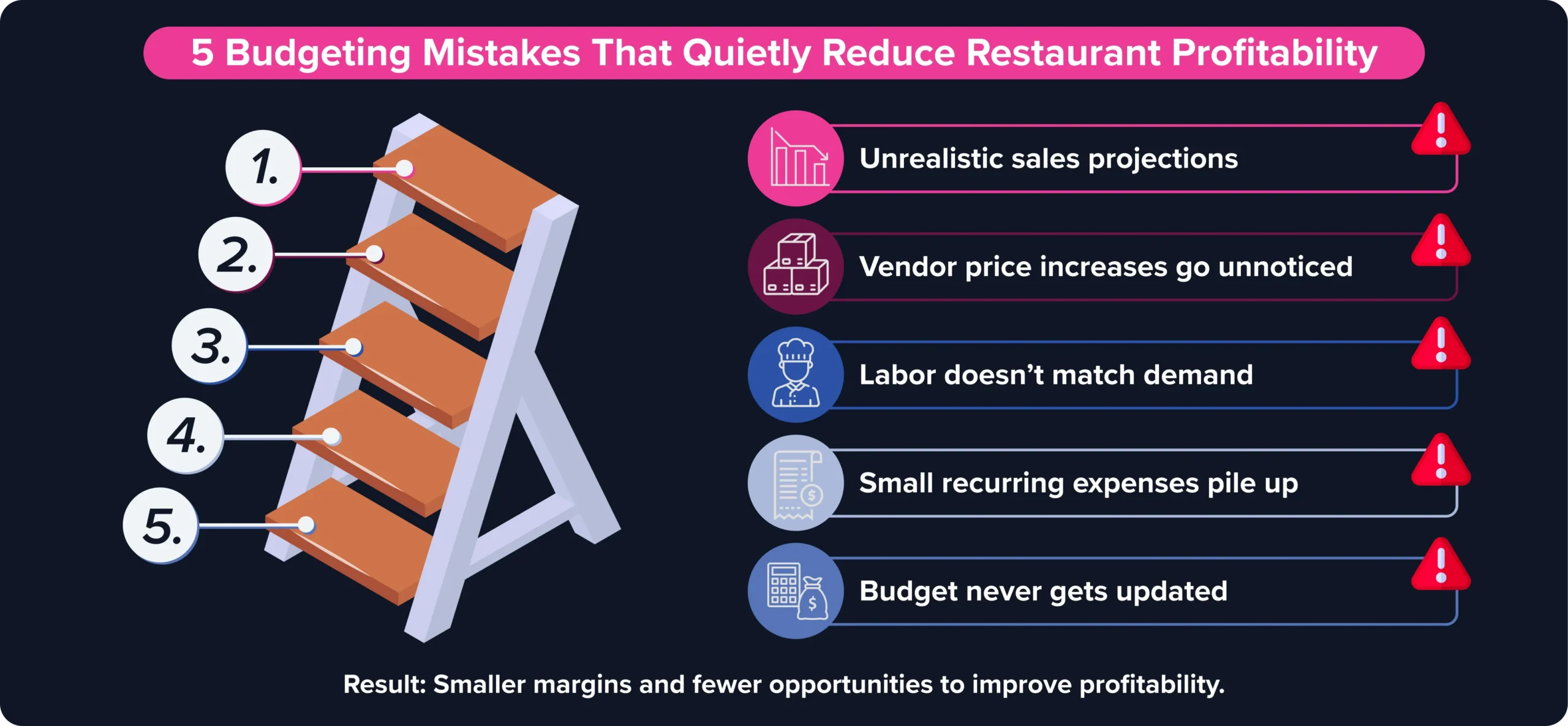
Even experienced operators can run into budgeting problems. The issue usually isn’t creating a budget, it’s failing to keep it aligned with what’s actually happening in the business. Avoiding these common mistakes can make your budget far more useful throughout the year.
Setting Unrealistic Revenue Targets
It’s natural to be optimistic when planning for the year ahead, but revenue projections need to be grounded in reality. Basing your budget on overly ambitious sales goals can create a ripple effect, making labor, purchasing, and profitability look healthier on paper than they’ll be in practice.
Start with historical performance, then factor in seasonality, local market conditions, and any changes you genuinely expect to influence sales.
Grouping Fixed and Variable Costs Together
Not every expense behaves the same way. Rent isn’t going to fluctuate because you had a busy Friday night, but food purchases and hourly labor certainly will.
Separating fixed and variable costs gives you a much clearer picture of what’s driving changes in your budget. It also makes it easier to identify where adjustments can have the biggest impact when costs start creeping up.
Overlooking Small Recurring Expenses
It’s rarely one large expense that throws off a budget. More often, it’s a collection of smaller recurring charges that slowly add up over time.
Software subscriptions, service fees, packaging costs, equipment maintenance, and other routine expenses can quietly chip away at profitability if they aren’t reviewed regularly. Taking the time to evaluate these line items can uncover savings that might otherwise go unnoticed.
Missing Vendor Price Increases
Supplier pricing doesn’t always change overnight. Costs often rise gradually, making small increases easy to miss until they’ve had a meaningful impact on food cost.
Reviewing purchasing data regularly helps operators spot pricing trends earlier, ask better questions, and make informed adjustments before those increases affect the overall budget. That’s where greater purchasing visibility can make a real difference, giving operators the insights they need to respond instead of react.
Building the Budget Once and Never Revisiting It
A budget shouldn’t sit in a folder until the end of the year. Sales fluctuate, labor needs change, commodity prices move, and unexpected challenges happen.
The most effective operators treat budgeting as an ongoing process rather than a one-time exercise. Reviewing performance against the budget each month allows you to make course corrections, update forecasts, and stay focused on your financial goals instead of falling behind them.
How Buyers Edge Platform Helps Operators Budget With Better Data
At its core, better restaurant budgeting depends on better information.
Operators need to know what they’re spending, where costs are changing, how purchasing behaviors differ across locations, and which opportunities exist to improve margin without sacrificing quality or service. That’s not easy to do when data is fragmented across invoices, distributors, locations, and internal systems.
Buyers Edge Platform helps bring more clarity to that picture. Through solutions that support purchasing visibility, cost insights, and operational decision-making, we help restaurant operators build budgets with stronger inputs and manage performance with greater confidence.
For multi-unit operators especially, that can mean:
- Better visibility into purchasing trends
- More consistency across locations
- Faster identification of pricing changes
- Stronger control over category spend
- More actionable data for budget-to-actual reviews
In a business where small percentage changes can have a big impact, better data supports better decisions. And better decisions lead to stronger profitability.
FAQs
How often should a restaurant update its budget?
Most operators build an annual budget and review it monthly, but many also update forecasts more frequently. If sales volume, labor conditions, or food costs are changing quickly, restaurant budgeting should be revisited on a rolling basis rather than left untouched.
What percentage of revenue should food cost be?
It depends on the concept, menu mix, and pricing model, but many restaurants target food cost in the range of 28% to 35% of food sales. The right target in restaurant budgeting should reflect your business model, not just an industry average.
What is a good prime cost for a restaurant?
A common target is around 55% to 65% of revenue, though this can vary by segment. In restaurant budgeting, prime cost should always be evaluated in context with service style, labor model, and pricing strategy.
What’s the difference between budgeting and forecasting?
A budget sets the financial plan. A forecast updates expectations based on current performance and changing conditions. In restaurant budgeting, both are useful: one sets targets, and the other helps operators adjust before problems grow.
How do multi-unit operators budget across locations?
The most effective approach is to create location-specific budgets based on each unit’s sales patterns, purchasing behavior, labor structure, and market conditions. Consolidated reporting is helpful, but restaurant budgeting works best when leaders can also drill down to the unit level.
What should be included in a restaurant budget?
A restaurant budget should include projected revenue, COGS, labor, prime cost, fixed expenses, variable operating expenses, and capital expenditures. Strong restaurant budgeting should also account for seasonality, contingency planning, and regular budget-to-actual review.