Restaurant owners hear the word profitability all the time, but it isn’t something you can measure with one number. A busy dining room doesn’t always mean the business is making money. Sales can be strong while food costs, labor, or purchasing decisions quietly chip away at every dollar coming in.
Whether you operate one restaurant or manage several locations, protecting your margins comes down to paying attention to the details. The good news is that many of the biggest opportunities to improve profitability are already inside your operation. You just have to know where to look.
This guide covers the habits, metrics, and day-to-day decisions that have the biggest impact on restaurant profitability, along with practical ways to improve margins without cutting corners on food quality or the guest experience.
What Profitability Really Looks Like in a Restaurant
Ask ten operators what makes a restaurant profitable, and you’ll probably get ten different answers. Some point to food cost. Others focus on labor or sales. In reality, it’s all connected.
Profitable restaurants usually aren’t the ones making dramatic changes every week. They’re the ones that stay consistent. Managers know their numbers, inventory gets counted, schedules match business levels, and purchasing follows a plan instead of becoming a last-minute scramble.
You can often recognize those habits by looking for things like:
- Closing procedures that catch cash or inventory issues before they become bigger problems.
- Menu items that guests order regularly and that also contribute healthy margins.
- Staffing levels that reflect actual business instead of hopeful forecasts.
- Purchasing decisions based on planning rather than reacting to supplier price increases or shortages.
None of those habits seem especially exciting on their own. Together, though, they create a restaurant that’s easier to manage, more predictable financially, and better prepared when costs inevitably change.
The Numbers You Need to Watch Every Day
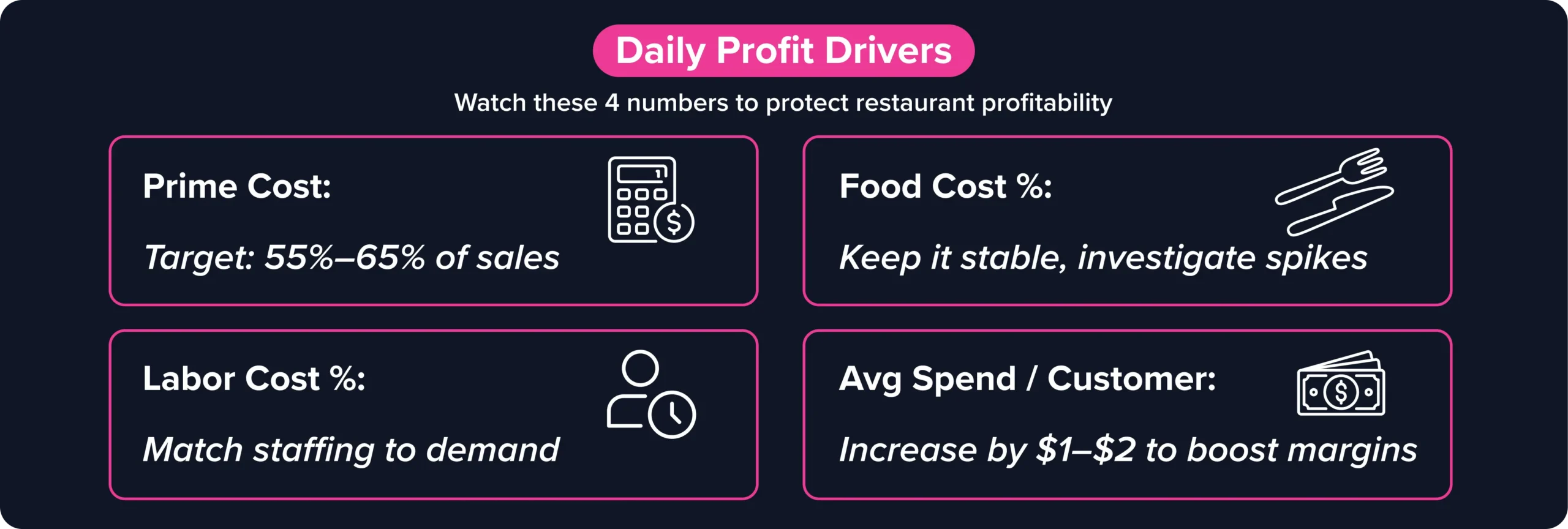
The most successful operators are glued to a few key metrics daily. These are your early warning systems for potential dips in restaurant profitability. Tracking these diligently and acting swiftly when they deviate is crucial.
Prime Cost
Prime cost is arguably your most critical control metric. It’s the combined total of your cost of goods sold (COGS) and your total labor costs.
Formula:
Prime Cost = Food + Beverage Cost (COGS) + Total Labor (wages + taxes + benefits)
Prime Cost % = (Prime Cost / Total Sales) × 100
While targets can vary by restaurant concept, many full-service establishments aim for a prime cost between 55%–65%. Fast-casual concepts typically target lower percentages. If your prime cost begins to creep upwards, your restaurant profitability will inevitably follow.
Food Cost Percentage
This metric tells you how much your ingredients cost relative to your food sales.
Formula:
Food Cost % = (Food Cost for period / Food Sales for period) × 100
It’s best calculated daily or weekly, using actual sales data and inventory adjustments. A sudden spike could indicate issues with waste, theft, portion creep, or a sudden supplier price increase. A consistent upward trend demands immediate attention.
Labor Cost Percentage
This represents your total labor expenses as a proportion of your total sales.
Formula:
Labor Cost % = (Total Labor Cost / Total Sales) × 100
Labor should be scheduled to meet anticipated demand, not inflated out of fear. It’s beneficial to track labor by daypart (e.g., lunch vs. dinner) and measure productivity, often done by looking at sales per labor hour.
Average Spend Per Customer
Also known as the average check or per-person average, this simple figure reveals how much each guest spends on average.
Formula:
Average Spend (Average Check) = Total Sales / Number of Covers
Even modest increases in average spend—achieved through smart suggestive selling, bundled offers, or slight menu repricing—can compound rapidly and directly boost restaurant profitability with minimal to no incremental cost.
Why Most Restaurants Struggle to Stay Profitable
Restaurants rarely lose profitability because of one big mistake. More often, it’s a series of small issues that build up over time. A little extra waste here, an unexpected invoice there, a few labor shifts that don’t match business levels, and suddenly margins are much tighter than they should be.
Some of the most common culprits include:
- Waiting too long to react. If you’re only reviewing performance after monthly reports come out, you’ve probably missed weeks of opportunities to correct the problem.
- Loose inventory habits. Inconsistent counts, over-portioning, and food waste can quietly increase food costs without anyone noticing right away.
- Purchasing without visibility. Working with multiple suppliers is normal, but without a clear process it’s easy to miss price increases or overlook better buying opportunities.
- Scheduling that doesn’t match demand. Too many people on a slow Tuesday or not enough staff during dinner service both end up costing money in different ways.
- Menu items that don’t earn their spot. A dish can be popular and still hurt profitability if the food cost, prep time, or labor required outweighs the return.
The encouraging part is that most of these problems can be corrected. Small operational improvements made consistently tend to have a much bigger impact than one major overhaul.
What to Fix First When Your Margins Are Low
When margins start slipping, it’s tempting to change everything at once. That usually creates more confusion than progress. Instead, focus on a few areas where you can quickly confirm what’s happening and take action.
A good place to start is by:
- Looking at yesterday’s sales alongside food usage and labor hours to see whether anything feels out of line.
- Reviewing your highest-cost menu items to make sure recipes, portions, and pricing still make sense.
- Comparing recent supplier invoices with previous orders. Even small price increases across several products can have a noticeable impact over time.
- Checking upcoming schedules against expected sales instead of simply repeating last week’s staffing plan.
- Talking with the kitchen team about waste. Reinforcing portion consistency, proper storage, and First In, First Out (FIFO) practices can produce savings surprisingly quickly.
Don’t worry about solving every profitability challenge in a single week. Start with the areas you can measure, make a few meaningful improvements, and build from there. Those small wins often create the momentum needed for larger operational changes.
How to Control Food Costs Without Cutting Quality
Ask five restaurant owners where food costs get out of hand, and you’ll probably hear five different answers. One blames waste. Another points to suppliers. Someone else swears it’s portion sizes.
The truth is, they’re usually all right.
Food costs rarely jump because of one big decision. It’s the little things that pile up over weeks. A few extra ounces on every plate. Product that expires before anyone notices. An invoice that’s a little higher than last month’s and never gets questioned.
That’s where I’d start looking.
Improve Portion Control and Reduce Waste
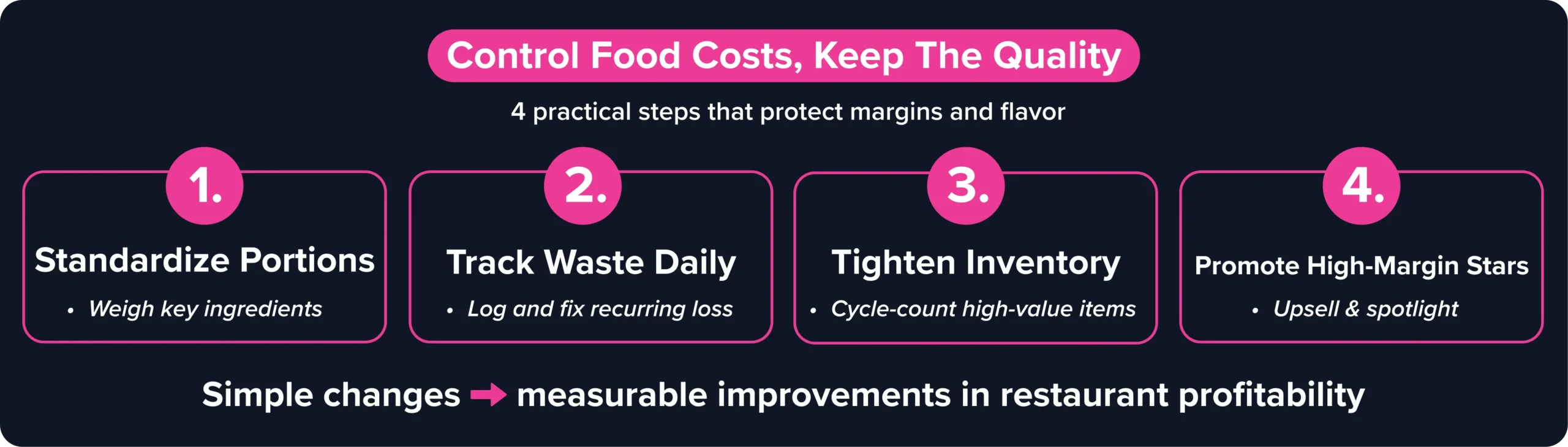
If two cooks plate the same dish and one uses six ounces of chicken while the other uses seven, guests probably won’t notice. Your food cost will.
Most kitchens already have recipes. The challenge is getting everyone to follow them the same way every shift. Portion tools help, but so does spending a few minutes watching plates come off the line instead of assuming everything is consistent.
Waste deserves the same attention. Keep a running list for a week. You’ll usually find one or two products showing up over and over, and that’s where the biggest opportunity is.
Strengthen Inventory Tracking and Ordering
Inventory problems don’t always look like missing product. Sometimes they show up as over-ordering because no one realized there were already four cases sitting in the walk-in.
That’s why shorter, more frequent counts usually tell you more than waiting for a month-end inventory. Pair that with realistic par levels, and ordering becomes a lot less reactive.
One habit that’s easy to overlook is checking deliveries while the truck is still there. Pricing mistakes and short shipments happen. Catching them immediately is a lot easier than trying to fix them later.
Optimize Menu Mix Toward Higher-Margin Items
Every restaurant has a few menu items that everyone loves. That doesn’t automatically make them profitable.
Every so often, it’s worth asking a simple question: if we introduced this item today, would we still put it on the menu?
Sometimes the answer is yes. Sometimes rising ingredient costs or labor have changed the math. Those are the dishes worth revisiting, whether that means adjusting the price, simplifying the recipe, or replacing them with something guests enjoy just as much.
Monitor Supplier Pricing and Cost Changes
Supplier pricing changes all the time, even when the increases seem small.
Compare invoices regularly instead of assuming prices haven’t moved. A few cents more on one product isn’t a big deal, but small increases across dozens of items can quietly take thousands of dollars out of your margins over the course of a year.
How to Manage Labor Costs Without Hurting Service
Labor is one of the largest expenses for most restaurants, but cutting hours isn’t always the answer. If service slows down or your team becomes overwhelmed, those labor savings can disappear pretty quickly. The better approach is making sure you have the right people scheduled at the right times.

Schedule Based on Actual Demand Patterns
No two weeks look exactly the same, but most restaurants have patterns. Maybe Thursday dinner is consistently busy, or Sundays tend to be slower than expected.
Looking back at your sales and guest counts can help you build schedules that reflect how the business actually operates instead of relying on habit. It’s also worth making adjustments for holidays, local events, or even weather when you know they’ll affect traffic.
Improve Staff Productivity During Peak and Slow Hours
Busy shifts usually run better when everyone knows what they’re responsible for before the rush begins. Clear expectations help the team stay focused and keep service moving.
Slower periods can be just as valuable. Use that time to prep ingredients, restock stations, clean equipment, or tackle projects that are difficult to squeeze in during service. Making good use of slower hours often makes the next rush much easier to manage.
Cross-Train Staff to Reduce Overstaffing
Cross-training gives managers more flexibility without automatically adding more labor.
A team member who can comfortably work in more than one role makes it easier to adjust when business changes throughout the day. Whether someone jumps from hosting to serving or helps another station in the kitchen, that flexibility keeps operations moving without always needing extra people on the schedule.
Reduce Overtime Without Impacting Operations
Overtime isn’t always avoidable, but it shouldn’t become part of the weekly routine.
Checking employee hours before payroll is finalized gives managers a chance to rebalance schedules if needed. Sometimes moving a few shifts around is enough to prevent unnecessary overtime while still keeping every position covered. The goal is to stay properly staffed without letting labor costs quietly creep higher each week.
How to Increase Sales Without Increasing Costs
Growing sales doesn’t always require a bigger marketing budget or opening another location. Sometimes the easiest wins come from making better use of what you already have. Small changes to pricing, menu strategy, and the guest experience can increase revenue without adding much to your operating costs.
Price Your Menu Based on Margins
It’s easy to keep pricing where it’s always been, especially if you’re worried about guest reactions. The problem is that ingredient and labor costs don’t stay the same.
Review your menu regularly and make sure pricing reflects what each item actually costs to serve. In some cases, even a modest adjustment on your strongest-selling dishes can improve margins without changing ordering habits.
Increase Average Order Value
Getting guests to spend a little more during each visit is often easier than finding brand-new customers.
Servers can help by making thoughtful recommendations instead of simply taking orders. A dessert to share, a premium beverage, or an upgraded side can naturally increase the check without making guests feel pressured.
Bundles and meal combinations are another simple way to increase average order value while giving customers the feeling they’re getting more for their money.
Drive Repeat Customers
A guest who comes back every few weeks is usually more valuable than someone who visits once and never returns.
People come back because they know what to expect. Consistent food, friendly service, and a smooth experience matter just as much as loyalty programs or promotional emails.
Staying connected after the visit through email or text can help, but earning repeat business still starts with giving guests a reason to come back.
Where Restaurants Commonly Lose Money
Most restaurants know food and labor are their biggest expenses. The harder part is spotting the smaller issues that slowly eat away at profits without attracting much attention.
Here are a few places those losses tend to show up:
- Product that gets thrown away because it wasn’t used in time or wasn’t tracked properly.
- Supplier invoices with pricing changes, billing mistakes, or missing credits that go unnoticed.
- Overtime that becomes routine instead of the exception.
- Popular menu items that generate plenty of sales but leave very little profit once food and labor are factored in.
- Waiting until month-end reports to discover problems that started weeks earlier.
- Discounts, comps, or voids that aren’t reviewed consistently.
- Slow service or operational bottlenecks that reduce table turns and discourage repeat visits.
None of these issues seem especially significant on their own. Together, though, they can have a meaningful impact on restaurant profitability.
Using Data to Improve Restaurant Profitability
The best decisions usually come from good information, not gut instinct alone. Looking at your numbers consistently makes it easier to catch trends before they turn into expensive problems.
A few reports are worth reviewing on a regular basis.
Keep an eye on daily sales to understand when business is strongest and which menu items guests order most often.
Review your food cost variance to see whether actual food costs are lining up with your recipes and inventory. Large swings usually point to waste, portion inconsistencies, or inventory issues that deserve another look.
Labor reports can also tell an important story. Comparing labor hours with sales often shows whether staffing levels match the business coming through the door.
Finally, spend some time reviewing menu performance. The goal isn’t simply to identify your best-selling items. It’s to understand which dishes are actually contributing the most to your bottom line.
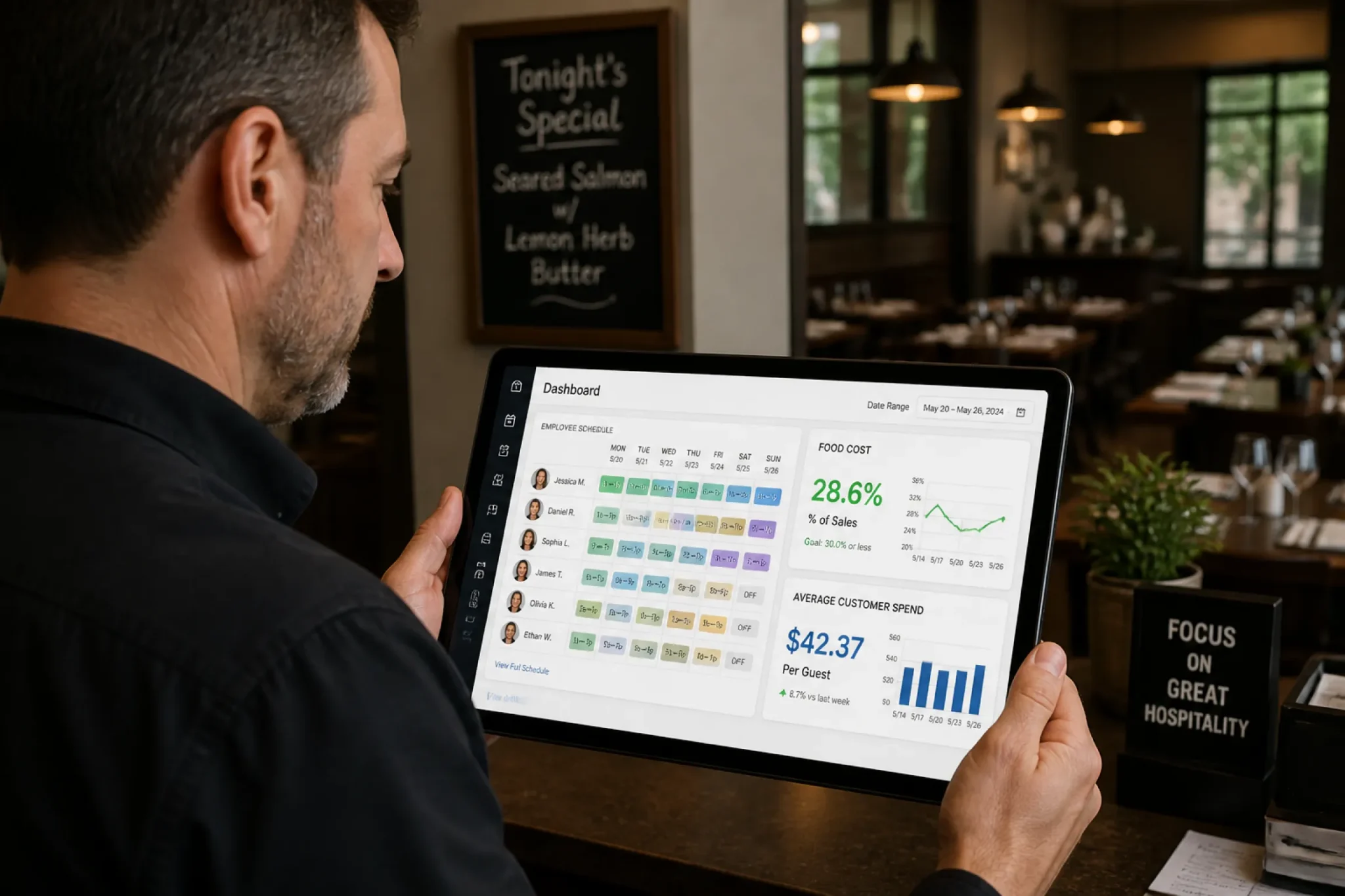
You don’t need dozens of reports to stay on top of profitability. A simple dashboard that tracks sales, food cost, labor, and guest traffic is often enough to help managers make better decisions throughout the week.
Building Long-Term Restaurant Profitability with Buyers Edge Platform
Improving restaurant profitability isn’t about finding one big fix. It’s about making smarter decisions consistently, whether that’s controlling purchasing costs, keeping labor in line, or understanding where your money is going each week.
That’s where Buyers Edge Platform can help. From digital procurement and purchasing insights to technology that gives operators better visibility into food costs, supplier pricing, and day-to-day performance, the goal is to make it easier to protect margins without adding unnecessary complexity.
If you’re looking for practical ways to improve restaurant profitability, we’re here to help. Let’s talk about how Buyers Edge Platform can support your operation. Click here to contact us today.
FAQs
What is a good profit margin for a restaurant?
There’s no single number that works for every restaurant, but many operators aim for a net profit margin somewhere between 5% and 10% after expenses. The right target depends on your concept, labor model, and operating costs. Quick-service restaurants often have different margins than full-service operations. The important part is tracking your numbers consistently so you can spot changes before they become bigger problems.
How can I increase profit margins quickly?
If you’re looking for quick wins, start with the areas you can control right away. Review portion sizes, compare recent supplier invoices for unexpected price increases, and take another look at employee schedules to make sure they match business levels. Even small menu price adjustments or a few successful upselling opportunities can improve margins without dramatically changing your operation.
What is prime cost in a restaurant?
Prime cost combines two of your biggest expenses: cost of goods sold (COGS) and labor. Together, those categories account for a large share of what most restaurants spend every day.
Keeping prime cost under control gives you a much clearer picture of how efficiently the restaurant is operating and where you may have opportunities to improve profitability.
How do I reduce food costs without lowering quality?
Lowering food costs doesn’t have to mean changing recipes or buying lower-quality ingredients. Many restaurants see better results simply by improving consistency.
Watching portion sizes, reducing food waste, reviewing inventory more often, and keeping a close eye on supplier pricing can all make a meaningful difference while delivering the same experience guests expect.
How can restaurants control labor costs effectively?
Managing labor starts with understanding when you actually need people on the schedule. Looking at sales trends, adjusting staffing for expected demand, and cross-training employees gives managers more flexibility without sacrificing service.
Checking labor reports regularly also helps catch overtime or scheduling patterns before they become expensive habits.
What impacts restaurant profitability the most?
Restaurant profitability usually comes down to how well the basics are managed. Food costs, labor, purchasing, pricing, and day-to-day operations all play a role.
Restaurants that consistently review their numbers, respond quickly to changes, and look for small improvements throughout the operation are often in a much stronger position than those waiting until the end of the month to see how things turned out.