
How is technology in the hospitality industry reshaping the way hotels, restaurants, and multi-unit operators deliver service and protect their margins?
The hospitality business has always been about people. A warm welcome at the front desk. A server who remembers your favorite cocktail. A manager who checks in at just the right moment.
But behind those moments? There is a growing digital engine making it all possible.
Technology in the hospitality industry is no longer a “nice to have.” It’s the infrastructure that supports faster service, smarter hospitality purchasing, stronger margins, and better guest experiences. From hotels and restaurants to senior living communities and multi-unit concepts, digital tools are reshaping how hospitality businesses operate every single day.
The operators who treat hospitality technology as a strategic investment rather than a back-office expense are the ones gaining ground.
Why Technology is Now Essential in Hospitality
Evolve Guest Expectations and Digital-First Behavior
Guests don’t just compare you to the restaurant down the street anymore. They compare you to Amazon, Uber, and every seamless digital experience they’ve had this week.
They expect:
- Online booking in seconds
- Mobile ordering without friction
- Instant payment options
- Real-time updates
- Personalized recommendations
If a guest can reserve a hotel room from their phone in under a minute but can’t split a dinner check without confusion, that gap becomes noticeable.
Digital transformation in hospitality is largely driven by this shift in guest behavior. Today’s guests are digital-first. If the experience feels outdated, they notice quickly.
Shift Toward Technology-Enabled Service Models
Self-service kiosks. QR code menus. Mobile room keys. Automated check-in.
These aren’t replacing service. They are supporting it.
Technology-enabled service models allow staff to focus on high-value interactions instead of transactional tasks. Instead of manually processing payments, a team member can focus on upselling dessert or resolving a guest concern.
The right hospitality systems elevate service rather than dilute it.
Improve Efficiency Without Losing the Human Touch
There’s a misconception that automation removes warmth. In reality, it removes friction.
When repetitive tasks are automated, managers spend less time chasing invoices and more time coaching staff. Servers spend less time running credit cards and more time reading the table.
Operational software should enhance hospitality, not sterilize it.
Rising Operational Complexity Across Locations
Multi-unit hospitality brands face a different level of complexity:
- Multiple suppliers
- Varying labor markets
- Fluctuating food and commodity costs
- Location-specific performance differences
Without centralized visibility, decision-making becomes reactive.
Technology platforms that consolidate reporting, purchasing data, and performance metrics allow operators to see what’s happening across all locations in real time instead of waiting for end-of-month surprises.
Demand for Speed, Accuracy, and Consistency
Speed matters. Accuracy matters more.
A wrong order. A mis-keyed invoice. A scheduling mistake that leads to overtime. These small errors compound.
Modern hospitality technology reduces manual input, standardizes processes, and creates consistency across teams. That consistency protects both brand reputation and profit margins.
Where Technology Is Used Across Hospitality Operations
Digital solutions now touch nearly every part of hospitality operations.

Reservations, Booking, and Channel Management Systems
Online booking engines, integrated channel managers, and centralized reservation systems allow properties and restaurants to manage availability across multiple platforms.
Instead of juggling phone calls, OTAs, and manual calendars, operators gain synchronized visibility into occupancy, reservations, and capacity.
Ordering, Payments, and Point-of-Sale Technology
POS systems today do more than just handle sales. They:
- Keep track of sales by item
- Keep an eye on how well the menu works
- Link to systems for keeping track of stock
- Connect to accounting software
People now expect contactless payments and mobile ordering.
Workforce Scheduling, Labor, and Staff Management
Labor is one of the largest controllable costs in hospitality.
Scheduling software helps managers:
- Forecast labor needs based on demand
- Reduce overtime
- Balance staffing levels
- Track productivity
Instead of building schedules on gut instinct, leaders can align staffing with actual sales data.
Inventory, Procurement, and Supply Chain Systems
Platforms for inventory management and procurement bring order to one of the most unstable parts of the hospitality industry.
With integrated systems, operators can:
- Keep an eye on inventory levels in real time
- Keep an eye on changes in price
- Make ordering automatic
- Check that the invoice is correct
- Find out what people are buying
This is where operational technology directly protects profits. Being able to see how much money is being spent, how well suppliers are doing, and whether contracts are being followed cuts down on waste and stops people from paying too much.
Customer Data, Loyalty, and Relationship Platforms
Guest data is one of the most valuable assets a hospitality business owns.
CRM and loyalty platforms help brands:
- Track guest preferences
- Reward repeat visits
- Personalize marketing
- Segment audiences
Instead of sending generic promotions, operators can send targeted offers that reflect actual behavior.
How Technology Improves the Guest Experience
Faster Service and Reduced Wait Times
When systems are connected, service flows more smoothly.
A table orders through a handheld device. The kitchen receives it instantly. Payment is processed at the table. No bottlenecks. No extra steps.
Guests feel the efficiency even if they don’t see the technology behind it.
Personalized Guest Interactions and Offers
Imagine a returning hotel guest who prefers late checkout and feather pillows. Or a restaurant regular who always orders a specific wine.
When data is accessible, personalization becomes natural instead of accidental.
Consistent Service Across Locations
For multi-location brands, consistency builds trust.
Centralized systems ensure:
- Pricing is standardized
- Recipes are followed
- Promotions are synchronized
- Reporting is aligned
A guest in Chicago should have a similar experience to a guest in Dallas. Technology helps maintain that consistency.
Seamless Communication Before, During, and After Visits
Automated confirmations. Real-time updates. Post-visit surveys. Loyalty follow-ups.
Technology extends hospitality beyond the four walls of a location.
Using Technology to Improve Daily Hospitality Operations
Automating Manual and Repetitive Processes
Invoice entry. Inventory counts. Report consolidation. Labor calculations.
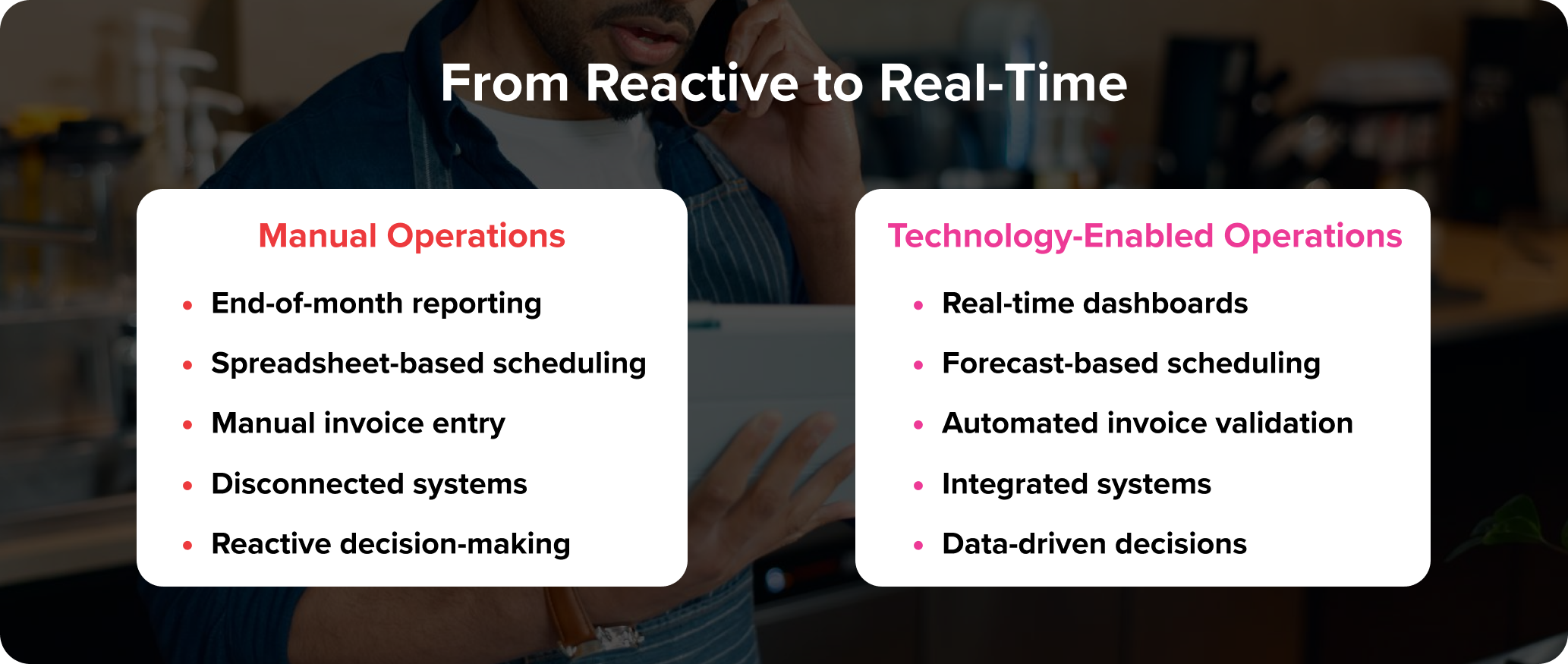
Automation cuts down on mistakes made by people and makes it easier for managers to do their jobs.
Real-Time Visibility Into Costs, Margins, and Performance
Waiting until the end of the month to review performance is risky.
Real-time dashboards provide:
- Daily sales comparisons
- Food cost tracking
- Labor percentage monitoring
- Supplier price changes
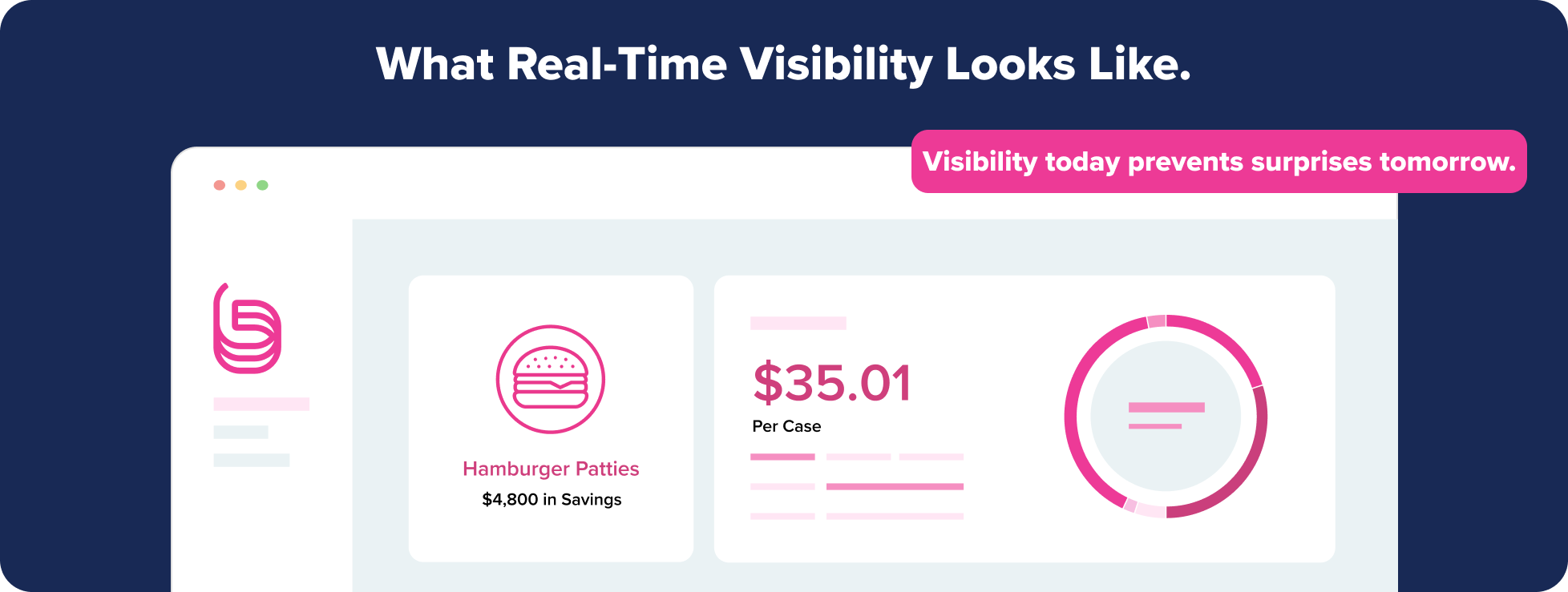
Operators can course-correct quickly instead of reacting weeks later.
Data-Driven Pricing, Forecasting, and Planning
Technology allows hospitality leaders to analyze historical trends and forecast demand.
Dynamic pricing strategies, demand forecasting, and predictive analytics improve planning and reduce waste.
Better Coordination Between Front-of-House and Back-of-House
When POS, inventory, and procurement systems are integrated, front-of-house and back-of-house teams operate in sync.
Menu items that are 86’d update automatically. Inventory levels inform ordering. Sales trends inform prep schedules.
The entire operation moves as one system rather than separate silos.
How to Choose Technology for a Hospitality Business
Aligning Technology Investments With Business Goals
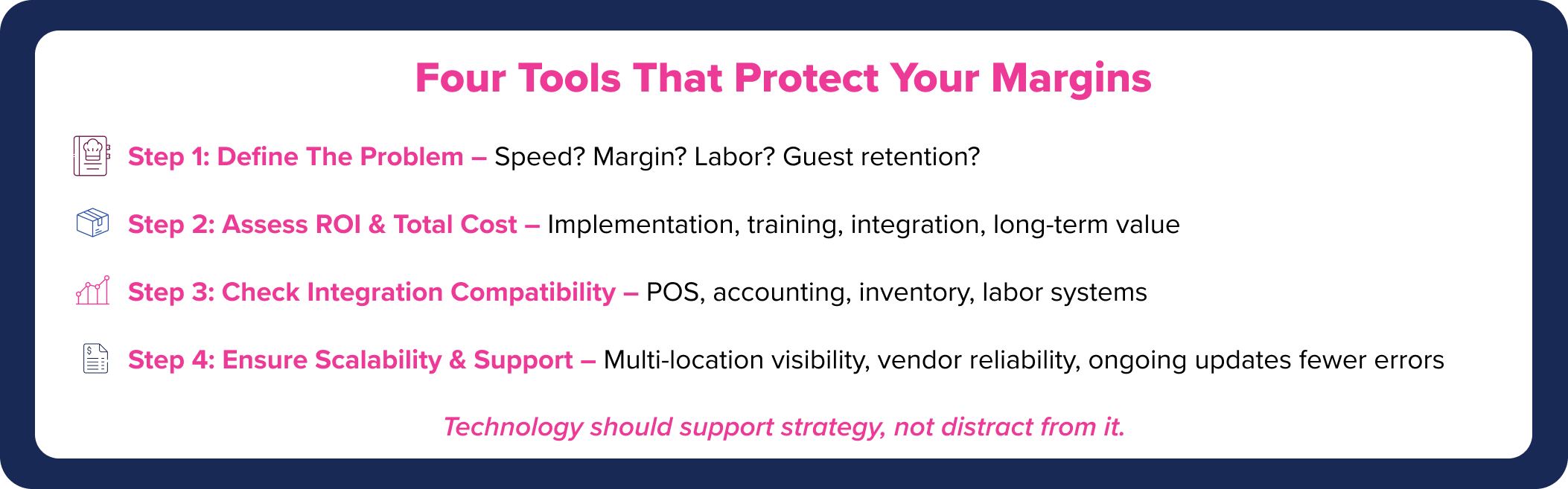
Before purchasing new software, operators should ask:
What problem are we solving?
Is this about speed? Margin protection? Labor control? Guest retention?
Technology should support strategy, not distract from it.
Measuring ROI and Total Cost of Ownership
Upfront cost is only part of the equation.
Consider:
- Implementation time
- Training requirements
- Ongoing subscription fees
- Integration expenses
- Long-term value
The right platform should produce measurable operational or financial improvements.
Ensuring Integration With Existing Systems
Disconnected systems create more work.
Hospitality software should integrate with:
- POS
- Accounting
- Inventory
- Procurement
- Labor systems
Integration prevents data silos and duplicated effort.
Scalability for Multi-Location and Enterprise Operations
A solution that works for one location must also support growth.
Enterprise-ready systems allow centralized reporting, role-based permissions, and multi-unit visibility.
Vendor Reliability, Support, and Long-Term Partnership
Technology providers should function as partners.
Look for:
- Strong customer support
- Ongoing updates
- Industry expertise
- Transparent pricing
Hospitality technology is not a one-time purchase. It’s an evolving relationship.
Challenges of Adopting Hospitality Technology
Budget Constraints and Implementation Costs
Technology requires investment. Smaller operators may hesitate due to upfront expenses.
However, many digital tools now offer scalable pricing models that make adoption more accessible.
Staff Training and Change Management
Even the best system fails without adoption.
Clear training, leadership buy-in, and phased rollouts reduce resistance and improve outcomes.
Tool Overload and Fragmented Systems
Too many disconnected tools create confusion.
Operators should prioritize consolidation and integration rather than stacking multiple single-purpose apps.
Data Security, Privacy, and Compliance Risks
With more data comes greater responsibility.
Secure systems, strong access controls, and compliance with privacy regulations are critical.
The Future of Technology in the Hospitality Industry
Artificial intelligence, predictive analytics, automation, and integrated procurement platforms will continue to shape hospitality operations.
The future is not about replacing people. It is about empowering them with better tools.
Operators who embrace digital innovation thoughtfully will gain:
- Greater margin control
- Improved guest loyalty
- Smarter forecasting
- Stronger supply chain resilience
Hospitality will always be human. Technology simply strengthens the systems behind it.
Final Thoughts
Technology in hospitality is no longer experimental. It is foundational.
From booking systems and POS platforms to inventory software and data analytics tools, digital transformation is reshaping how hospitality businesses operate, scale, and protect profitability.
The goal is not to become a tech company. It is to use hospitality technology strategically so teams can deliver better service, operate more efficiently, and grow with confidence.
When implemented with purpose, technology becomes one of the most powerful competitive advantages in the industry.
Frequently Asked Questions
How is technology used in the hospitality industry today?
Technology supports nearly every function in hospitality, including reservations, POS systems, labor scheduling, inventory management, procurement, loyalty programs, and financial reporting. Digital tools provide real-time visibility and operational control across locations.
Does technology replace human roles in hospitality?
No. Technology reduces repetitive administrative tasks and supports decision-making. It allows teams to focus more on guest engagement, service quality, and relationship-building rather than manual processes.
Can small and mid-sized hospitality businesses afford technology?
Yes. Many hospitality software providers offer scalable pricing models. Even small operators can implement core systems like POS integration, inventory tracking, and labor scheduling to improve efficiency and protect margins.
What technology should hospitality businesses prioritize first?
Businesses should prioritize systems that provide immediate visibility into revenue and costs. POS integration, inventory management, and labor scheduling tools often deliver the fastest operational impact.
What are the biggest technology challenges for multi-location hospitality brands?
The biggest challenges include system integration, maintaining consistent data across locations, managing user access, ensuring staff adoption, and protecting data security while scaling operations.
Click here to see how the right technology strategy can help your hospitality business operate smarter, scale confidently, and protect your margins.
Want to see the biggest hospitality industry challenges operators are facing today and how to solve them? Read our guide here.