
Written by Experts from Restaurant Partners Procurement
Restaurant supply chains are more interconnected and more vulnerable than ever. Across the Buyers Edge Platform network, operators are navigating these challenges in real time, from pricing pressure to operational disruption.
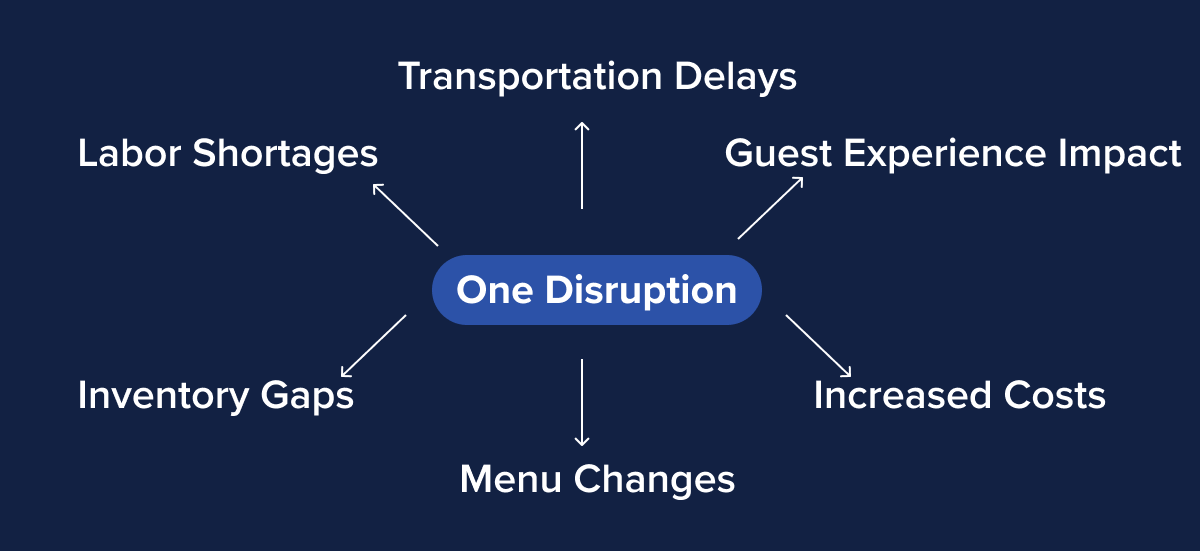
These restaurant supply chain risks are becoming more complex and harder to predict. What makes today’s environment especially challenging is that these risks are no longer isolated. A disruption in one area, like labor or transportation, can quickly cascade into inventory shortages, menu changes, and increased costs across the operation.
Understanding where these risks exist is the first step toward building a more resilient and adaptable supply chain.
Why Supply Chain Risk Matters More Than Ever
For restaurant operators, supply chain disruptions don’t just impact sourcing—they directly affect profitability, consistency, and the guest experience.
From unexpected price spikes to missed deliveries, even small disruptions can force last-minute decisions that impact food quality, labor efficiency, and margins.
Managing restaurant supply chain risks is now a critical part of protecting margins and maintaining operational consistency. As a result, operators are placing a greater focus on visibility, supplier diversification, and procurement strategy to stay ahead of ongoing volatility.
Here is a comprehensive list of the top 10 supply chain risks facing restaurants today:
These restaurant supply chain risks are shaping how operators approach sourcing, menu planning, and overall business strategy.
1. Food Price Volatility and Inflation
Rapid and unpredictable swings in commodity prices for key ingredients (e.g., beef, produce, dairy, grains, oils) are a major concern. This impacts profitability, forces frequent menu price adjustments, and is driven by global inflation, weather events, geopolitical tensions, and energy costs. For many operators, this translates to tighter margins and more frequent menu engineering decisions just to stay profitable.
2. Labor Shortages Across the Supply Chain
Workforce gaps are prevalent from agricultural production and food processing to trucking and restaurant operations. This reduces capacity, increases labor costs, and contributes to delivery delays. Labor shortages upstream can also reduce production output, limiting availability and increasing competition for key ingredients.
3. Transportation and Logistics Disruptions
Issues like port congestion, carrier capacity constraints, driver shortages, and infrastructure problems lead to delayed or missed deliveries. This is critical for perishable goods and can result in spoilage and increased operational costs. Even short delays can create ripple effects across prep schedules, inventory planning, and menu availability.
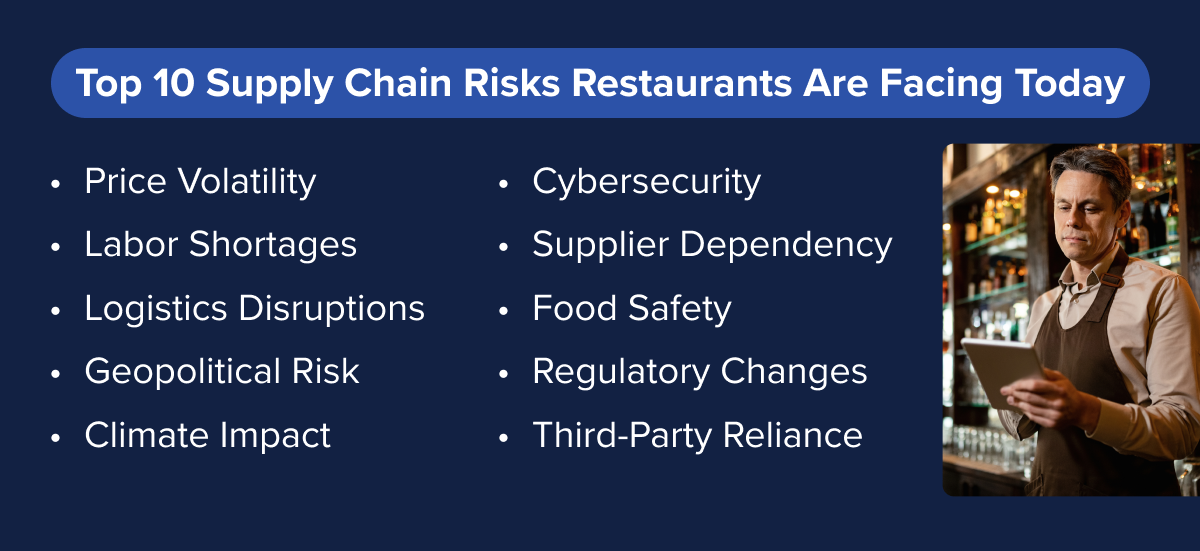
4. Geopolitical Instability and Trade Disruptions
Conflicts, trade tensions, tariffs, sanctions, and export restrictions disrupt global supply chains. This impacts the availability and cost of imported ingredients and supplies, forcing restaurants to reassess sourcing strategies. Operators sourcing imported products may face sudden cost increases or need to pivot to alternative suppliers with little notice.
5. Climate Change and Extreme Weather Events
Droughts, floods, heatwaves, and storms directly impact agricultural production, leading to ingredient shortages and price spikes. These events also disrupt transportation networks and can affect waterway access. Seasonal unpredictability is making it more difficult for operators to plan menus and forecast costs with confidence.
6. Cybersecurity Threats and Technology Failures
The increasing digitization of supply chains makes them vulnerable to ransomware attacks, data breaches, and system failures. Disruptions to ordering platforms, supplier management systems, or distributor portals can halt operations. As more operators rely on digital tools, system downtime can quickly interrupt ordering, receiving, and back-of-house workflows.
7. Supplier Unreliability and Single-Source Dependency
Relying on a limited number of suppliers or distributors creates vulnerability. Operational issues, bankruptcy, or disruptions at a key supplier can lead to sudden gaps in product availability, especially for unique or specialized items. This becomes especially risky for operators relying on proprietary or limited-source ingredients that are difficult to replace quickly.
8. Food Safety Incidents and Recalls
Contamination events (pathogens, allergens, foreign materials) or quality lapses can trigger recalls, force menu changes, and lead to reputational damage, liability exposure, and operational disruptions. Evolving regulations around traceability further complicates this. These incidents can also require rapid supplier changes and increased scrutiny across sourcing and compliance processes.
9. Regulatory Changes and Compliance Issues
Navigating evolving regulations related to food safety, import/export, labor practices, sustainability, and data privacy adds complexity and cost. Non-compliance can result in fines, recalls, and operational hurdles. Staying compliant often requires additional operational oversight and coordination across multiple teams and partners.
10. Third-Party Vendor and Technology Dependencies
Restaurants increasingly rely on third-party platforms for delivery, reservations, and other services. Disruptions at these partners or with critical software vendors can cascade, impacting sourcing, operations, and customer service. When these systems go down, operators can lose visibility into orders, inventory, and customer demand in real time.
How Operators Can Reduce Supply Chain Risk
While many of these risks are outside of an operator’s direct control, there are strategic steps that can help mitigate their impact.
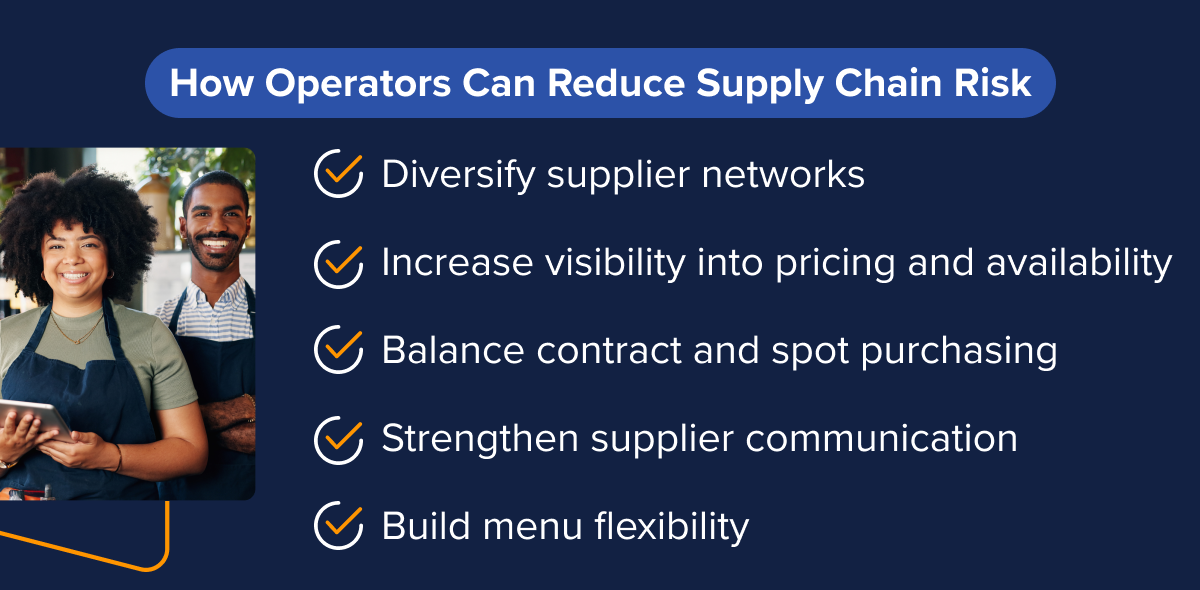
Reducing restaurant supply chain risks starts with building a more proactive and data-driven procurement approach, including:
- Diversifying supplier networks to reduce dependency on a single source
- Leveraging data and visibility tools to track pricing, availability, and performance
- Balancing procurement strategies, including contract buying and spot purchasing
- Strengthening communication with suppliers and distribution partners
- Building flexibility into menus to adapt to availability and cost changes
Building a More Resilient Supply Chain
Understanding these risks is only the first step. The real advantage comes from having the right procurement strategy, supplier network, and visibility in place to navigate them—helping operators build resilience into their supply chains and respond faster when disruptions occur.