
Written by Experts from Restaurant Partners Procurement
Choosing between long-term contracts vs spot buying is a critical decision that shapes how restaurants manage costs, control supply, and respond to changing market conditions.
In the fast-paced world of the restaurant industry, securing a steady supply of quality ingredients at a predictable cost is paramount. The decision of how to source ingredients – whether through long-term contracts or spot buying – can significantly impact a restaurant’s bottom line, operational efficiency, and ability to adapt to market changes. Understanding these nuances is crucial for making informed procurement decisions.
Across Buyers Edge Platform’s network, Restaurant Partners Procurement (RPP) experts regularly see operators navigating this decision, balancing cost control with flexibility in constantly shifting market conditions.
Understanding the Strategies
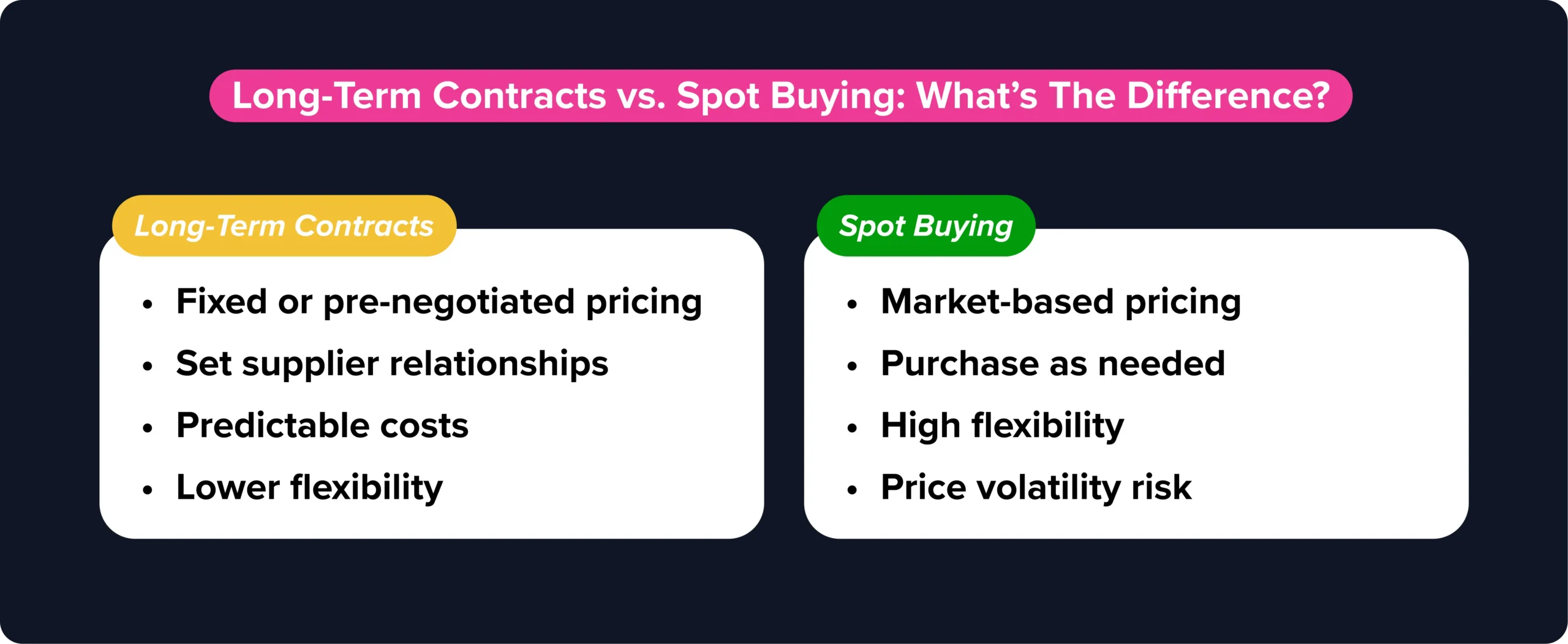
Long-term contracts involve agreements with suppliers for a set period, often with fixed or pre-negotiated pricing. This approach brings a valuable sense of stability to the often-volatile restaurant supply chain.
Spot buying involves purchasing ingredients on an as-needed basis at current market prices. This strategy offers a high degree of flexibility and the potential to capitalize on market dips.
The Case for Long-Term Contracts: Stability and Predictability
Pros:
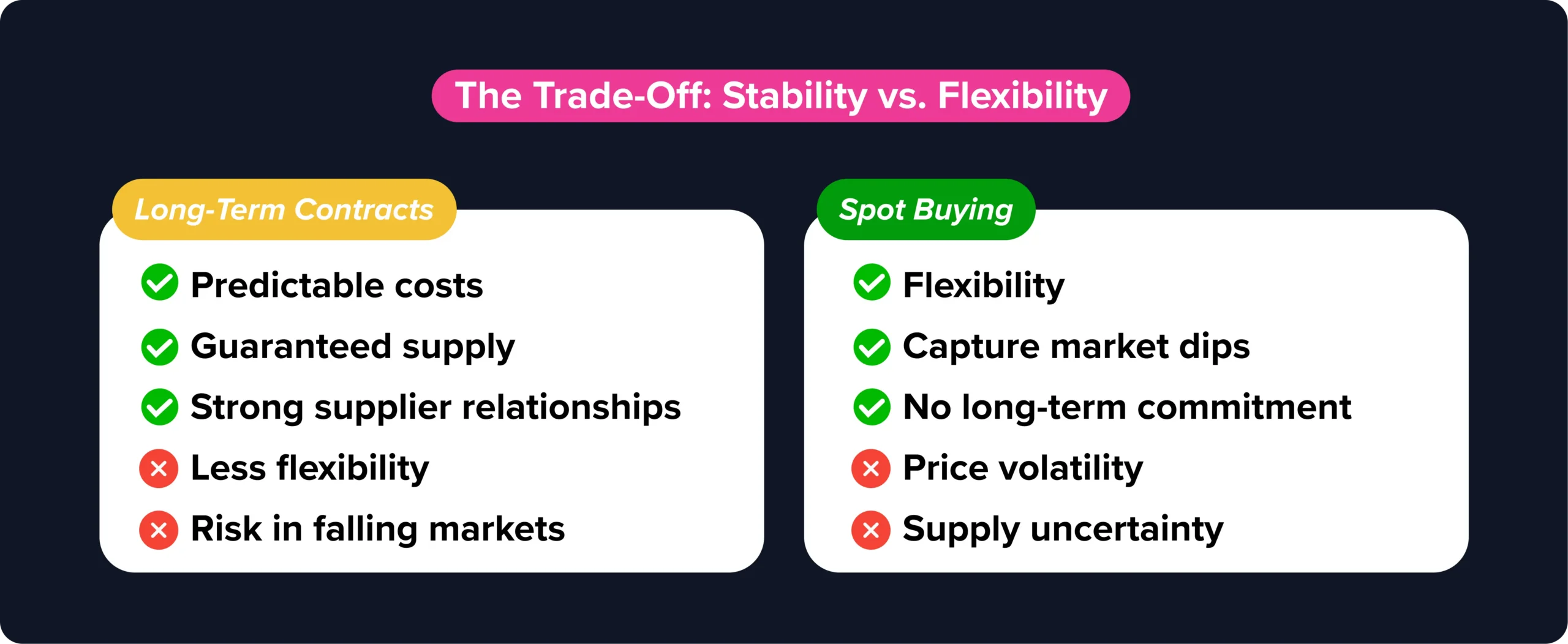
- Cost Predictability and Stability: Lock in prices, shielding the restaurant from market fluctuations and unexpected cost increases. This predictability is invaluable for budgeting and financial planning, especially during times of inflation. This level of predictability is especially valuable for operators managing tight margins and forecasting across multiple locations.
- Guaranteed Supply and Reliability: Ensure a consistent flow of essential ingredients, mitigating the risk of stockouts and supply chain disruptions. This is crucial for maintaining consistent menu offerings and customer satisfaction.
- Stronger Supplier Relationships: Committing to a supplier over an extended period fosters trust and can lead to better service, priority during shortages, and potential volume discounts.
- Reduced Administrative Burden: Negotiating one long-term agreement can be more efficient than frequent spot purchases, saving time and resources on procurement.
- Potential for Quality Assurance: Established relationships can lead to greater transparency regarding product quality and market insights from suppliers.
Cons:
- Reduced Flexibility: A loss of agility. If market prices drop significantly, restaurants locked into a contract might overpay. Similarly, if demand for a specific ingredient decreases, the restaurant may be bound by minimum volume requirements.
- Risk of Overpaying: In a falling market, contract pricing can become disadvantageous.
- Commitment to Potentially Unsatisfactory Terms: If supplier performance or market conditions change unfavorably, a long-term contract can be difficult to renegotiate or exit.
- Limited Opportunity for New Suppliers: A long-term commitment to one supplier might mean missing out on better deals or innovative products from emerging vendors.
The Appeal of Spot Buying: Agility and Opportunity
Pros:
- Maximum Flexibility: Adjust purchase quantities based on immediate demand or changing menu needs. This is ideal for businesses with unpredictable demand or those that frequently update their menus. For operators running seasonal menus or limited-time offers, this flexibility can create meaningful cost advantages when aimed right.
- Capitalize on Market Dips: Take advantage of temporary price reductions when market prices fall.
- No Long-Term Commitments: Avoid being locked into potentially unfavorable agreements and allow for easy switching between suppliers.
- Ideal for Irregular Needs: A practical solution for one-time projects, urgent orders, or sourcing items with short product life cycles.
- Improved Cash Flow: No upfront financial commitment for long-term inventory, which can aid cash flow management.
Cons:
- Price Volatility: The biggest risk is exposure to unpredictable price spikes, which can severely impact budgeting and profitability.
- Supply Chain Uncertainty: There’s no guarantee of availability, especially during peak demand periods or supply chain disruptions. This can lead to last-minute scrambling and potential menu changes.
- Less Favorable Pricing: Without the volume commitments of long-term contracts, spot buyers may not receive the best possible prices.
- Increased Administrative Work: Constantly sourcing and negotiating for individual purchases can be time-consuming and administratively intensive.
- Potential for Inconsistency: Relying on spot buys can lead to variations in product quality or availability from different suppliers over time.
Finding the Right Balance: A Hybrid Approach
For many operators, the decision isn’t simply long-term contracts vs spot buying – it’s how to use both strategically to protect margins while staying flexible in a changing market.
A hybrid procurement strategy allows restaurants to lock in stability where it matters most while still taking advantage of market opportunities as they arise.
In practice, that looks like:
Securing Core Ingredients
Use long-term contracts for staple ingredients with stable demand to ensure consistent supply and predictable costs.
Flexibility for Seasonal or Variable Items
Employ spot buying for seasonal produce, limited-time offers, or ingredients with fluctuating demand to capture cost savings and maintain menu dynamism.
Risk Mitigation
A diversified approach helps mitigate the risks associated with over-reliance on a single strategy.
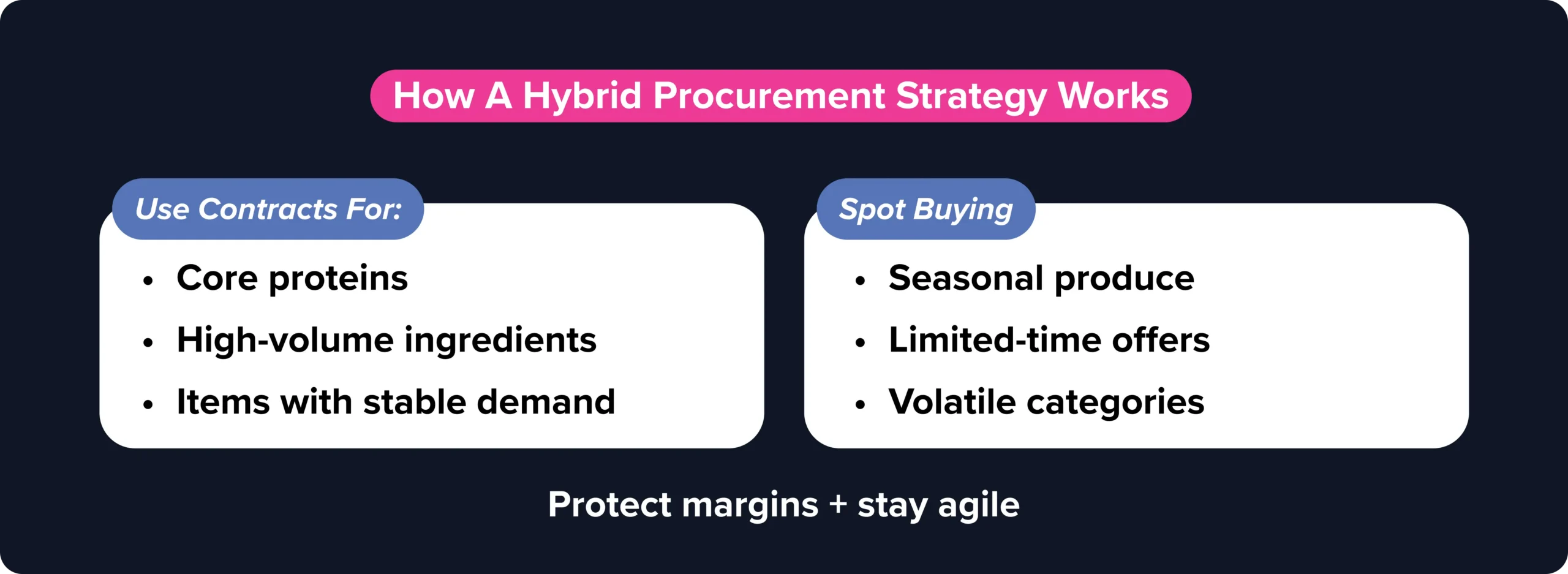
In practice, many of the most successful operators Restaurant Partners Procurement supports take a hybrid approach, locking in core items to protect margins while staying opportunistic on volatile or seasonal categories.
Ultimately, the decision between long-term contracts and spot buying, or a combination thereof, depends on a restaurant’s specific business model, risk tolerance, market conditions, and supply chain relationships. By carefully weighing the pros and cons, restaurateurs can craft a procurement strategy that supports both culinary excellence and financial success.
Build a procurement strategy that works as hard as your kitchen. Click here to connect with Restaurant Partners Procurement to see how the right balance can protect your margins and keep you ahead of the market.