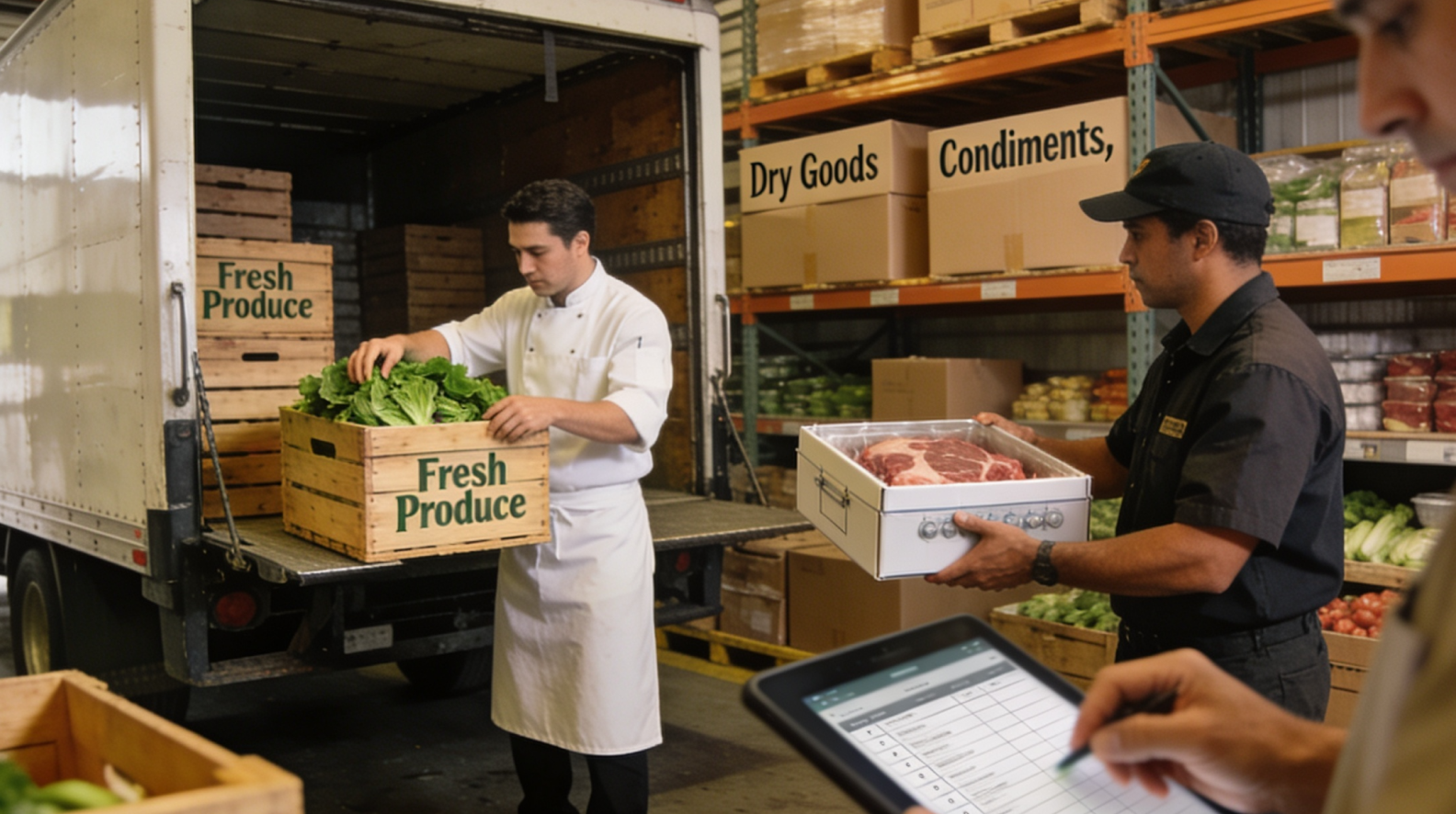
If you’re in food distribution, you don’t need a report to tell you things have gotten more complicated. You feel it every day. Orders shifting last minute. Suppliers running tight. Margins getting squeezed from every direction.
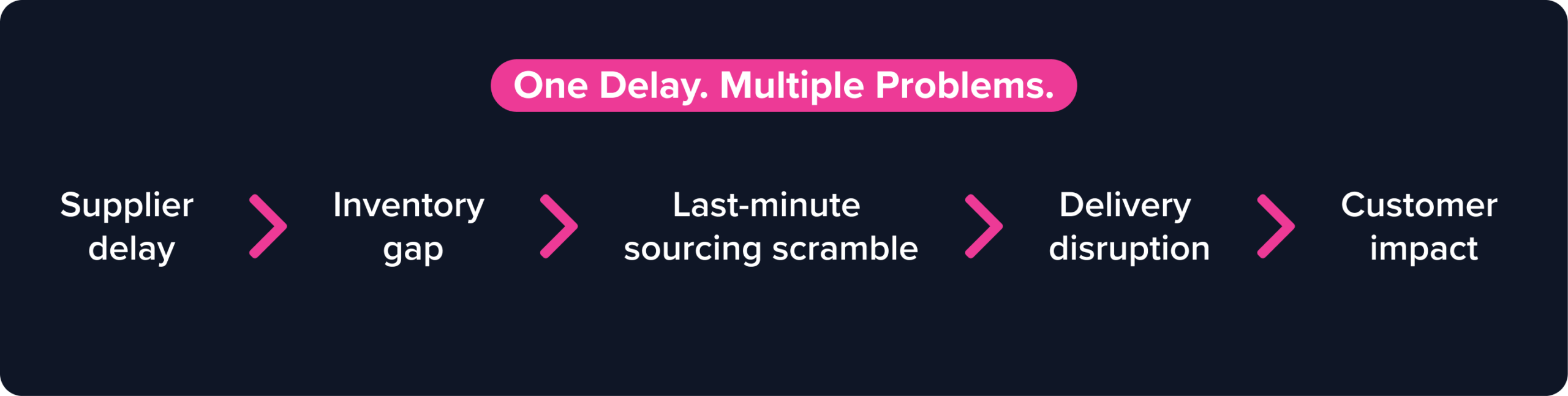
The reality is, most of today’s food distribution challenges aren’t isolated problems. They’re connected. A delay upstream turns into a stockout. A pricing change ripples into margin pressure. A missed delivery impacts your customer relationship.
Let’s break down the biggest challenges distributors are dealing with right now and, more importantly, how to stay ahead of them.
Supply Chain Disruptions
Supplier Delays, Shortages, and Inconsistent Supply
Some weeks it feels like you’re chasing product instead of moving it. Suppliers are dealing with their own labor gaps, raw material shortages, and production issues, which means what you ordered isn’t always what shows up.
This is one of the most persistent food distribution challenges distributors are navigating right now.
That inconsistency forces quick decisions. Do you wait it out, find an alternative, or risk disappointing your customer?
Multi-Vendor Dependencies and Sourcing Risks
Working with multiple suppliers sounds great on paper. In reality, it can feel like you’re constantly piecing things together. One vendor has the product but not the volume. Another has volume but pushes the delivery out a few extra days. Pricing never quite lines up the same way twice.
You end up spending more time coordinating than you’d like, just trying to keep everything moving.
And when one supplier drops the ball, it’s rarely contained to that one item. Now you’re calling around, trying to fill the gap, shifting orders, and hoping it doesn’t create a ripple effect across the rest of your deliveries.
Impact on Delivery Timelines and Customer Service
When supply is unpredictable, delivery timelines take the hit. And in this business, timing is everything. Restaurants and operators aren’t just buying product. They’re counting on consistency.
A missed or partial delivery doesn’t just impact one order. It can affect their entire day of service.
How to Improve Supply Chain Coordination and Fulfillment
The distributors staying ahead here are the ones leaning into visibility. Knowing what’s coming in, what’s at risk, and where alternatives exist makes a huge difference.
Stronger communication with suppliers, better forecasting, and having backup sourcing strategies in place can help you stay flexible without losing control.
Inventory Management Challenges
Overstocking, Stockouts, and Waste Risks
Walk any warehouse floor, and you’ll see the balancing act. Too much inventory ties up cash and increases waste. Too little, and you’re scrambling to fill orders.
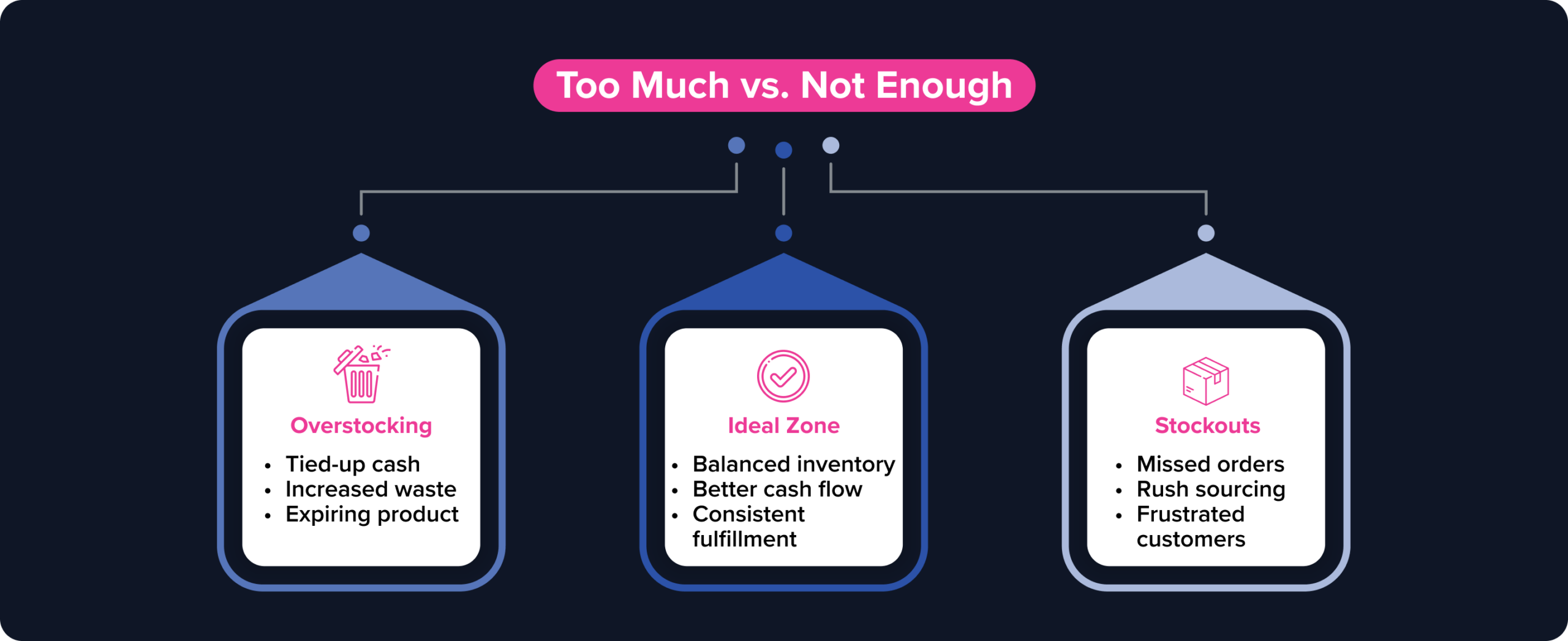
Managing that balance has become one of the more complex food distribution challenges, especially with demand constantly shifting.
Perishables raise the stakes even higher. There’s not much room for error.
Demand Fluctuations Across Customers and Locations
Demand isn’t steady. One location might spike while another slows down. Seasonal trends, promotions, and even weather can shift ordering patterns overnight.
Trying to keep inventory aligned across all that movement isn’t easy.
Shelf-Life Management and Product Rotation
It’s not just about having product. It’s about moving it in the right order. Miss rotation, and you’re looking at shrink, waste, and potential quality issues.
And once product quality slips, so does trust.
How to Improve Inventory Planning and Stock Availability
Better data leads to better decisions. Distributors who can track demand patterns and adjust purchasing accordingly are in a stronger position.
Simple things like tighter inventory tracking, clearer visibility into movement, and smarter reorder points can go a long way in reducing both waste and stockouts.
Temperature Control Challenges
Maintaining Cold Chain Across Storage and Transit
Everyone talks about cold chain like it’s a checkbox. In reality, it’s more like a relay race. Product moves from receiving to storage, onto a truck, then out to the customer, and every handoff is a chance for something to slip.
Maybe a door stays open too long during loading. Maybe a truck gets backed up at a stop. None of it seems like a big deal in the moment, but those little gaps add up.
Risks of Spoilage and Compliance Failures
When temperature drifts, you don’t always see it right away. That’s part of the problem. Product can look fine, get delivered, and only later does someone realize it didn’t hold up.
At that point, you’re not just dealing with shrink. You’re dealing with credits, potential compliance headaches, and a customer who’s now second-guessing your reliability.
Monitoring Conditions Across Warehouses and Transport
Most teams have some level of monitoring in place, but the real question is how quickly you can act on it. Getting an alert after the fact doesn’t help much.
The distributors who stay ahead here are the ones who can spot an issue while it’s happening, not hours later when the product is already compromised.=
How to Strengthen Cold Chain and Food Safety Controls
This is where tighter processes make a difference. Not just adding more tech, but making sure everyone on the floor knows exactly what good looks like and what to do when something’s off.
Simple habits help more than people think. Keeping doors closed, checking temps consistently, double-checking loads before they leave. When those basics are done right, everything else runs a lot smoother.
And from the customer side, that consistency matters. They might not see your process, but they notice when product shows up exactly how it should, every time.
Transportation and Delivery Challenges
Rising Fuel and Freight Costs
Fuel costs alone can shift your entire cost structure. Add in driver shortages and rising freight rates, and transportation becomes one of the toughest areas to manage.
Margins feel it immediately.
Inefficient Routing and Delivery Delays
Routes that look fine on paper don’t always hold up in the real world. Traffic, last-minute order changes, and scheduling gaps can throw off delivery windows fast.
And once delays start stacking, it’s hard to recover the day.
Vehicle Capacity and Utilization Issues
Running trucks under capacity wastes money. Overloading them creates risk. Finding the right balance is a constant challenge, especially when orders fluctuate.
How to Optimize Transportation and Delivery Efficiency
Smarter routing and better planning tools can help tighten delivery windows and reduce unnecessary miles.
Even small improvements in route efficiency or load optimization can have a noticeable impact on cost and service levels.
Pricing and Margin Challenges
Supplier Price Fluctuations and Cost Volatility
If you’ve been doing this for a while, you already know pricing rarely sits still. One week chicken is manageable, the next week it jumps and you’re trying to figure out how to explain it to your customers.
Cost volatility continues to be one of the toughest food distribution challenges when it comes to protecting margins.
Produce can swing just as fast depending on weather or supply.
Limited Visibility into Costs and Margins
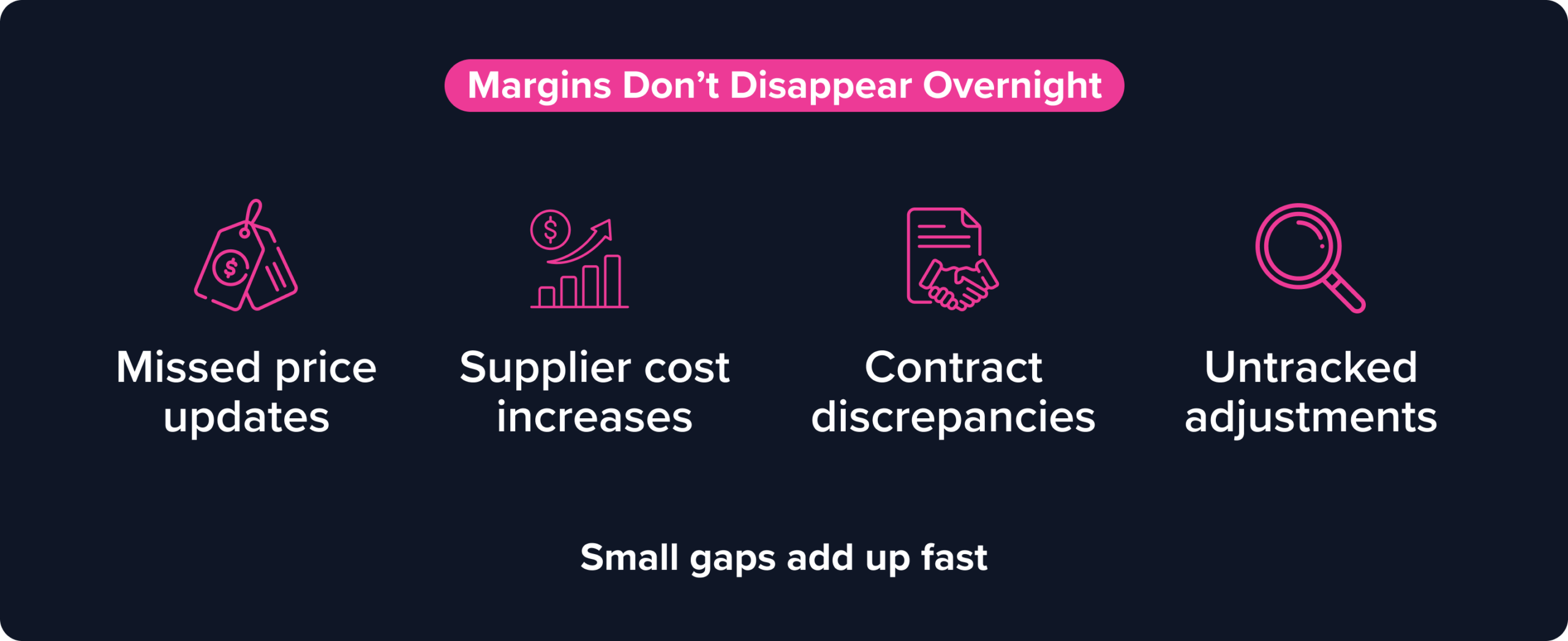
A lot of margin loss doesn’t happen all at once. It’s small stuff that slips through. A price change here, a missed update there, maybe a contract item that didn’t ring in the way you expected.
If you’re not looking at it closely, you don’t always catch it right away. You just feel it later when numbers aren’t where they should be.
Balancing Competitive Pricing with Profitability
Every customer wants a sharp price. That’s not new. The challenge is figuring out how far you can go without giving away too much margin.
Some days it feels like you’re walking a tightrope. You want to keep the business, but you also need to make sure the numbers still work on your end.
How to Improve Pricing Control and Margin Visibility
The distributors who handle this well usually have a tighter grip on their numbers day to day. They’re not waiting until the end of the month to see where things landed.
They’re checking movement, watching costs as they come in, and making small adjustments as they go. It’s not about overcomplicating it. It’s about staying close enough to the data that nothing drifts too far before you catch it.
Supplier Management Challenges
Supplier Fragmentation and Coordination Gaps
Working with a wide range of suppliers can create gaps in communication and coordination. Different systems, processes, and expectations don’t always line up.
That misalignment can slow things down.
Product Substitutions and Availability Constraints
When products aren’t available, substitutions become necessary. But not all substitutions are equal.
Managing those changes while keeping customers satisfied takes careful coordination.
Inconsistent Supply Across Locations
For distributors serving multiple regions, consistency becomes even more difficult. What’s available in one market may not be available in another.
That creates uneven service levels.
How to Improve Supplier Management and Availability
Stronger relationships and clearer communication with suppliers make a difference.
Having visibility into supplier performance, availability trends, and alternative options helps you respond faster when something changes.
Final Thoughts
Food distribution challenges aren’t going away anytime soon. If anything, they’re getting more complex.
But the distributors who stay competitive aren’t trying to control everything. They’re focused on improving visibility, tightening operations, and building flexibility into their process to stay ahead of these food distribution challenges.
When you can see what’s happening across your supply chain, inventory, pricing, and delivery, you’re in a much better position to make the right call when things shift.
And in this business, things always shift.
You don’t have to manage these food distribution challenges alone. Click here to connect with Buyers Edge Platform to bring more visibility, control, and consistency to your operation.
FAQs
What are the biggest food distribution challenges today?
Honestly, it’s a mix of everything hitting at once. Product isn’t always where you expect it to be, pricing changes faster than you can update a sheet, and customers still expect the same consistency they always have. Most distributors aren’t dealing with one issue. They’re juggling five at the same time.
How can distributors reduce supply chain disruptions?
You can’t prevent every disruption, but you can stop being surprised by them. The distributors who handle this best usually have a backup plan for key items, stay in close contact with their suppliers, and keep a pretty tight pulse on what’s coming in and what might be at risk.
What causes inefficiencies in food distribution operations?
It usually comes down to not having a clear picture of what’s going on. When inventory isn’t accurate, routes aren’t dialed in, or supplier updates are coming in late, small issues start stacking up. Before you know it, you’re spending the day putting out fires instead of running the business.
How can distributors improve inventory management?
A lot of it is getting back to basics and then tightening things up. Knowing what’s moving, what’s sitting, and what’s about to expire makes a big difference. Distributors who stay on top of their numbers tend to waste less and miss fewer orders.
How do supplier costs impact distributor margins?
When costs go up, your margin feels it immediately. The tricky part is that those increases don’t always come with much warning. If you don’t catch it quickly or adjust pricing fast enough, you’re the one absorbing that hit.
How can distributors improve delivery efficiency?
It usually starts with the routes. If trucks are doubling back, sitting in traffic, or leaving half full, it adds up fast. The teams that run the tightest operations are constantly tweaking routes, looking at delivery patterns, and figuring out how to get more out of each run without overcomplicating things.