
A strong restaurant purchasing strategy is becoming one of the biggest differentiators between operators protecting their margins and those struggling to keep up with rising costs.
In a year when the National Restaurant Association projects U.S. restaurant and foodservice sales to reach $1.55 trillion in 2026, the headline number suggests growth. But for operators, the reality behind the scenes tells a different story.
Nearly 42% of restaurants reported they were not profitable last year. Food and labor costs remain significantly elevated compared to pre-pandemic levels. And now, new purchasing data adds another layer to the challenge.
Buyers Edge Platform data shows that same-store operators increased total food spend by +1.41% year over year, while case volume rose just +0.29%.
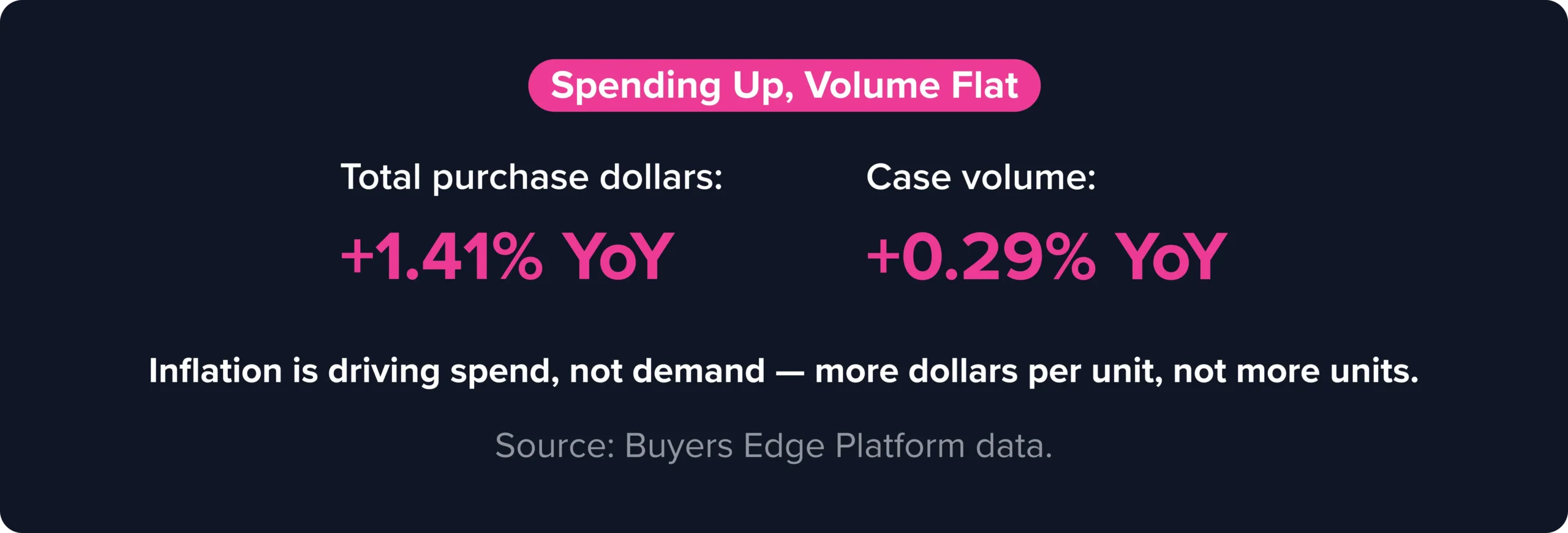
Operators are spending more, but not getting more.
That gap is one of the clearest signals of where the industry stands today. Inflation is driving spend, not demand. And if pricing and purchasing strategies don’t evolve alongside it, margins erode quickly.
This moment is forcing a shift.
Restaurants are no longer relying on revenue growth alone to improve profitability. Instead, they are being pushed to operate with tighter discipline, finding ways to protect margin within their existing spend.
The opportunity is no longer just about what you buy. It’s about how well you manage, optimize, and recover value from every dollar already going out the door.
Why Procurement Discipline Is Becoming a Competitive Advantage
This isn’t just another cost cycle. It’s a structural shift in how restaurants operate.
Operators who actively manage pricing, purchasing, supplier strategy, and rebate recovery are creating separation. Those relying on legacy processes or reactive decisions are seeing margin slip without always realizing why.
In many cases, the difference comes down to visibility and follow-through. The dollars are already there. The question is whether they’re being captured.
The data highlights exactly where both the pressure and the opportunity exist.
Proteins remain the primary inflation driver, while produce is offering rare cost relief. Beverages and frozen add-ons continue to outperform as margin contributors. And across categories, restaurant purchasing strategy is becoming just as important as pricing strategy.
The data makes it clear where the pressure is and where operators are finding opportunities to respond.
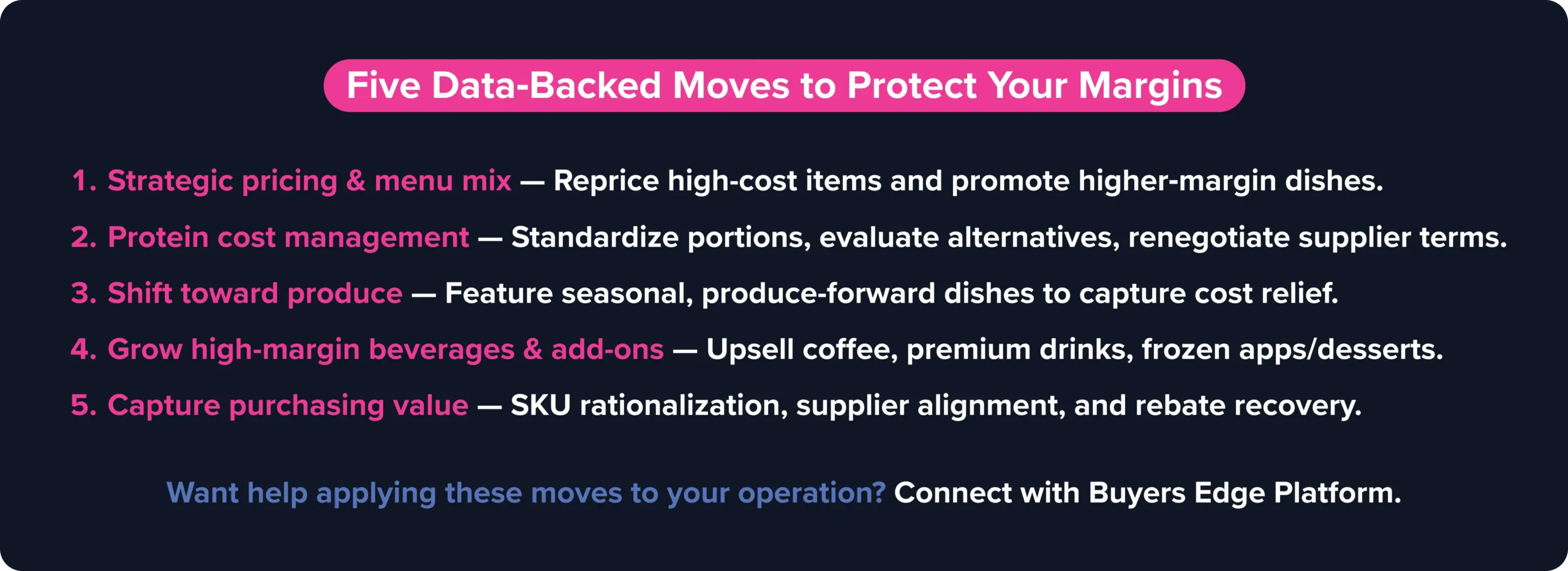
1. Strategic Menu Pricing and Mix Optimization
Data Point 1: Total purchase dollars rose +1.41% YoY while case volume rose only +0.29%.
Why it matters? Operators are paying more per unit, and without intentional pricing strategy, inflation quietly erodes margin. Margin protection increasingly depends on how effectively pricing and menu mix reflect rising costs.
What’s happening: Many operators are taking a closer look at item-level profitability and popularity, adjusting pricing where needed, and repositioning menus to highlight higher-margin items while limiting lower-performing ones.
2. Increased Focus on Protein Cost Management
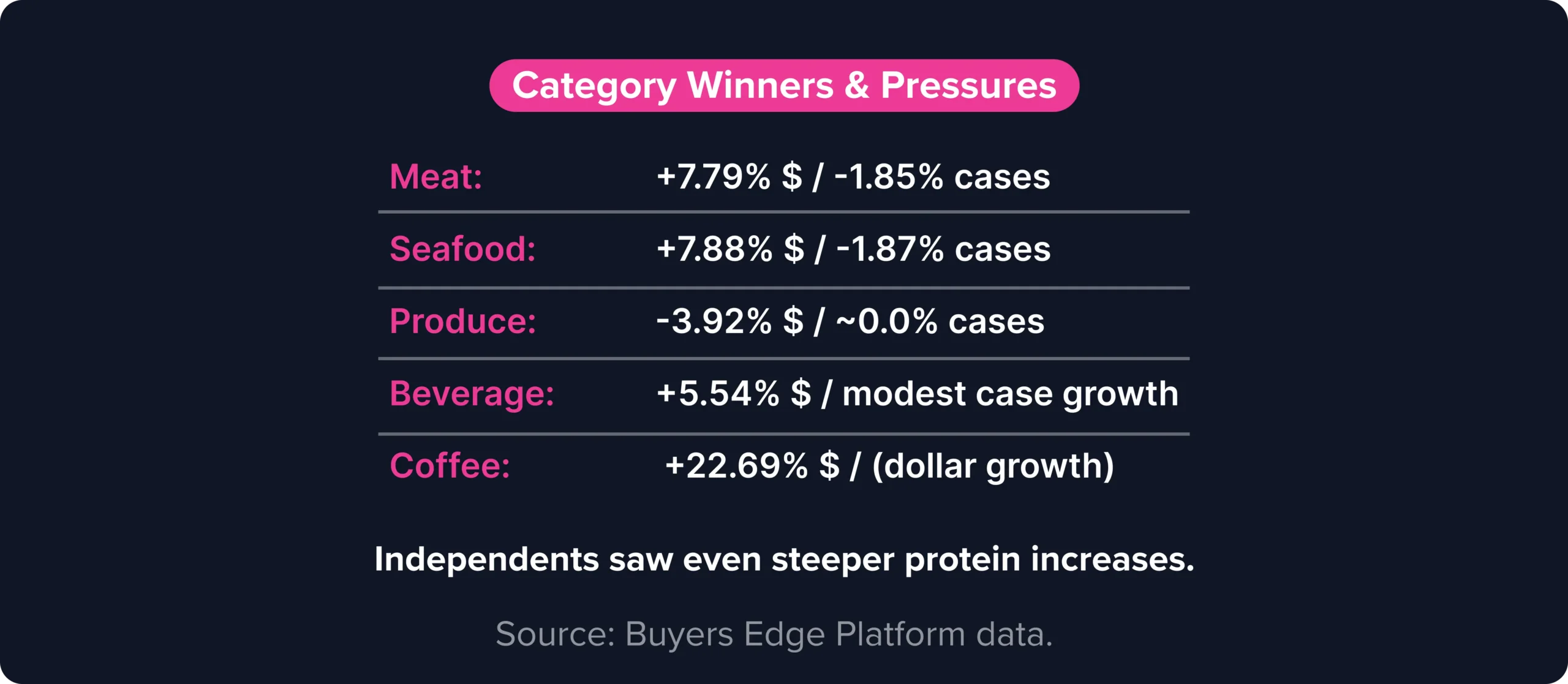
Data Point: Meat dollars +7.79% while cases fell -1.85%; seafood dollars +7.88% while cases fell -1.87%. Independents saw even steeper increases.
Why it matters: Protein inflation continues to drive disproportionate increases in spend, making it one of the most closely monitored categories across the industry.
What’s happening: Operators are placing more emphasis on portion consistency, evaluating alternative proteins, and approaching supplier conversations with a greater focus on pricing structure, volume, and rebate opportunities.
3. Shifting Menu Emphasis Toward Produce
Data Point: Produce dollars down -3.92% while cases remained nearly flat.
Why it matters: Produce is one of the few categories currently offering cost relief, creating an opportunity to rebalance margins without relying on price increases.
What’s happening: Some operators are leaning into seasonal ingredients, featuring produce-forward dishes, and using limited-time offerings to take advantage of more favorable pricing while aligning with consumer demand for fresh, lighter options.
4. Growth in High-Margin Beverage and Add-On Categories
Data Point: Beverage dollars +5.54% with modest case growth; coffee up +22.69%. Frozen appetizers and desserts also saw gains in both dollars and volume.
Why it matters: When traffic is inconsistent, increasing average check becomes a key lever for maintaining profitability. These categories tend to deliver higher margins with relatively low operational complexity.
What’s happening: Operators are expanding premium beverage programs, enhancing dessert and appetizer offerings, and creating more opportunities to increase check size without significantly impacting labor or prep time.
5. Greater Emphasis on Restaurant Purchasing Strategy and Value Recovery
Data Point: Category shifts and supplier dynamics continue to create pricing inconsistencies and missed opportunities across purchasing.
Why it matters: Beyond sourcing and pricing, there is growing attention on how effectively operators are capturing value from their existing spend.
Manufacturer rebates, in particular, are receiving increased scrutiny. Historically treated as a back-office function, they are now being viewed as a more meaningful contributor to overall margin performance.
What’s happening: Operators are placing more focus on SKU rationalization, supplier alignment, and contract structures, while also paying closer attention to rebate tracking and validation. What was once considered incremental income is increasingly being treated as an important offset to rising input costs.
The Bottom Line
Restaurants are spending more for the same, or in some cases less, product. That reality isn’t going away.
What is changing is how operators respond.
Margin protection is becoming less about broad cost-cutting and more about precision. About understanding where money is being spent, where value is being missed, and where small adjustments can have a measurable impact.
Because in today’s environment, the operators who outperform won’t just be the ones who buy well.
They’ll be the ones who understand exactly where their dollars are going and make sure every one of them is working harder.
Want a clearer view of where your dollars are going and where you can capture more value? Click here to connect with the experts at Buyers Edge Platform.