
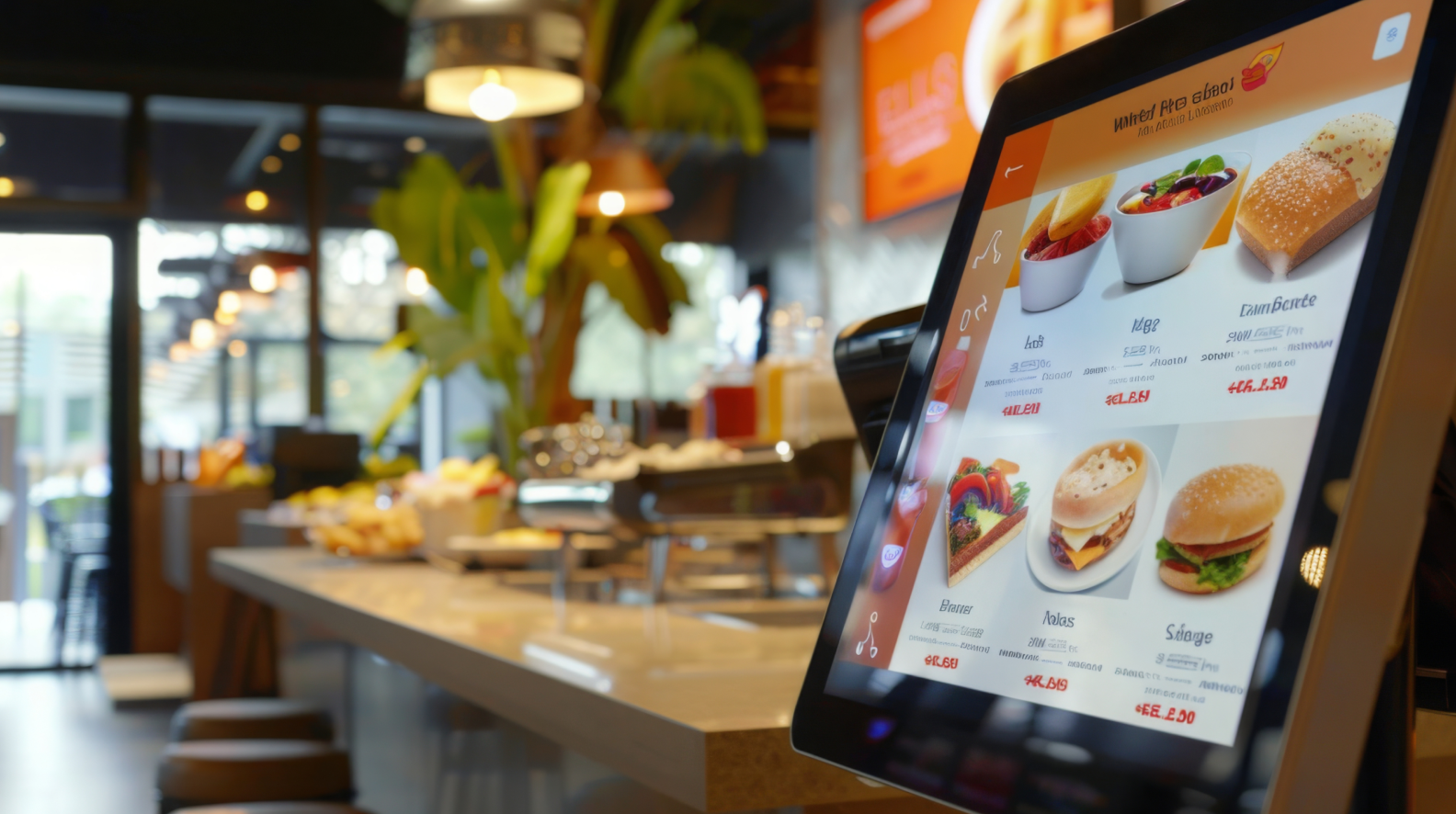
Quick-service restaurants have always been built on speed, consistency, and volume. But today’s QSR operators are juggling more than just throughput. Food costs fluctuate weekly. Labor is tight. Guest expectations are higher than ever. And margins leave very little room for error.
That’s where AI for quick service restaurants is starting to make a real impact.
Artificial intelligence is no longer reserved for experimental tech labs or national brands with endless budgets. It’s showing up in useful, operational ways that help QSRs cut down on food waste, keep better track of their inventory, make their workers more productive, and protect their profits. Not by taking people out of the picture, but by giving operators better information and quicker help with decisions.
When applied thoughtfully, AI helps QSRs shift from reactive firefighting to proactive control.
How AI Is Reshaping the Quick Service Restaurant Industry
In the QSR space, AI isn’t so much about flashy robots as it is about smarter systems that work quietly in the background. These tools look at past sales data, current ordering patterns, inventory movement, and operational patterns to help people make better choices all day long.
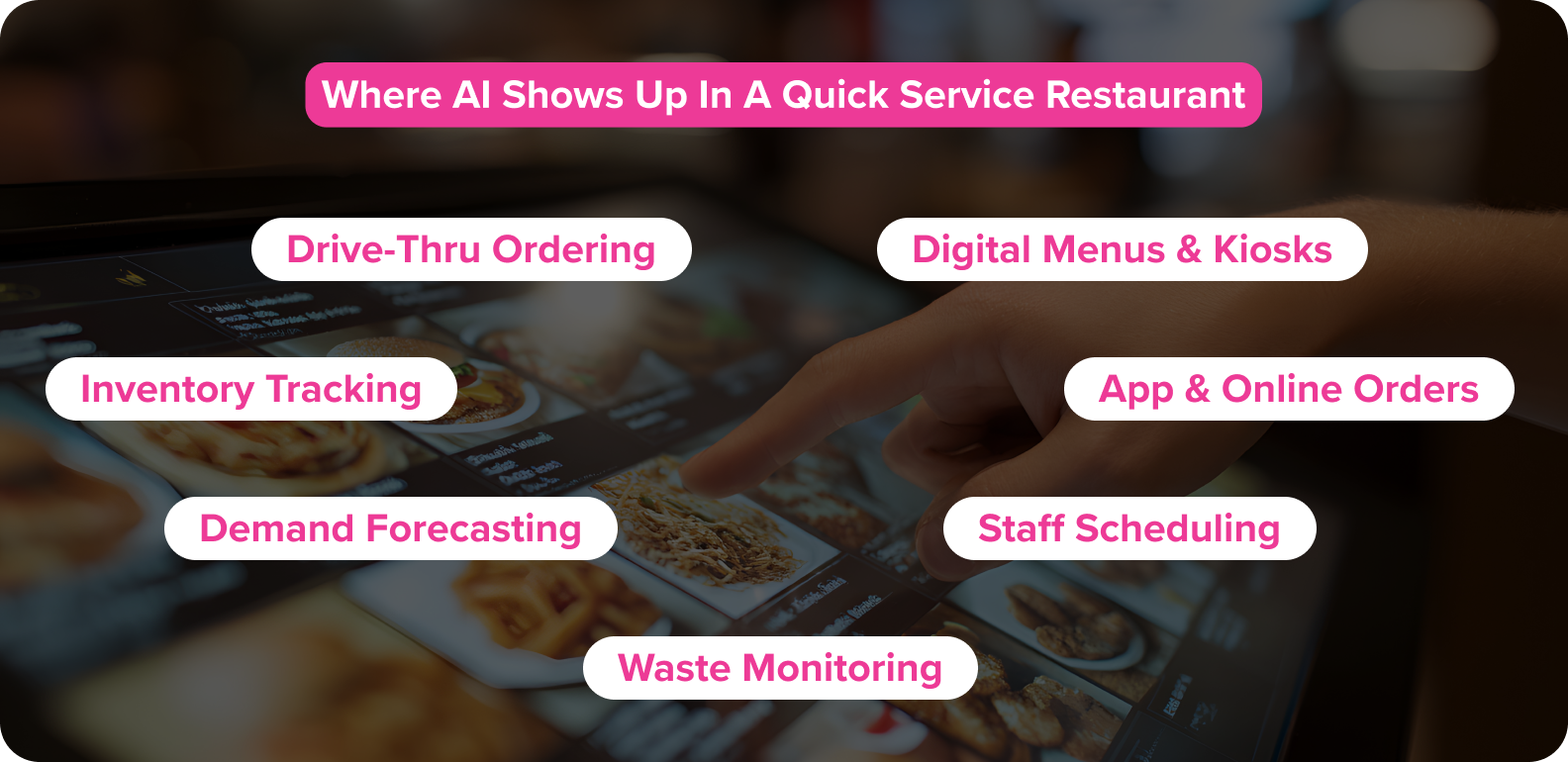
Small changes add up quickly for quick-service brands that have low profit margins and a lot of transactions. Less stuff that is over-prepared. More accurate staffing. Promotions at better times. Less trash is going to the dumpster at the end of the day.
Instead of guessing, AI lets operators see what’s coming.
AI in Front-of-House Operations
Front-of-house is where speed, accuracy, and guest experience collide. AI tools are increasingly helping QSRs deliver all three without adding labor pressure.
Automated Order-Taking Through Voice AI
Voice AI systems are being used at drive-thrus and phone ordering points to capture orders consistently and accurately. These systems reduce misheard items, upsell strategically, and keep lines moving during peak periods.
For operators, this means shorter wait times, fewer order corrections, and more predictable throughput during rushes.
AI Chatbots for App and Online Orders
Anyone running a QSR knows digital orders don’t always go as planned. Missing modifiers, half-finished orders, or customers backing out because they can’t find what they want all slow things down behind the scenes.
AI-powered chat tools help clean that up. They step in during the ordering process to answer quick questions, prompt guests when something looks incomplete, and guide them through choices without forcing staff to jump in mid-rush.
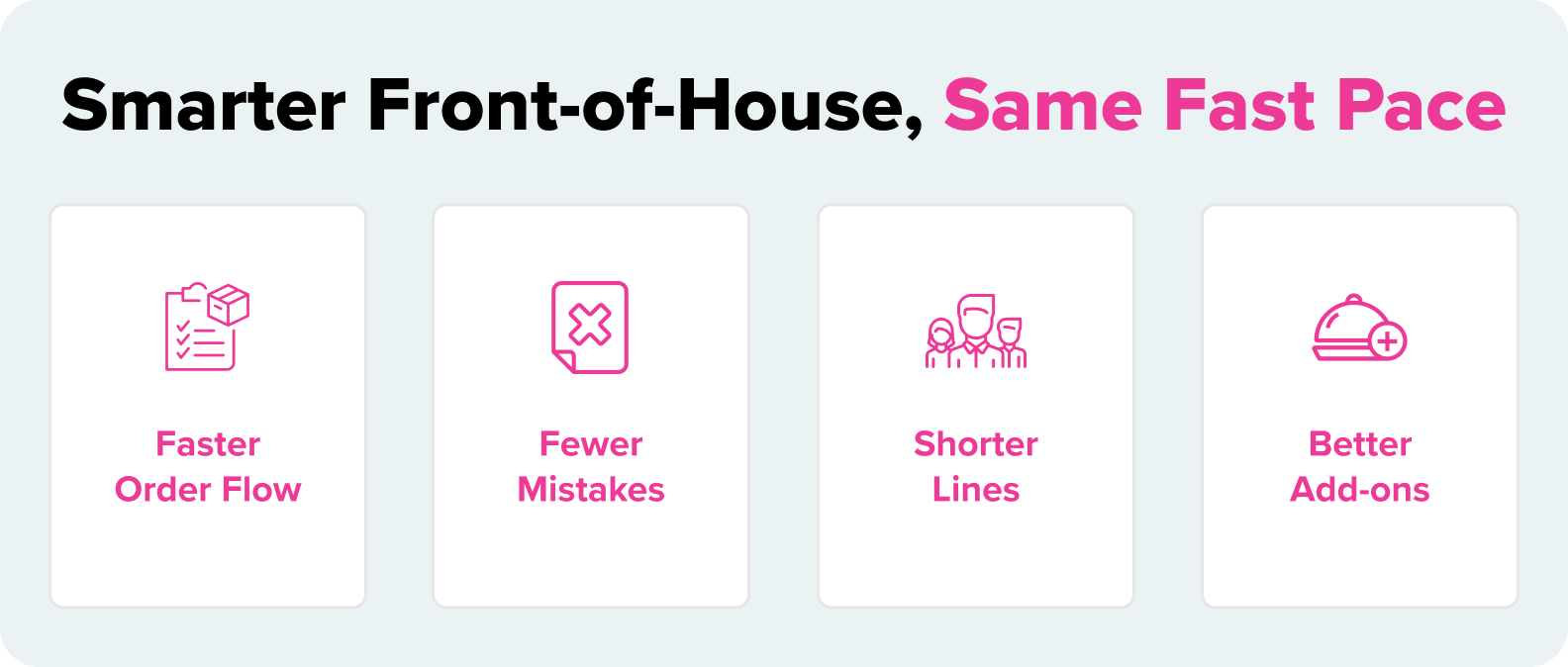
The result is fewer order issues hitting the kitchen, less time spent fixing mistakes, and digital orders that move through the system more smoothly when volume is high.
Smart Self-Service Kiosks
Self-service kiosks that use AI change based on the time of day, what people are buying, and how they behave. They make it easier to place an order, get rid of delays, and give team members more time to prepare and deliver food.
Personalized Menu Displays
A lot of guests don’t want more options. They want the right ones to be easy to spot.
Smarter menu displays put popular items front and center by paying attention to what people order most often and how tastes change from place to place. That helps guests make decisions more quickly, feel better about what they’re ordering, and keeps the lines moving without putting more pressure on the staff. This way of working the menu naturally leads to better add-ons and higher check totals without feeling forced.
Dynamic Promotions Based on Real-Time Context
Things change quickly in a quick-service setting. The lunch rush starts early. The weather makes people walk more slowly. Some things move faster than expected, while others stay put.
Instead of using set promotions, smarter systems change offers based on what is happening right now. Promotions can change to help move a product before it becomes a loss if a location has a lot of it. This lets operators deal with the day as it happens, not after the damage has already been done.
AI-Powered Customer Feedback and Review Processing
Most quick-service restaurants get a lot of feedback, but it’s not possible to read every review and survey when teams are already busy.
Tools that use AI can help you sort through all that data and find the patterns that matter. Operators can focus on fixing problems that really affect the guest experience instead of chasing down one-time complaints, service slowdowns, or menu issues that come up quickly.
AI in Back-of-House Operations
Back-of-house is where AI delivers some of the biggest financial wins for quick service restaurants.
Predictive Demand Forecasting
AI forecasting tools use past sales, seasonal patterns, sales, and outside factors to make more accurate guesses about demand. This helps kitchens get ready more efficiently and not make too much food.
Real-Time Inventory Monitoring and Stock Control
AI-enabled inventory systems track usage patterns throughout the day. Operators gain visibility into what’s moving, what’s slowing down, and where adjustments are needed before shortages or overages occur.
AI-Driven Waste Detection and Reduction
AI can find patterns of waste by looking at the difference between what was expected to be sold and what was actually produced and sold. This helps operators figure out where food is often over-prepared or thrown away and change how they do things to fix the problem.
Automated Reordering and Expiry Alerts
AI systems can trigger reorder recommendations based on real usage rather than static par levels. They also flag items approaching expiration, giving teams time to adjust menus or promotions before the product is lost.
Optimized Staff Scheduling
Building a schedule in a quick-service restaurant is always a balancing act. One day, you’re overstaffed and watching the clock crawl. Next, a surprise rush hits, and everyone’s doing three jobs at once.
By learning from past sales, traffic trends, and how labor has performed over time, AI helps managers create schedules that line up better with how the day actually plays out. It’s not about getting every shift perfect. It’s about cutting down on wasted labor during slow periods and avoiding those rushes where the team feels stretched past its limit.
Kitchen Automation and Robotic Food Preparation
In some kitchens, automation is starting to take pressure off the most repetitive tasks. AI-supported equipment can handle things like portioning or basic prep with consistency, helping food come out the same way every time.
That doesn’t replace the people on the line. It gives them room to focus on pace, quality, and keeping service moving when volume picks up.
AI-Based Quality and Consistency Monitoring
AI systems can monitor cook times, holding times, and product quality indicators. This helps ensure menu items meet brand standards while minimizing remakes and waste.
Practical Challenges in Adopting AI for QSRs
AI is powerful, but it’s not plug-and-play.
High Implementation Costs
Some AI solutions require upfront investment in software, hardware, and integration. Operators must weigh cost against long-term ROI.
Staff Adaptation and Training Requirements
Teams need training and clear communication to trust and use AI tools effectively. Adoption improves when systems support workflows instead of disrupting them.
Integration with Existing POS Systems
AI solutions must integrate cleanly with POS, inventory, and ordering platforms. Poor integration can create more work instead of less.
Data Security and Privacy Concerns
It is very important to handle customer and operational data in a responsible way. AI platforms must follow rules and be safe.
Technical Failures and Downtime Risks
AI systems, like any other technology, need to be watched and supported to keep them running smoothly and reliably during busy times.
What This Really Means for QSR Operators
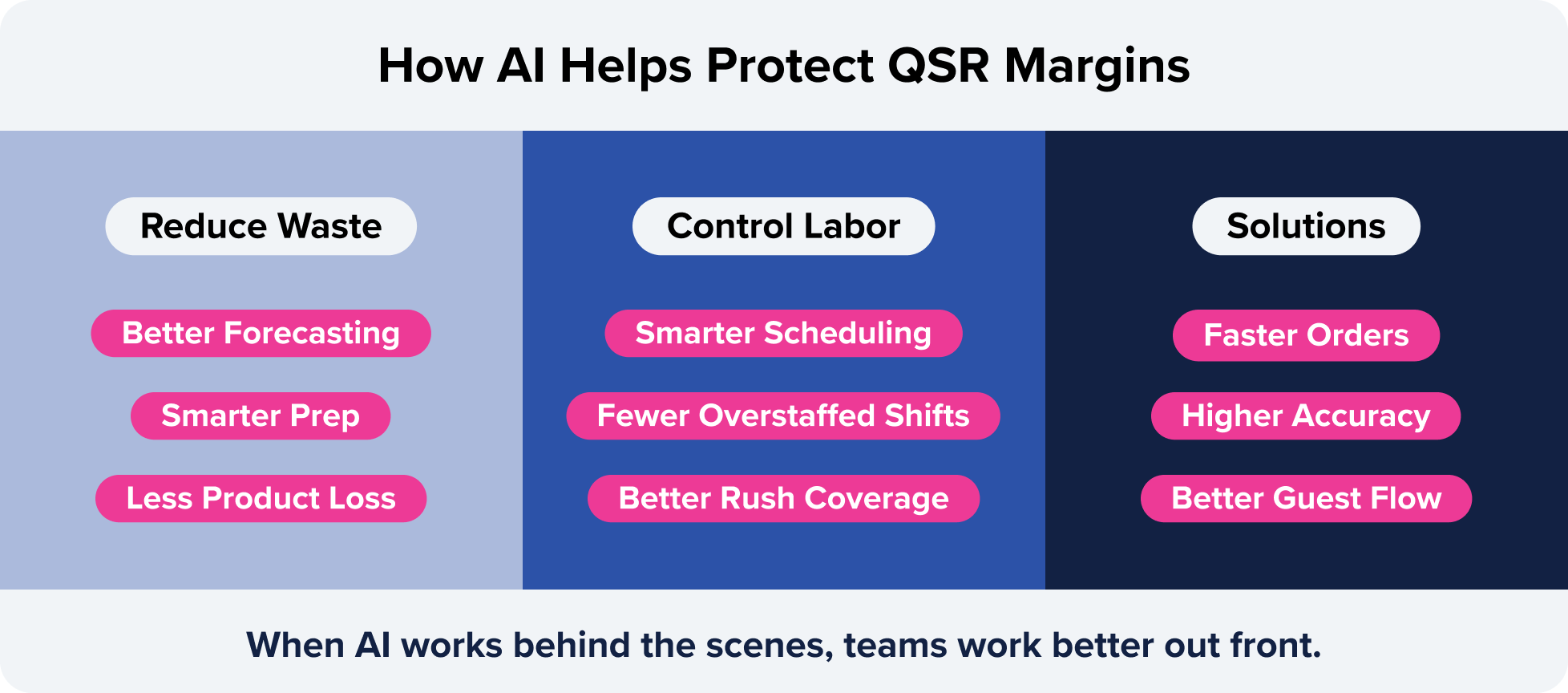
AI in quick service restaurants isn’t about handing decisions over to technology. It’s about giving operators clearer information sooner, so they’re not forced to react after costs creep up or waste shows up on the report.
For QSR teams trying to keep food waste in check, manage costs, and protect already-thin margins, AI works best when it’s used as a support system, not a replacement for experience. The operators seeing results are the ones applying these tools where they matter most, solving real operational problems instead of chasing the next trend.
When AI works behind the scenes, teams work better out front.
FAQs
How does AI reduce food waste in quick-service restaurants?
AI improves demand forecasting, inventory tracking, and prep planning. This reduces overproduction and helps teams adjust before food is wasted.
Can AI help increase profit margins in QSRs?
Yes. By reducing waste, improving labor efficiency, increasing order accuracy, and supporting personalized selling, AI helps protect and grow margins.
Is AI suitable for small and mid-sized QSR businesses?
Many AI solutions are now scalable and modular, making them accessible to smaller operators when implemented thoughtfully.
What type of AI technology is used in QSR kitchens?
Common technologies include predictive analytics, inventory optimization tools, quality monitoring systems, and automation integrated with kitchen equipment.