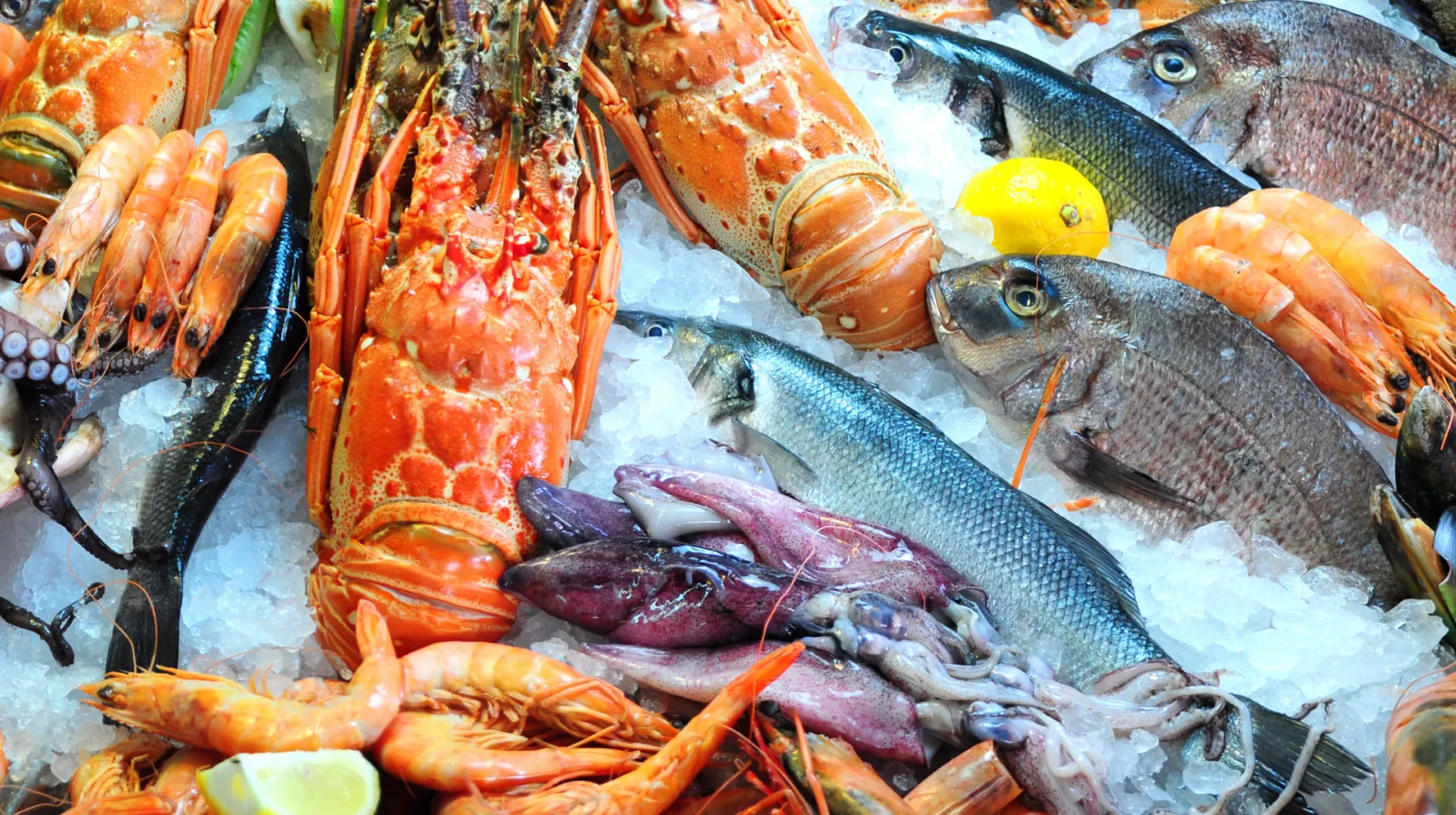
Seafood for restaurants remains a profitable menu category as operators navigate rising seafood costs, strong shrimp demand, and ongoing operational pressures.
Seafood has gotten a lot more complicated over the last few years. Costs are higher. Pricing changes fast. Labor is tight. And operators are constantly trying to balance menu quality with profitability.
But even with all of that, seafood is still holding onto valuable real estate on menus across foodservice.
Why? Because when seafood is done well, guests notice.
Seafood dishes can instantly elevate menu perception. A shrimp appetizer, lobster roll special, salmon entrée, or seafood taco feature often feels more premium to guests than many other proteins. It gives operators a way to add variety, drive check averages, and create seasonal excitement without completely reinventing the menu.
At the same time, restaurants are feeling the pressure behind the scenes.
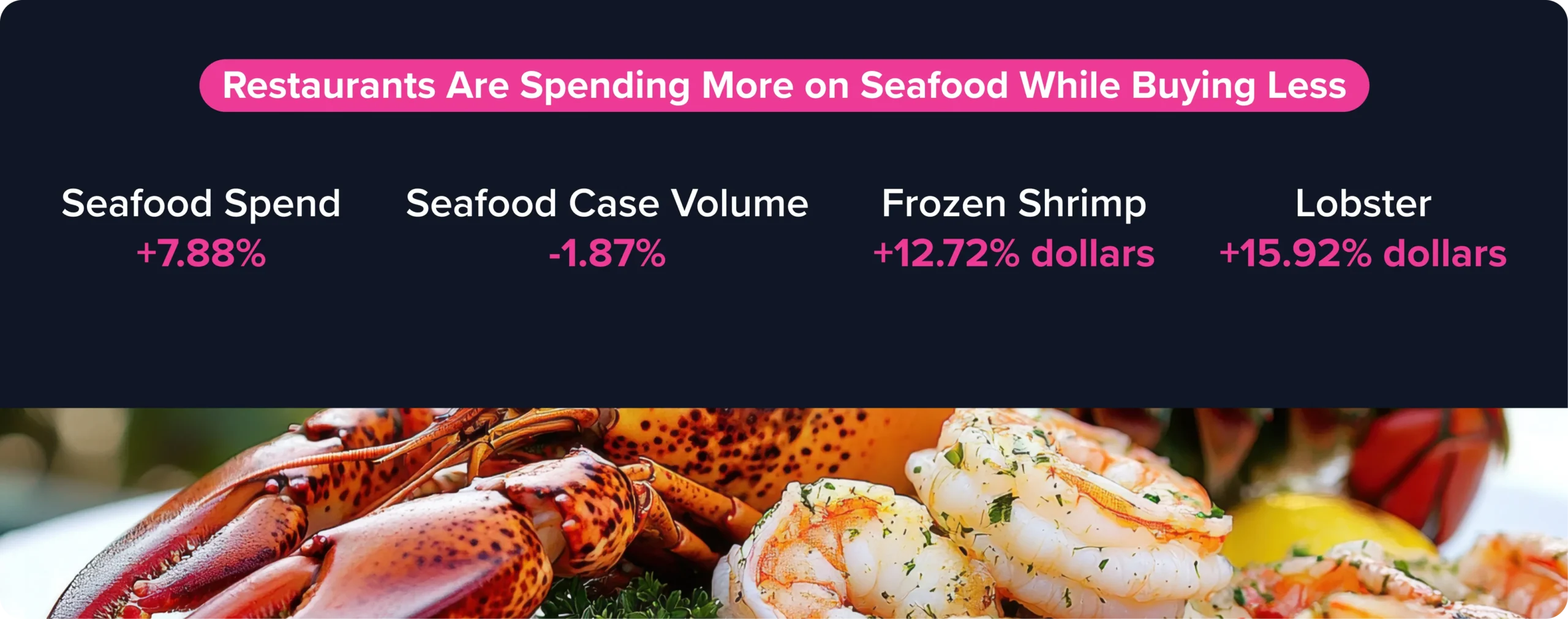
Buyers Edge Platform purchasing data shows seafood spending increased +7.88% year-over-year while case volume declined -1.87%. In simple terms, operators are spending more money while often buying less product. Categories like frozen shrimp (+12.72% dollars, -1.21% cases) and lobster (+15.92% dollars, +3.80% cases) continue reflecting both strong guest demand and rising seafood costs.
That doesn’t mean seafood no longer makes sense on the menu. It just means operators have to approach it differently than they did a few years ago.
Today, profitable seafood programs are usually built around smarter purchasing, tighter inventory management, operational flexibility, and supplier relationships that help restaurants stay consistent when markets shift.
Seafood Still Carries Strong Menu Value
Even when consumers are watching their spending, seafood continues pulling its weight on menus.
Part of that comes down to perception. Seafood often feels like a treat, even in more casual dining environments. Guests may skip higher-priced steak entrées, but still justify ordering shrimp tacos, crab dip, or a salmon bowl because it feels lighter, fresher, or more unique.
Seafood also works across a lot of menu formats, which makes it easier for operators to get more mileage out of the products they bring in.
A single shrimp SKU, for example, might support:
- Appetizers
- Salads
- Pasta dishes
- Tacos
- Rice bowls
- Catering platters
- Limited-time specials
That kind of flexibility matters right now.
Operators are looking harder at cross-utilization opportunities because nobody wants expensive inventory sitting in the walk-in without a plan.
Seafood also continues helping restaurants:
- Add premium menu options
- Build seasonal promotions
- Create shareable appetizers
- Diversify protein offerings
- Appeal to health-conscious guests
Seafood often photographs well too, which never hurts in the social media era. A lobster roll or grilled salmon plate usually has a little more visual pull than another basic chicken sandwich.
Real Challenges Restaurants Are Facing With Seafood
Of course, none of this means seafood is easy right now.
For a lot of operators, seafood can feel like one of the harder categories to manage consistently.
Pricing volatility alone creates headaches. Markets can move quickly depending on:
- Fuel costs
- Weather
- Imports
- Harvesting conditions
- Global demand
- Supply chain disruptions
One month a product works perfectly for your food cost target. A few weeks later, margins start shrinking fast.
Then there’s labor.
Some seafood products require more prep, tighter handling procedures, additional training, or stricter temperature management. That becomes difficult when restaurants are already operating with leaner teams.
Waste is another issue operators constantly battle.
Fresh seafood can move from profitable to painful pretty quickly if forecasting is off. Over-ordering creates spoilage. Under-ordering creates menu issues and frustrated guests. Neither situation helps margins.
Multi-unit operators also face consistency challenges. Maintaining the same seafood quality, preparation standards, and portioning across locations is not always simple, especially when supply conditions shift unexpectedly.
That’s why a lot of operators are paying much closer attention to purchasing visibility and inventory movement than they used to. The restaurants staying ahead are usually the ones identifying problems earlier instead of reacting after margins already take a hit.
Why Frozen Seafood Is Becoming a Smarter Operational Strategy
Frozen seafood has quietly become one of the more strategic tools for restaurants trying to simplify operations.
And no, this is not the frozen seafood people remember from twenty years ago.
Quality across frozen seafood categories has improved significantly, which is one reason more operators are becoming comfortable using it across both casual and upscale menu applications.
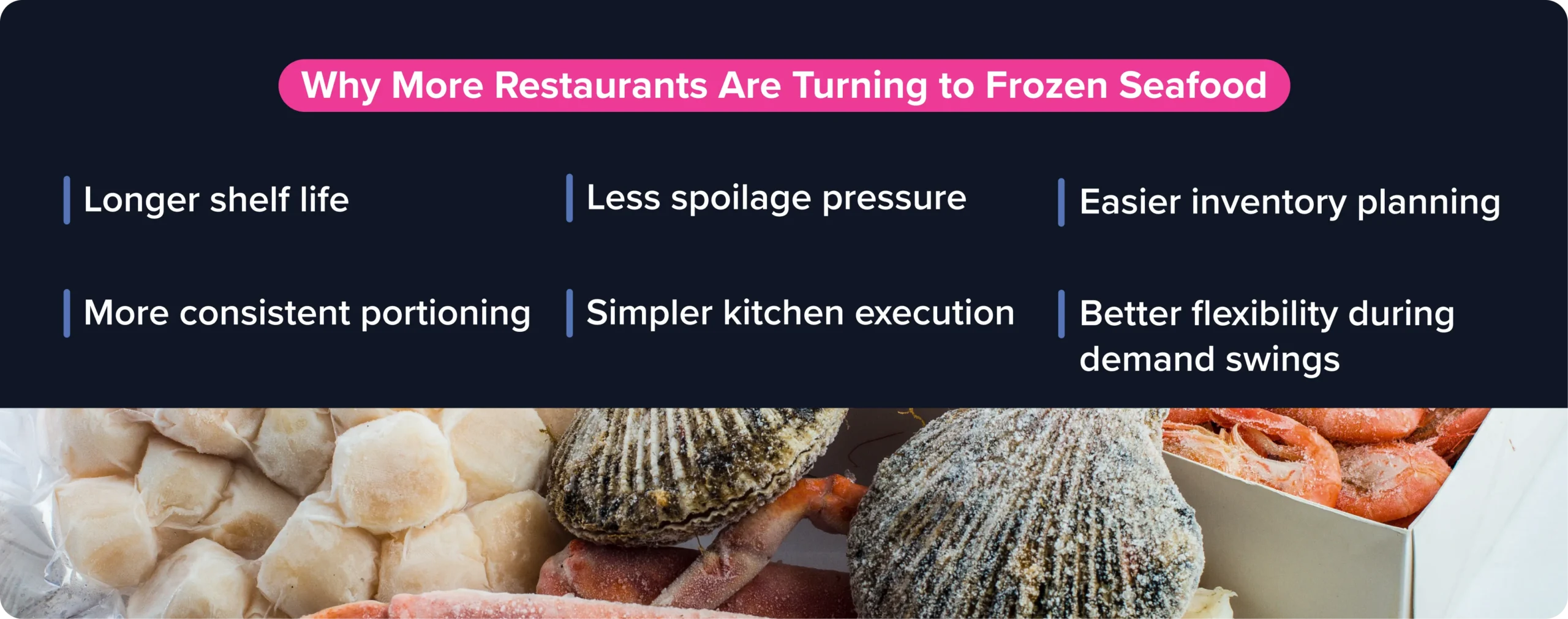
Some operators have started relying more heavily on frozen seafood because it helps remove some of the day-to-day pressure that comes with managing fresh product inventory. Instead of constantly racing against shelf life, frozen products can give kitchens a little more flexibility when traffic patterns shift unexpectedly.
- Longer shelf life that helps reduce spoilage risk
- More flexibility when guest traffic fluctuates
- Easier inventory planning during busy or slower periods
- More consistent portion sizes across shifts and locations
- Simpler storage and product management
- Less prep pressure on already stretched kitchen teams
For multi-unit operators especially, consistency matters. Frozen seafood can help restaurants standardize execution across locations a little more easily, particularly when teams are trying to maintain quality while managing labor and inventory challenges at the same time.
Products like frozen shrimp continue gaining traction because they can move across multiple menu categories while still helping operators control labor and waste.
A lot of restaurants are also realizing frozen seafood gives them breathing room operationally. Teams can forecast more comfortably without feeling like every order has to be timed perfectly.
That flexibility matters when staffing, guest traffic, and supply conditions can all shift week to week.
Protecting Seafood Margins Takes More Than Menu Pricing
When seafood costs rise, the instinct is often to look at menu prices first.
But most operators know profitability problems usually start deeper in operations.
A few small misses across inventory, ordering, prep, or portioning can quietly chip away at margins over time.
Restaurants protecting seafood profitability well in 2026 are typically focusing on a few key areas.
Cross-Utilization
The more ways a seafood product can be used, the easier it becomes to move inventory consistently.
Operators are looking for products that work across multiple menu applications rather than bringing in highly specialized items with limited use cases.
Portion Consistency
Seafood can become expensive fast when portioning drifts.
Pre-portioned or standardized products help reduce variability and make food costs easier to control across shifts and locations.
Better Purchasing Visibility
Many operators are relying more heavily on purchasing and inventory data to identify trends earlier.
That visibility helps restaurants:
- Forecast more accurately
- Reduce emergency ordering
- Monitor inventory movement
- Identify unusual usage patterns
- Make faster purchasing adjustments
Strong Supplier Relationships
Reliable suppliers matter even more during volatile markets.
Restaurants often benefit from supplier partners that can help them:
- Navigate product shortages
- Explore alternative formats
- Maintain consistency
- Improve fulfillment reliability
- Adapt purchasing strategies when markets change
The goal is not just securing seafood product. It is building a seafood program that can actually hold up operationally week after week.
What Restaurants Need From a Modern Seafood Supplier
Choosing a seafood supplier today is about much more than finding whoever has product available that week.
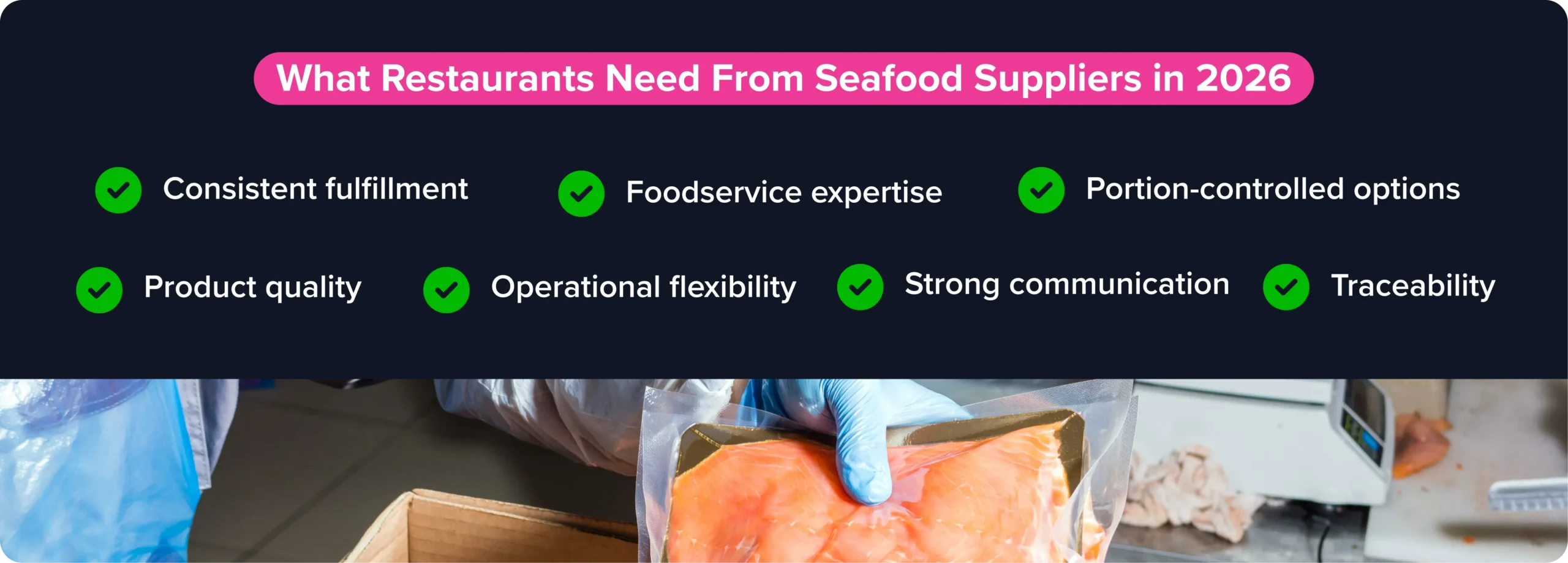
Operators need consistency. They need flexibility. They need suppliers that understand foodservice realities instead of just moving cases.
Restaurants are increasingly looking for seafood suppliers that can support:
- Reliable fulfillment
- Product consistency
- Traceability
- Operational efficiency
- Portion-controlled options
- Frozen and value-added seafood formats
- Long-term menu planning
When markets shift, operators do not want surprises showing up on invoices or sudden product gaps with no warning. The strongest supplier relationships are usually the ones where operators feel informed and supported instead of constantly reacting.
For many operators, building a stronger seafood program also means strengthening their overall sourcing strategy. Regional supplier programs can provide access to trusted seafood partners, shorter supply chains, improved product freshness, and greater flexibility when market conditions change. Click here to learn more about the benefits of regional sourcing and supplier programs for foodservice operators.
That’s one reason many restaurants continue working with experienced seafood suppliers like Slade Gorton.
Slade Gorton has worked across foodservice seafood categories for years, helping operators source products that align with both guest expectations and operational realities. Their experience across seafood sourcing, frozen products, and foodservice support helps restaurants navigate a category that has become increasingly complex.
In partnership with Buyers Edge Platform, Slade Gorton recently shared additional insights around seafood sourcing, operational efficiency, and navigating today’s seafood market challenges.
Final Thoughts
Seafood is not the easiest category to manage right now. Most operators would probably agree with that.
But it is still one of the strongest categories for driving menu variety, premium perception, and guest interest when approached strategically.
The restaurants finding success with seafood in 2026 are usually not chasing perfection. They are building programs that are flexible, operationally realistic, and supported by smarter purchasing decisions.
That often means:
- Simplifying inventory
- Improving visibility
- Using products more strategically
- Reducing waste
- Partnering with suppliers that understand foodservice pressure firsthand
Seafood may look different operationally than it did a few years ago, but for many restaurants, it still absolutely deserves a place on the menu.
Click here to contact Buyers Edge Platform and learn how our procurement network, supplier partnerships, and operational solutions can help support your seafood program.
Already a Buyers Edge Platform member? Contact your Client Manager to explore seafood sourcing opportunities and supplier solutions available through the network.
FAQs
What seafood tends to move the fastest on restaurant menus?
It depends on the type of operation, but shrimp continues to be one of the easier seafood products for restaurants to work with because it fits into so many menu categories. Operators use it in tacos, pasta dishes, appetizers, bowls, salads, and even catering trays. Salmon also stays popular because guests often see it as a healthier premium option without it feeling overly expensive compared to some other seafood entrées.
Is frozen seafood actually good quality now?
A lot of operators would probably say frozen seafood has come a long way from what people used to picture years ago. Many frozen products today are processed and frozen quickly after harvest, which helps maintain quality and consistency. For restaurants, the bigger advantage is often operational. Frozen seafood can make ordering, storage, and inventory management a lot less stressful during unpredictable weeks.
Why is seafood harder to forecast than other proteins?
Seafood can be tricky because pricing and availability can shift fast. Weather, imports, fuel costs, harvesting conditions, and transportation issues can all impact supply. Unlike some other proteins, seafood markets tend to react quickly to outside disruptions, which is why operators sometimes see pricing move around more often than expected.
What usually hurts seafood profitability the most in restaurants?
For many restaurants, it is not always the initial product cost. Waste, inconsistent portioning, over-ordering, and inventory sitting too long can quietly create bigger problems over time. A few small operational issues across prep, storage, or ordering can end up affecting seafood margins more than operators initially realize.
What makes a seafood supplier easier to work with?
Most operators are looking for consistency more than anything else. They want reliable fulfillment, steady product quality, good communication, and flexibility when markets shift. It also helps when suppliers understand restaurant operations and can recommend products or formats that fit real kitchen challenges instead of offering a one-size-fits-all solution.