
Today, running a food service business means keeping track of more things than ever before. The rising cost of food, the lack of workers, the instability of the supply chain, and the higher expectations of customers are all factors.
Because of these pressures, making food service more environmentally friendly has gone from a “nice to have” idea to a smart business plan.
Restaurants, hotels, and institutions that serve food are finding that being environmentally friendly can also save them money. Cutting down on waste, using less energy, and making smarter choices about where to get supplies can help keep profits up while also having less of an effect on the environment.
To put it another way, being environmentally friendly in the food service industry isn’t just about doing the right thing. It’s about running your business more intelligently.
What Sustainability Means in Food Service
Sustainability in food service means running a business in a way that has the least effect on the environment while still being profitable and efficient.
This means making smart buying decisions all along the supply chain, cutting down on waste, and using resources wisely.
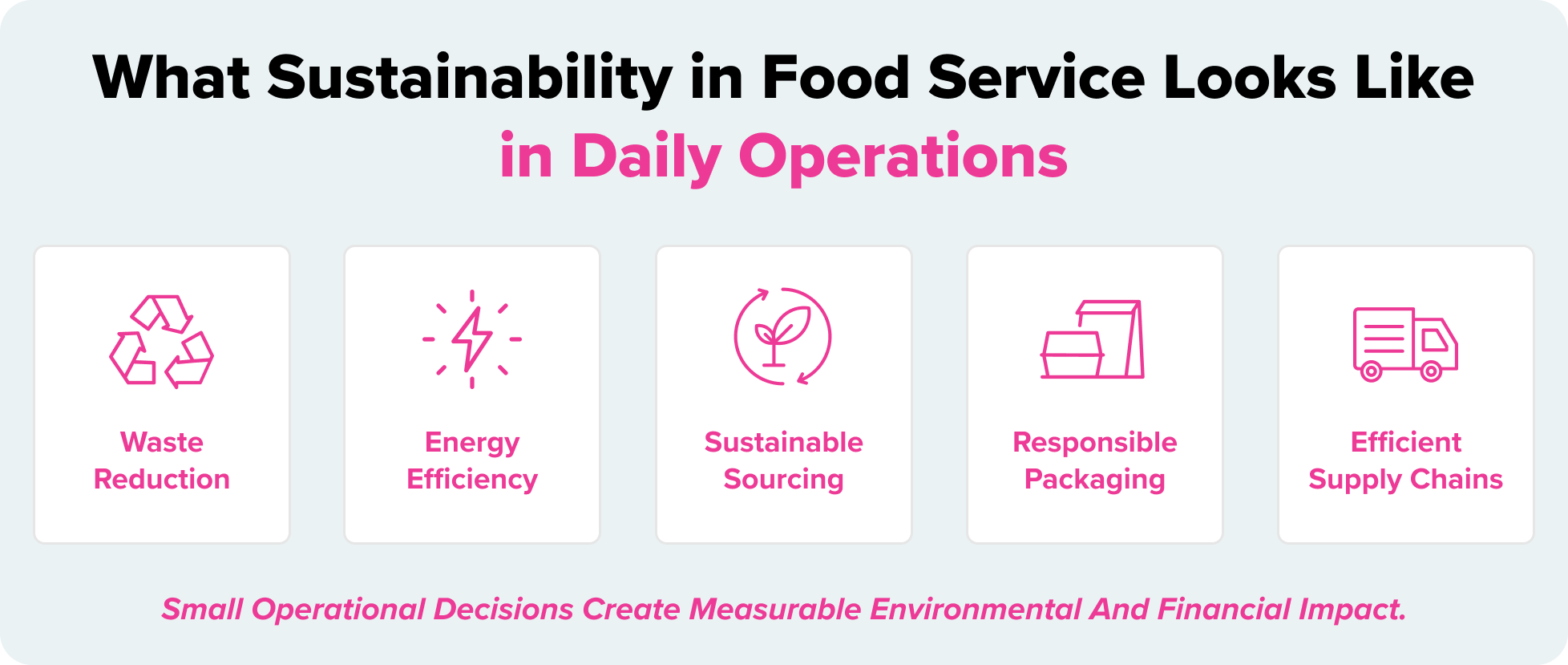
For people who work in food service, sustainability often affects many parts of their daily work:
- Managing food stock to cut down on waste
- Choosing tools and methods that use less energy
- Choosing ingredients that come from responsible sources
- Cutting down on single-use packaging and throwaway items
- Making transportation and logistics work better
Sustainability in food service isn’t just one thing; it’s a set of choices about how to run a business that make it more efficient and better for the environment.
Why Sustainability Matters for Food Service Businesses
For many operators, the push toward sustainability began as a response to customer interest. Today, however, it is also driven by economics and regulation.
Rising food, energy, and labor costs
Costs of doing business in the food service industry keep going up. Prices of ingredients go up and down, energy bills go up, and there aren’t enough workers.
Practices in the food service industry that help the environment, like cutting down on waste and using less energy, also lower costs directly. Fewer dollars lost when food goes bad, and more efficient equipment lowers utility costs.
Changing customer expectations
Customers are more and more willing to buy from businesses that care about the environment.
Sustainability in food service can affect how customers see your business and how loyal they are. For example, using local ingredients and cutting down on plastic waste can do this. People who eat out often think that businesses that are environmentally friendly are more trustworthy and forward-thinking.
Regulatory and compliance pressure
Many places are making rules about food waste, packaging materials, and emissions.
As these rules change, food service operators who already put a lot of emphasis on sustainability are better able to stay compliant and avoid making expensive changes later.
How Food Service Operations Create Environmental Impact
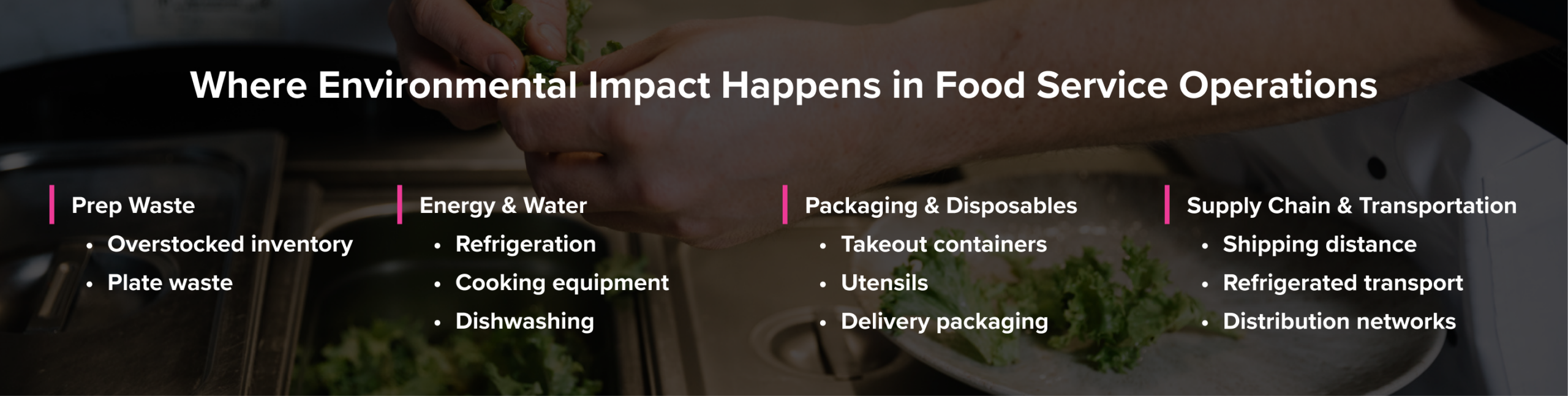
Foodservice operations interact with the environment in several ways throughout daily operations. Understanding where impact occurs is the first step toward improvement.
Food waste across preparation and service
Food waste is one of the largest environmental challenges in the industry.
Waste occurs at multiple stages:
- Overstocked inventory that spoils before use
- Prep waste during food preparation
- Uneaten food from plates or buffet service
Reducing food waste is one of the most impactful ways to improve sustainability in food service while also protecting food cost margins.
Energy and water usage
Commercial kitchens are energy-intensive environments. Refrigeration, cooking equipment, lighting, and ventilation all consume large amounts of electricity and gas.
Water use is also significant, especially in dishwashing, food preparation, and sanitation.
Improving energy and water efficiency plays a major role in advancing sustainability in food service.
Packaging and disposable materials
Single-use packaging is becoming more and more common, especially since takeout and delivery have become more popular.
Waste from containers, utensils, and packaging materials ends up in landfills and harms the environment.
Switching to recyclable, compostable, or reusable options can help lessen the environmental impact of sustainability in food service.
Transportation and supply chain impact
Food goes a long way through complicated supply chains before it gets to the kitchen.
Transportation emissions, refrigeration during shipping, and bad logistics all hurt the environment.
Making food service more sustainable and cutting costs can both be done by improving buying strategies and distribution networks.
Implementing Sustainability in Daily Food Service Operations
The good news is that a lot of sustainable practices are also good business practices. Making small changes on a regular basis can have a big impact.
Reducing Food Waste
Cutting down on food waste is often the quickest way to make food service more profitable and environmentally friendly.
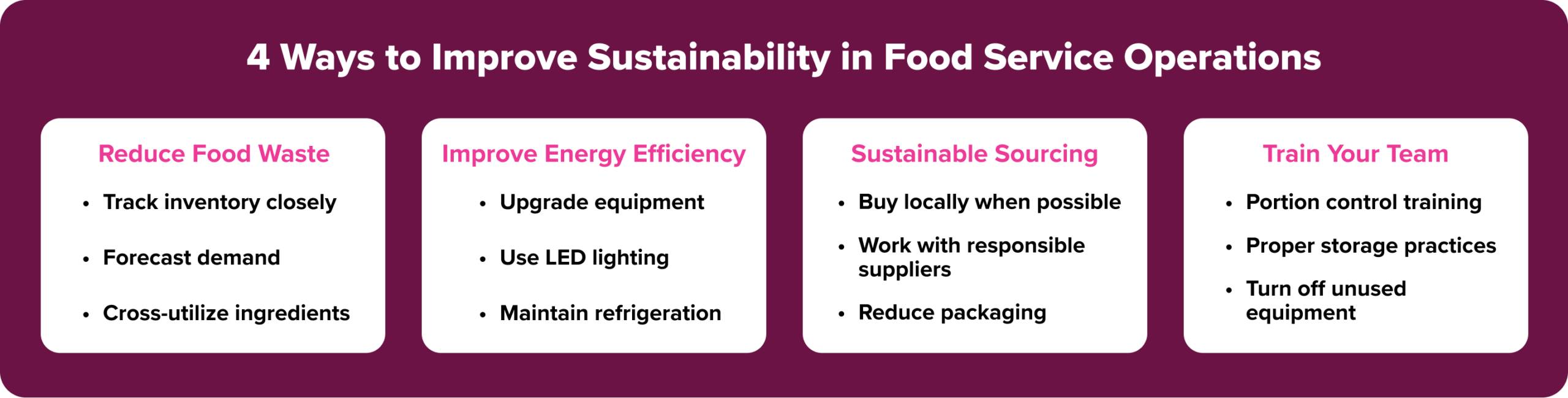
To get started, operators can:
- Keeping a closer eye on inventory
- Better predicting demand
- Teaching employees how to control portions
- Using the same ingredients in different menu items
Operators can also find out where waste happens with the help of technology solutions that give them a better view of purchases and usage.
Improving Energy and Resource Efficiency
Using energy-efficient tools and methods can cut utility costs by a lot.
Some examples are:
- Switching to appliances and refrigerators that use less energy
- Using LED lights all over the building
- Keeping equipment in good shape to make sure it works well
- Keeping an eye on how much water is being used and cutting down on wasteful use
These changes help food service stay open while lowering costs of doing business.
Making Sustainable Sourcing and Packaging Decisions
Environmental impact is also affected by sourcing choices.
A lot of food service operators make their businesses more sustainable by:
- Buying ingredients from local sources when possible
- Working with suppliers who put responsible farming first
- Choosing packaging that can be recycled or composted
- Cutting down on extra packaging in deliveries
These choices not only help the environment, but they also make relationships with responsible suppliers stronger.
Training Teams and Building Sustainable Habits
Without team participation, even the best sustainability programs will fail.
Teaching employees how to reduce waste, store food properly, recycle, and run a kitchen efficiently helps make sustainability a part of their daily lives.
Over time, small habits like turning off equipment that isn’t being used or properly rotating inventory can make a big difference.
Business Benefits of Sustainable Food Service
Sustainability efforts are often driven by their effects on the environment, but the benefits to business are just as strong.
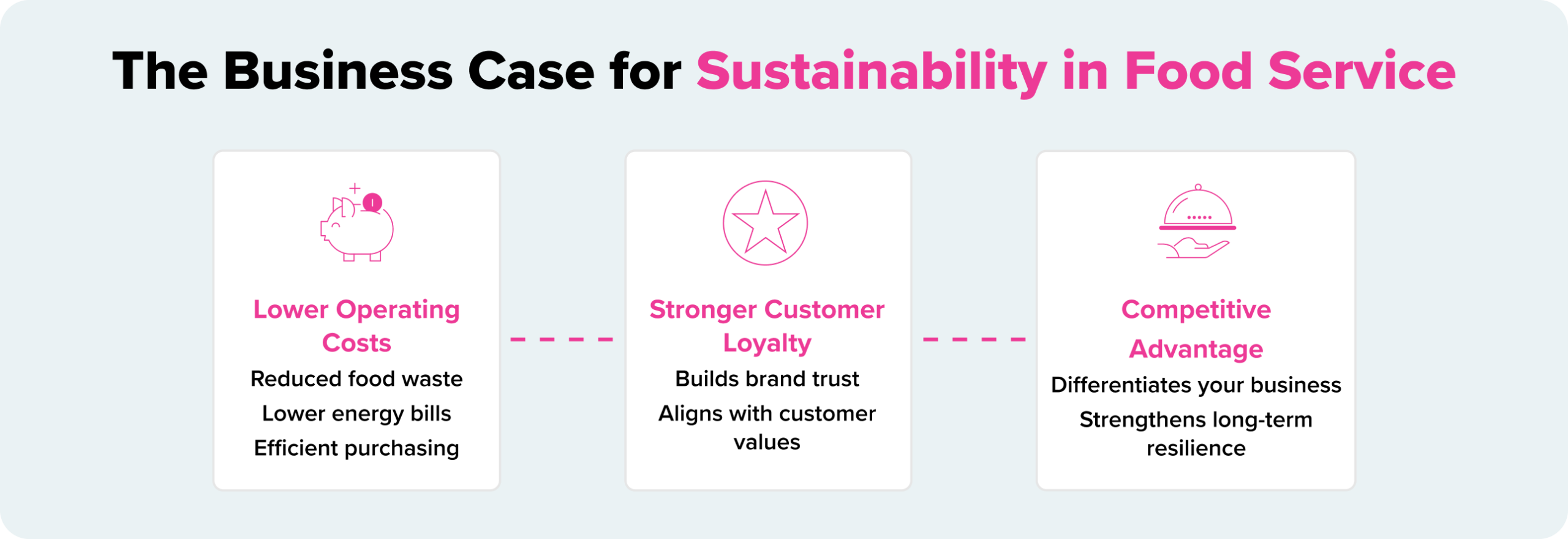
Lower operating costs and improved margins
A lot of sustainable practices cut down on waste, use less energy, and make it easier to buy things.
So, making food service more sustainable can directly help the bottom line.
Stronger brand trust and customer loyalty
More and more, people want to buy from brands that act responsibly.
Food service businesses that put sustainability first often have better relationships with customers and a better brand reputation.
Competitive advantage in a crowded market
With more competition in restaurants, hotels, and institutional dining, it’s important to stand out.
Businesses that actively promote sustainability can stand out in crowded markets and attract customers who care about the environment.
The Future of Sustainability in Food Service
The talk about sustainability in the food service industry will keep getting bigger.
Improvements in food technology, waste management, and supply chain transparency are making it easier to use sustainable methods. Customers, regulators, and investors are also expecting businesses to be more environmentally responsible.
Operators who start using eco-friendly methods today will be better ready for the rules and operations of tomorrow.
Final Thoughts
Sustainability in the food service industry is no longer just a fad. It is becoming an important part of running a business that works well and is strong.
Foodservice operators can save money and help the environment by cutting down on waste, using resources more efficiently, and making smart sourcing choices.
Sustainability in food service is good for the planet and the bottom line when done right.
Frequently Asked Questions
What does sustainability mean in food service?
Sustainability in food service means running your business in a way that has less of an effect on the environment while still being efficient and making money. This means making smart choices about where to get food, using less energy, and throwing away less food.
How can food service operators reduce food waste?
Operators can cut down on food waste by better managing their inventory, making better predictions about how much food they will need, teaching their staff how to control portions, and using the same ingredients in different dishes.
Are sustainable practices affordable for small businesses?
Yes. A lot of sustainability efforts, like cutting down on food waste or making energy use more efficient, actually lower operating costs and don’t need much money up front.
Does sustainability improve profitability?
Yes, in a lot of cases. Sustainability in food service can often lead to less waste, lower utility bills, and better buying habits, all of which can help margins.
Where should food service operators start?
Finding out where waste and inefficiency happen is the best place to start. After that, operators can work on cutting down on food waste, making their operations more energy-efficient, and coming up with smarter ways to get supplies.
Click here to learn how Buyers Edge Platform helps foodservice operators make smarter purchasing decisions and run more efficient operations.