
Hotel management in 2026 is about staying two steps ahead of a crowded weekend, shifting demand, and guests who expect flawless personalization—so when a VIP walks in late and the PMS goes down, what’s your play? In this guide, we’ll cut through theory and focus on practical moves: the operational routines, revenue tactics, staffing and training notes, and the tech that actually reduces friction. Think of it as a field-tested playbook you can use this week to tighten standards, protect margins, and lift guest satisfaction. Read on for clear, actionable steps every hotel manager and department head should have in their toolkit.
What Hotel Management Covers and How It Shapes Guest Experience
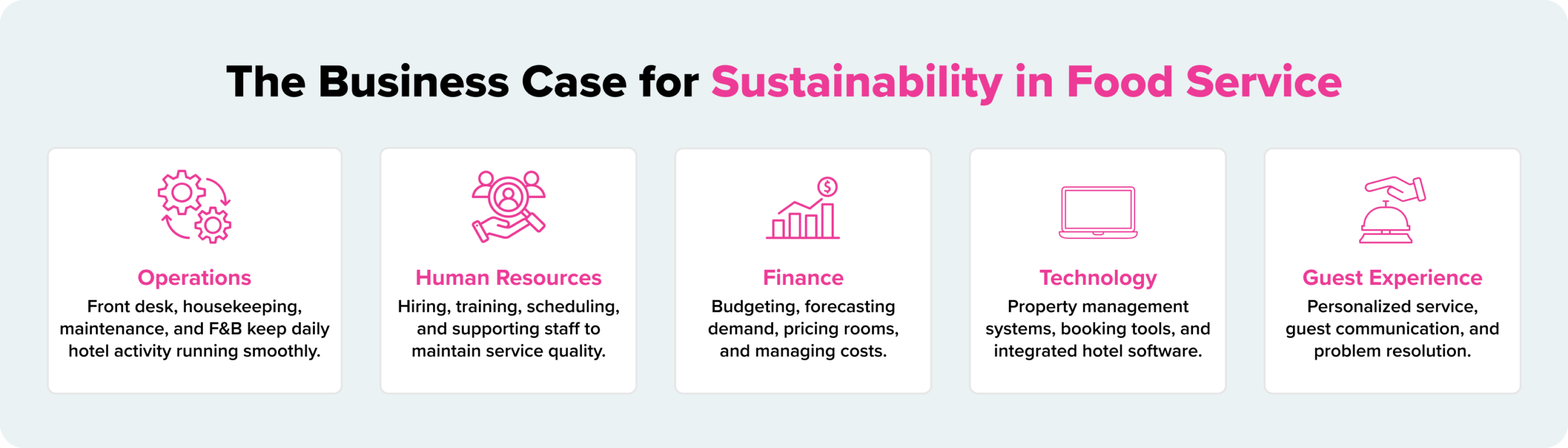
Most people think hotel management is just running the front desk. In reality, a manager’s day touches a lot more ground than that. On any given shift, these are the areas that usually demand attention:
- Keeping daily operations moving – Front desk flow, housekeeping updates, maintenance issues, and food and beverage service all intersect throughout the day. If one department slows down, the rest usually feel it.
- Managing and supporting the staff – Hotels run on people. Managers spend a surprising amount of time hiring, training, adjusting schedules, and helping teams handle busy periods or guest issues.
- Watching the numbers – Room rates, occupancy, expenses, and forecasts are checked constantly. Even small changes in pricing or demand can affect the property’s revenue for the week.
- Using the hotel’s technology systems – Most of the operation now runs through software like the PMS, booking systems, and reporting tools. These systems help track reservations, payments, and guest information in real time.
- Making sure the guest experience holds together – Everything ultimately leads back to the guest. From pre-arrival communication to solving problems during the stay, the goal is to make the visit feel easy and well-managed.
When these pieces stay coordinated, guests usually notice the difference right away. Check-ins feel smoother, rooms are ready on time, and the stay simply feels more organized. When one area slips, it tends to show up quickly in the guest experience.
Core Areas Every Hotel Management Team Must Handle
Every successful hotel management team needs to be good at a few basic areas of operations:
Front Office Operations
The front desk is usually the first and last stop for guests during their stay. Staff handle reservations, check-ins, check-outs, billing, room assignments, and concierge requests. When these tasks are organized, and guest folios stay accurate, the team can spend less time fixing issues and more time focusing on the guest experience. It’s also where simple opportunities for upselling often happen, like offering a better room or recommending add-on services.
Standard Operating Procedures (SOPs) help guide staff through everyday situations such as early arrivals, late check-ins, walk-ins, or no-shows. Having clear steps in place helps the team respond consistently and keeps the experience professional for every guest.
Housekeeping and Facility Management
Guests will not accept rooms that are dirty and not working. Housekeeping is responsible for cleaning the rooms every day, doing a deep clean, keeping track of the linens and amenities, and working with engineering to fix things. Facility management is responsible for making sure that public areas are safe, doing preventative maintenance, and making sure that they meet standards. Good communication is important to make sure that rooms are ready for guests. This can be helped by digital room status updates and standard inspection checklists.
Food and Beverage Operations
Food and Beverage (F&B) operations are a major source of income and a major way for guests to interact with the hotel. Managing this area means making sure that the menu is well-designed, that supplier contracts are as good as they can be, that inventory and waste are kept under control, that the kitchen runs smoothly, and that there are enough staff members to handle busy times. Combining food and beverage options with front desk and revenue management strategies, like package deals or catering for events, can increase spending without lowering profit margins.
Guest Services and Experience
This is what makes a hotel stand out. Guest services include remembering guests’ preferences, recognizing loyalty, handling special requests, providing concierge assistance, and fixing problems before they happen. Making sure that every department knows what it needs to do to make a stay enjoyable and memorable is important. This includes everything from communicating with guests before they arrive to the arrival experience, the stay itself, and reaching out to guests after their stay.
Roles, Responsibilities, and Daily Work of Hotel Managers
In hotel management, the manager is the linchpin — think of a Friday evening when a 120‑person corporate group arrives early, the boiler trips, and a VIP requests a last‑minute upgrade. That one person needs to keep guests calm, coordinate teams, make quick financial calls, and protect the property’s reputation. Below is a practical, no‑fluff checklist of daily priorities that captures the mix of strategy, operations, and hands‑on work managers do every day.
Daily checklist: 10 practical priorities for hotel managers
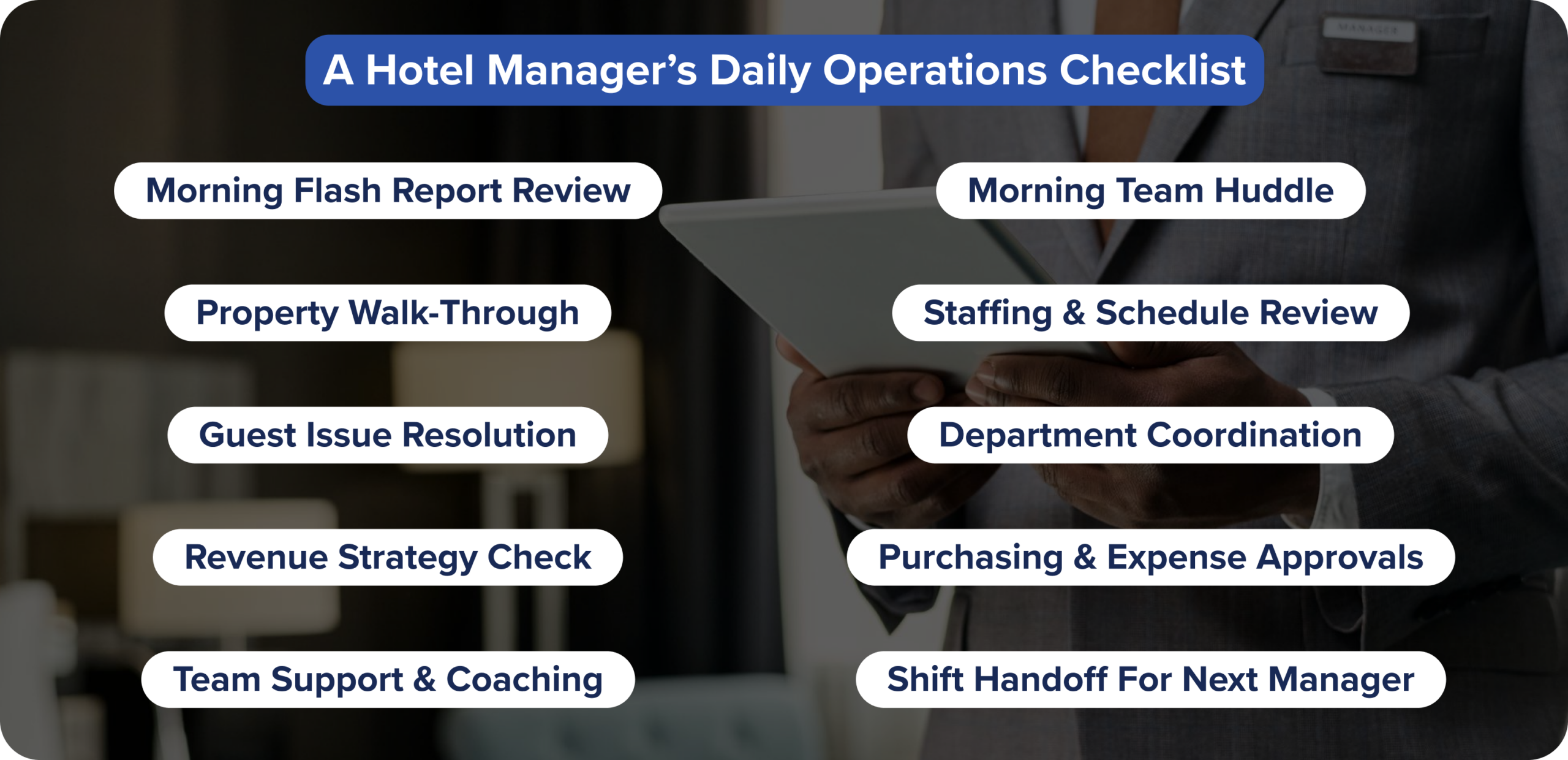
1. Start the Day with the Flash Report
Before anything else, take a look at the flash report. It gives you a quick snapshot of how the property is performing. Check occupancy, ADR, RevPAR, group arrivals, cancellations, and any numbers that look out of the ordinary so you know where attention might be needed.
2. Gather the Team for a Quick Morning Huddle
Most properties kick off the day with a short meeting between department heads. It doesn’t need to be long. Ten minutes is often enough to go over priorities, talk through any expected challenges, and make sure everyone is aligned before the day gets busy.
3. Walk the Property
A quick walk through the building can tell you more than a report sometimes. Look at the lobby, hallways, and a few guest rooms. Stop by the food and beverage areas. Little things like cleanliness, lighting, or maintenance issues are easier to fix when they’re caught early.
4. Check Staffing and Shift Coverage
Hotels move fast, and staffing gaps show up quickly. Review the schedule, confirm key roles are covered, and adjust if someone calls out or business levels shift. Keeping an eye on overtime is part of the balancing act, too.
5. Stay on Top of Guest Issues
Some guest problems naturally make their way to the manager’s desk. Throughout the day, you may need to deal with complaints, service recovery decisions, or special requests from VIPs. The goal is simple: fix problems quickly and make sure the guest has a good time.
6. Keep Departments Connected
A lot of the day is spent making sure teams stay coordinated. Maintenance tickets, room moves, housekeeping holds, and other operational details often need quick decisions so things don’t slow down the guest experience.
7. Check in on Revenue Strategy
Hotel managers also keep an eye on how much money the business makes. That could mean letting a rate change go through, looking at booking patterns, or keeping an eye on what online travel agencies are doing while still pushing direct bookings.
8. Review Purchases and Expenses
During the day, you may need to get approval for big purchases or bills. Managers may also check inventory levels to make sure that departments don’t run out of important supplies.
9. Support the Team When Issues Come Up
Not all talks are about numbers or how things work. Sometimes you just need to check in with a team member who needs help, talk about a performance issue, or help a department fill in a training gap.
10. Wrap Up with a Clear Shift Handoff
Before the day ends, the next manager coming on duty needs a full picture of what’s going on. Any unresolved issues, VIP arrivals, or follow-ups get passed along so nothing falls through the cracks overnight.
Financial and Revenue Side of Hotel Management
In hotel management, the financial side is where daily ops and long-term strategy collide—get the numbers wrong and even excellent service won’t keep the lights on. This area covers budgeting, cash flow, and margin control, plus revenue-focused work like forecasting demand, setting dynamic rates (ADR, RevPAR), and choosing the right channel mix to balance OTA commissions with direct-booking incentives. It also means controlling labor and F&B costs, planning capex, and using timely reports so pricing, staffing, and marketing moves are coordinated with real-world occupancy and guest expectations. Get these levers aligned and you’ll protect margins without sacrificing the guest experience.
How Hotel Management Software Supports Daily Operations
Hotel management these days pretty much runs on software — not because tech is trendy, but because it actually makes the day-to-day less chaotic. The right tools stop your team from wasting time on repetitive tasks, keep guest info from being scattered across five different systems, and let you spot problems before they blow up. Below are the practical ways property management tech helps you get control of operations and keep guests happy.
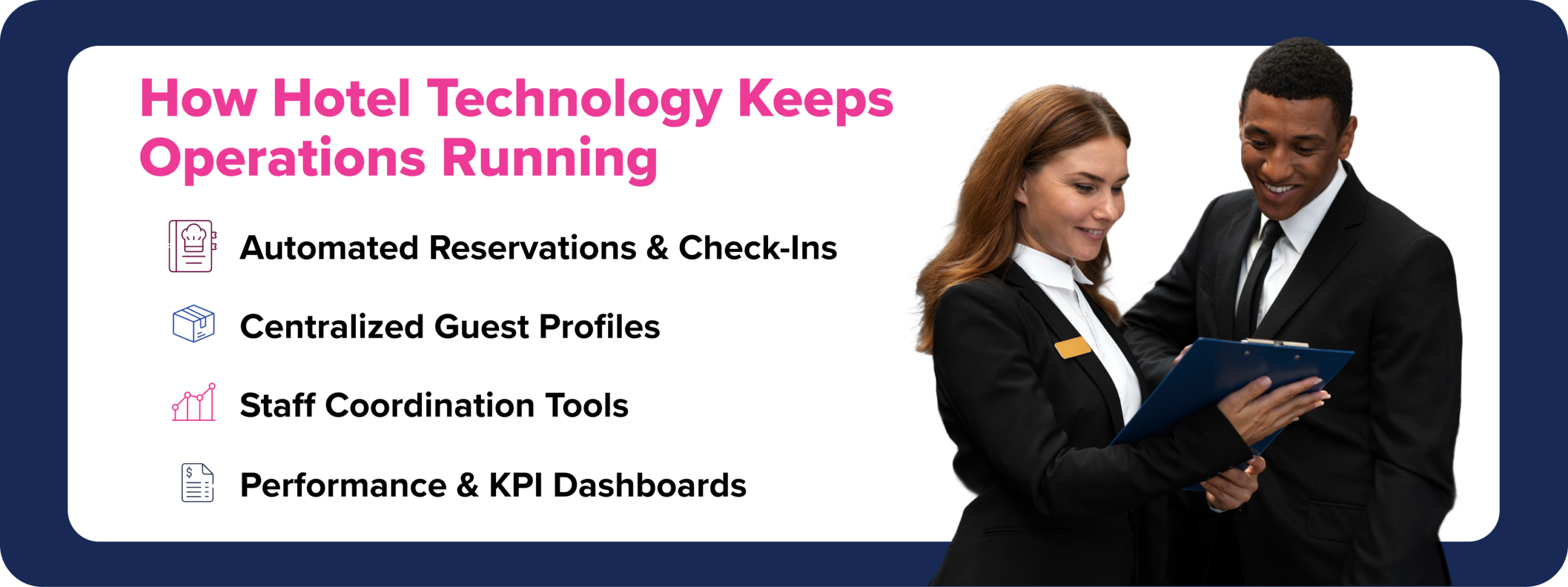
Automate Reservations and Check-Ins
If you’ve spent mornings fixing duplicate bookings or late-night check-in headaches, you’ll appreciate automation. A modern PMS and booking engine handle the heavy lifting: real-time availability, group blocks, modifications, and speedy check-ins.
- Cut the paperwork: fewer manual entries mean fewer mistakes and faster arrivals.
- Speed up arrival moments: mobile check-in, digital keys, and express kiosks get guests to their rooms quicker.
- Make upgrades easy: built-in upsell prompts for upgrades, late check-outs, or add‑ons at booking or check-in boost revenue without extra work.
Centralize Guest Data
Nothing kills a personalized stay faster than a team that doesn’t know a guest’s preferences. Centralized guest profiles fix that — one place for stay history, notes, loyalty status, and special requests.
- Deliver small touches that matter: know their pillow preference, parking needs, or favorite drink before they arrive.
- Make marketing smarter: use real data to send targeted offers, not generic blasts.
- Reduce friction across teams: housekeeping, F&B, and front desk all see the same notes, so the guest gets consistent service.
Improve Staff Coordination
Poor communication is where most slip-ups start. Tasking tools and mobile staff apps keep everyone on the same page in real time.
- Live room status updates speed turnover and prevent overbookings.
- Digital work orders with photos and priority levels cut back and forth, and get maintenance moving faster.
- Assignments and checklists reduce confusion — teammates know exactly what’s next without chasing people down.
Track Performance and KPIs
If you don’t measure it, you can’t fix it. You can make decisions every day with confidence when you have dashboards that show occupancy, ADR, RevPAR, labor %, and guest satisfaction.
- See when demand drops in the middle of the week or when food and beverage margins start to fall.
- Do quick tests: change a rate or package and see what happens in real time.
- Hold teams accountable: shared KPIs show where they are winning and where they are falling short, so coaching isn’t guesswork.
Bottom line: when hotel management software is chosen and set up sensibly, it stops being an IT project and starts being a productivity engine. You get fewer firefights, happier guests, and more time to focus on the parts of hospitality that actually need a human touch.
Common Challenges in Hotel Management and How to Solve Them
Running a hotel isn’t all smooth sailing—stuff hits the fan all the time, from cranky guests to staff calling out sick. But good hotel management means spotting these headaches early and having fixes ready to roll. Here’s the real talk on the top pain points pros face in 2026, plus straightforward ways to tackle ’em without overcomplicating things.
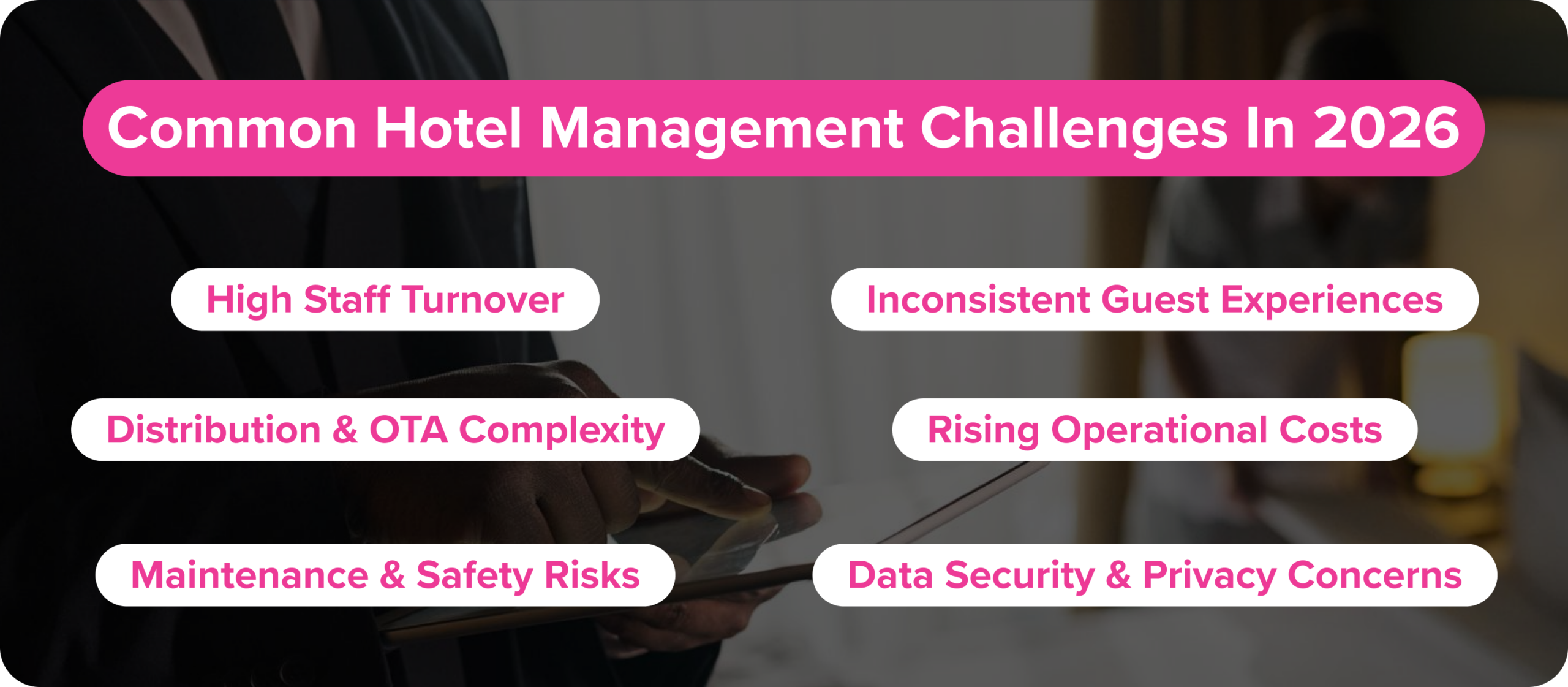
High Staff Turnover
We’ve all dealt with it: great front desk kid quits after three months, housekeeping’s short-staffed during peak season. It’s brutal on morale and your wallet.
Quick Fixes:
- Cross-train everyone so one person can jump between roles—no one’s indispensable.
- Keep schedules predictable and fair; nobody sticks around for constant last-minute swaps.
- Shout-outs win publicly—simple “employee of the month” or shoutouts in huddles go far.
- Onboard newbies right: clear expectations day one, plus real training that sticks.
Inconsistent Guest Experiences
One shift nails it, the next drops the ball. Guest leaves a 5-star review one day, trashes you the next. Frustrating, right?
Quick Fixes:
- Nail down SOPs (standard operating procedures) that are short, visual, and actually used—like checklists on phones.
- Do mystery shopper audits monthly, not just yearly.
- Pull feedback daily from reviews and surveys, then coach the team right away on fixes.
- Train on empathy: role-play tough scenarios, so staff own the recovery.
Channel and Distribution Mess
OTAs eating your margins? Rates all over the place because Booking.com and Expedia aren’t synced? It’s a nightmare keeping it straight.
Quick Fixes:
- Get a solid channel manager—syncs everything in real-time, no more manual updates.
- Push direct bookings hard: flash sales, loyalty perks that OTAs can’t match.
- Set rate parity rules upfront, but fence inventory for high-value guests.
- Track commissions weekly; ditch underperformers if they’re killing profits.
Rising Costs Squeezing Margins
Labor, food, and utilities are spiking while revenue is flat? Feels like you’re paddling upstream.
Quick Fixes:
- Schedule smart: use forecasts to match staff to actual demand, cut overtime ruthlessly.
- Audit suppliers quarterly—switch if they’re gouging.
- Waste less: kitchen apps for F&B inventory, energy timers for lights/AC.
- Menu engineer: kill low-margin items, push what sells and costs peanuts.
Maintenance and Safety Headaches
A leaky faucet turns into a flooded room, or worse, a safety violation fine. Reactive fixes cost double.
Quick Fixes:
- Preventive schedules: monthly checks on HVAC, quarterly on everything else—log it digitally.
- App-based ticketing: photo the issue, assign, track till done.
- Safety drills quarterly, not annually—keep it fresh.
- Budget 3-5% of revenue for capex; don’t let owners nickel-and-dime it.
Data and Privacy Worries
Guests freak if their info leaks, or hackers hit your PMS. Regulations are tighter than ever.
Quick Fixes:
- Update software monthly—patches fix holes.
- Train staff yearly on phishing (most breaches start there).
- Use encrypted backups, two-factor everywhere.
- PCI compliance for payments—no shortcuts.
These aren’t pie-in-the-sky ideas; they’re battle-tested from hotels crushing it right now. Tackle one at a time, measure the wins, and watch your hotel management game level up. Guests stay happier, team sticks around, bottom line grows.
Final Thoughts
Hotel management boils down to three simple things: hire and support people who care, lock down a few rock-solid processes, and use tech only where it actually saves time. Make small, measurable changes—daily forecasting, three SOPs enforced, one tech integration—and you’ll see compounding gains in guest satisfaction and the bottom line. Show up, listen to your team, act on the data, and the rest follows.
Frequently Asked Questions
What are the main functions of hotel management?
In hotel management, the main functions cover everything that keeps a property open, clean, staffed, and profitable. That includes front office (reservations and check‑in), housekeeping and maintenance, food & beverage, and guest services. Behind the scenes, you’ve also got revenue management, sales/marketing, HR, and finance keeping rates, staffing, budgets, and compliance on track. When those pieces sync up, the guest experience and the bottom line both benefit.
What skills are required for hotel management?
Hotel management demands a mix of people skills and commercial sense. Strong communication and leadership are musts — you’ll be coaching teams and calming guests. You also need problem‑solving, attention to detail, and financial literacy to read P&Ls and forecasts. Being tech‑savvy with PMS/CRMs and staying calm under pressure round out the toolkit.
Which software is commonly used in hotels?
Operations in hotel management depend on a few key systems. A Property Management System (PMS) is the main part of the system. It also has a booking engine/CRS for making reservations and a channel manager to keep rates in sync across OTAs. Revenue Management Systems (RMS), POS for food and drink, and CRM platforms all help you set the right prices and market to the right people. Tasking/housekeeping apps and maintenance software are the last two pieces of the stack, and integrations are what make them work.
How can hotels improve guest satisfaction?
In hotel management, improving guest satisfaction is mostly about consistency, speed, and personalization. Train and empower staff to solve problems on the spot, keep rooms and public areas spotless, and remove friction at check‑in/out with fast tech. Use centralized guest profiles to remember preferences and act on feedback so issues don’t repeat. Small, thoughtful gestures often have an outsized impact on loyalty.
What KPIs should hotel managers track?
In hotel management, managers should watch a mix of revenue, cost, and experience metrics. Core revenue numbers are occupancy, Average Daily Rate (ADR), and RevPAR, with GOPPAR useful for profit focus. Operational KPIs like labor cost percentage, average length of stay, and F&B margins show efficiency. Don’t forget guest measures (NPS or review scores) and channel mix/direct‑booking share to protect margins.