

If you’ve spent more than five minutes working in a restaurant, you already know the job isn’t hard because of one big thing. It’s hard because everything is happening at the same time. One minute you’re talking through a prep list, the next you’re reviewing a bank drop, and before you can blink, someone’s asking why you’re out of the one item everyone suddenly wants today.
Most of the stress that weighs operators down comes from a handful of recurring issues. They’re not glamorous, and they’re not new, but they’re the things that quietly eat into margin, morale, and momentum. Once you get a handle on these pressure points, the whole operation starts to feel steadier.
Why Effective Restaurant Management is Critical to Success
Good management isn’t just about sitting in an office with a stack of paperwork. It’s knowing what’s coming before it hits, understanding how one small problem turns into three bigger ones, and having systems that keep things from unraveling on a Saturday night.
When management practices are strong:
- Staff know what’s expected of them
- Costs stop swinging wildly from week to week
- Inventory doesn’t feel like a mystery
- Guests get a consistent experience
- Decisions get easier because the numbers back them up
Restaurants are a balancing act. Strong management is the thing that keeps you from falling off the tightrope.
5 Most Common Problems in Restaurant Management
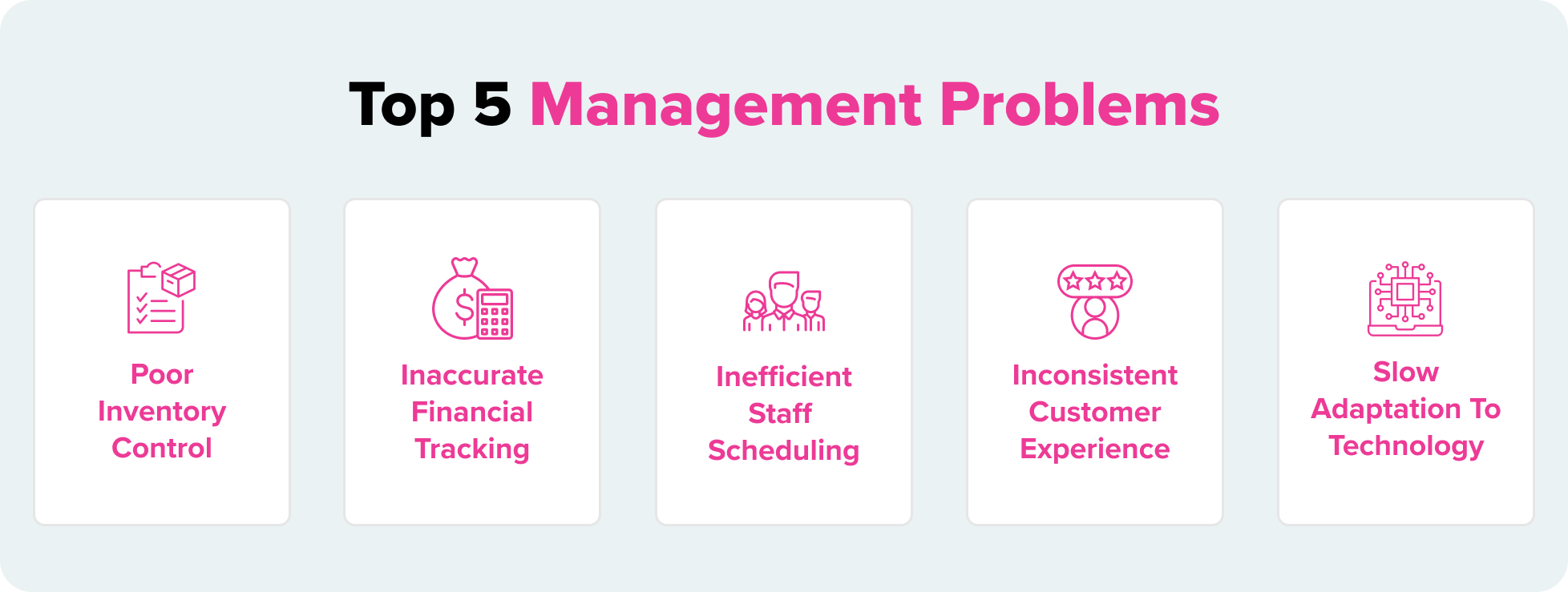
1. Poor Inventory Control
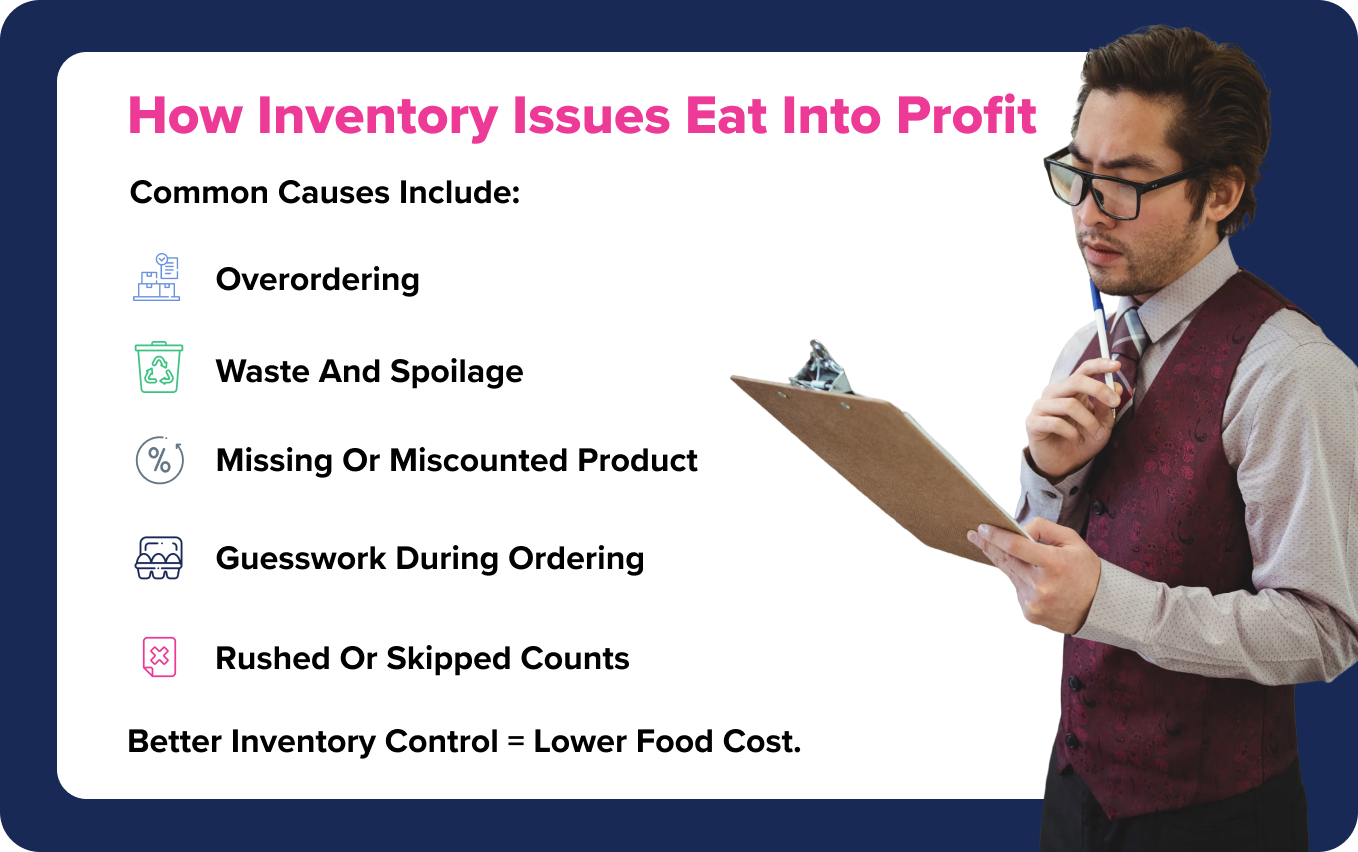
Inventory issues sneak up on you. One week everything looks fine, the next week you’re staring at a food cost report wondering how ten pounds of product evaporated. When counts are skipped or rushed, or when ordering becomes more “gut feeling” than data, the problems stack up fast: waste, overordering, missing product, unnecessary spending.
It’s one of the biggest drains on profitability, usually because no one has the time to slow down and get it right.
Click here for inventory management tips!
2. Inaccurate Financial Tracking
When the numbers aren’t right, nothing else feels right. Maybe invoices sit in a pile waiting to be entered. Maybe reporting is always a week behind. And maybe different managers track things in different ways.
If financials are messy, operators end up making decisions with half-information. And that’s where the expensive mistakes tend to happen.
3. Inefficient Staff Scheduling
Scheduling is an art form on its own. You’re juggling availability, skill levels, school schedules, part-timers, full-timers, rush patterns, and labor budgets—while also praying no one calls out.
When schedules are built on instinct instead of actual demand patterns, you end up with the classic combination: slow days overloaded with staff, and busy days where everyone’s drowning.
4. Inconsistent Customer Experience
A guest shouldn’t need luck to get a good experience. But inconsistency creeps in quickly when training varies by shift leader or when new hires learn the ropes by shadowing three different people who all do things differently.
One day the food is spot-on. The next day the timing is off or the service feels flat. Consistency is what keeps guests coming back—but it’s also one of the first things to go when processes aren’t locked in.
5. Slow Adaptation to Technology
A lot of restaurants still run on systems that worked ten years ago but are barely limping along now. I’ve seen places doing inventory on paper sheets, building schedules in notes apps, and tracking costs with spreadsheets that haven’t been updated since the last GM left.
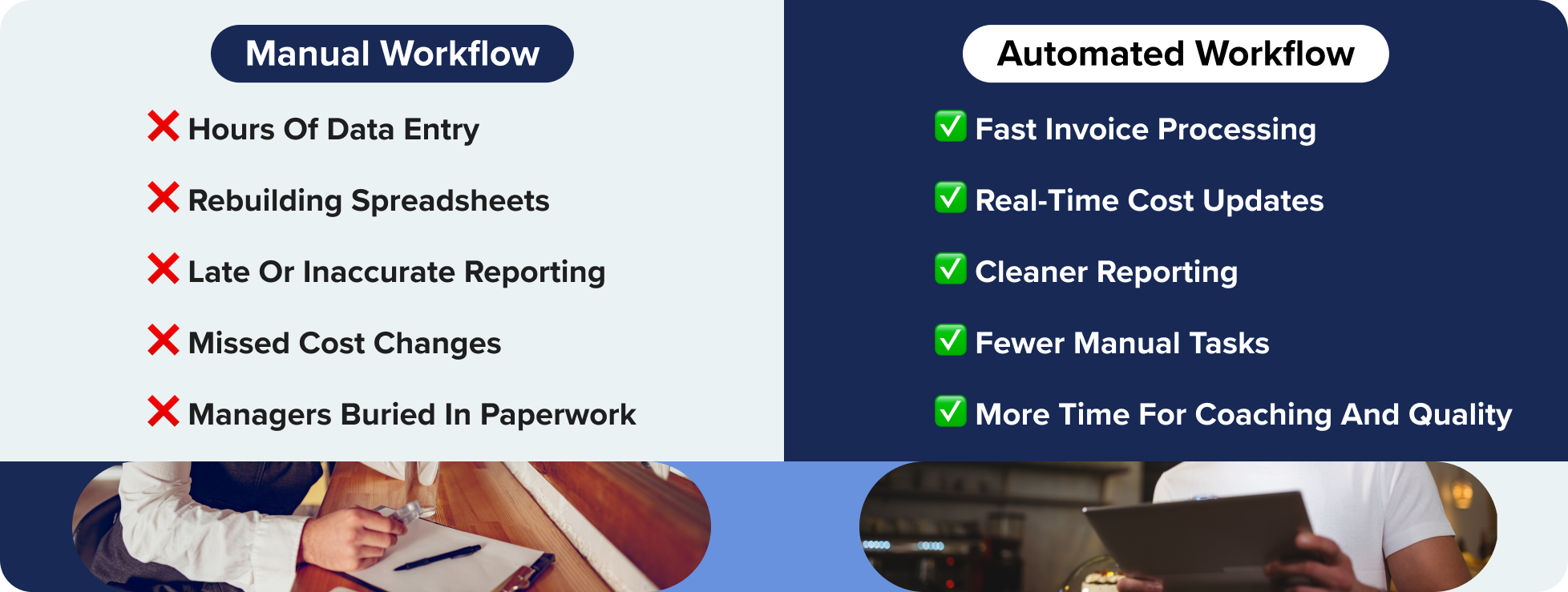
It’s not that operators don’t care. They do. They’re just stretched thin, and learning a new tool can feel like another chore in a never-ending list. But sticking with manual processes creates blind spots—ones you usually only discover once they’ve already hurt your margins.
Proven Solutions to Overcome These Challenges
Implement Inventory and Cost Management Systems
You don’t need complicated software to get your inventory under control. You just need a system that prevents guesswork. Real-time counts, usage tracking, and clearer visibility help operators catch issues before they become expensive problems. Even basic tools can reduce waste, tighten ordering, and bring food cost back down to reality.
Using Restaurant Accounting Software for Accuracy
Restaurant accounting isn’t glamorous, but it’s non-negotiable. Tools built for restaurants take a lot of pressure off managers and owners. Automated invoice entry, cleaner reporting, and up-to-date financial insights help operators understand what’s actually happening—so decisions aren’t based on assumptions or outdated reports.
Leverage Workforce Management Tools
Scheduling stops feeling like a weekly panic session when it’s backed by real data. Workforce tools use sales patterns, labor targets, and coverage needs to help managers build smarter schedules. It reduces overtime surprises and keeps shifts staffed appropriately—even when things get unpredictable.
Standardize Processes and Training
If you want guests to have a consistent experience, your team needs a consistent playbook. Clear checklists. Straightforward training. Expectations that don’t change depending on who’s running the shift.
When the entire team uses the same standards, the operation stops relying on luck and starts relying on systems.
Leverage Technology and Automation
Some back office automation tools can take hours of manual work—invoice entry, inventory updates, recipe costing, reporting—and shrink them down to minutes. It doesn’t remove the need for management; it just removes the clutter.
The more time managers get back, the more they can focus on people, hospitality, and quality—the things that actually move the business forward.
Click here for back office restaurant management software that can help you gain efficiencies and drive profitability.
Conclusion
Every restaurant has its own brand of challenges, but most operators run into the same five problems again and again. The good news? They’re fixable. With more consistent processes, better data, and tools that lighten the administrative load, operators can spend less time fighting fires and more time doing what they do best—running a great restaurant. Click here to see how Buyers Edge Platform can help streamline your operations, sharpen your business decisions, and give you the visibility you need to run smarter, more profitable restaurants.