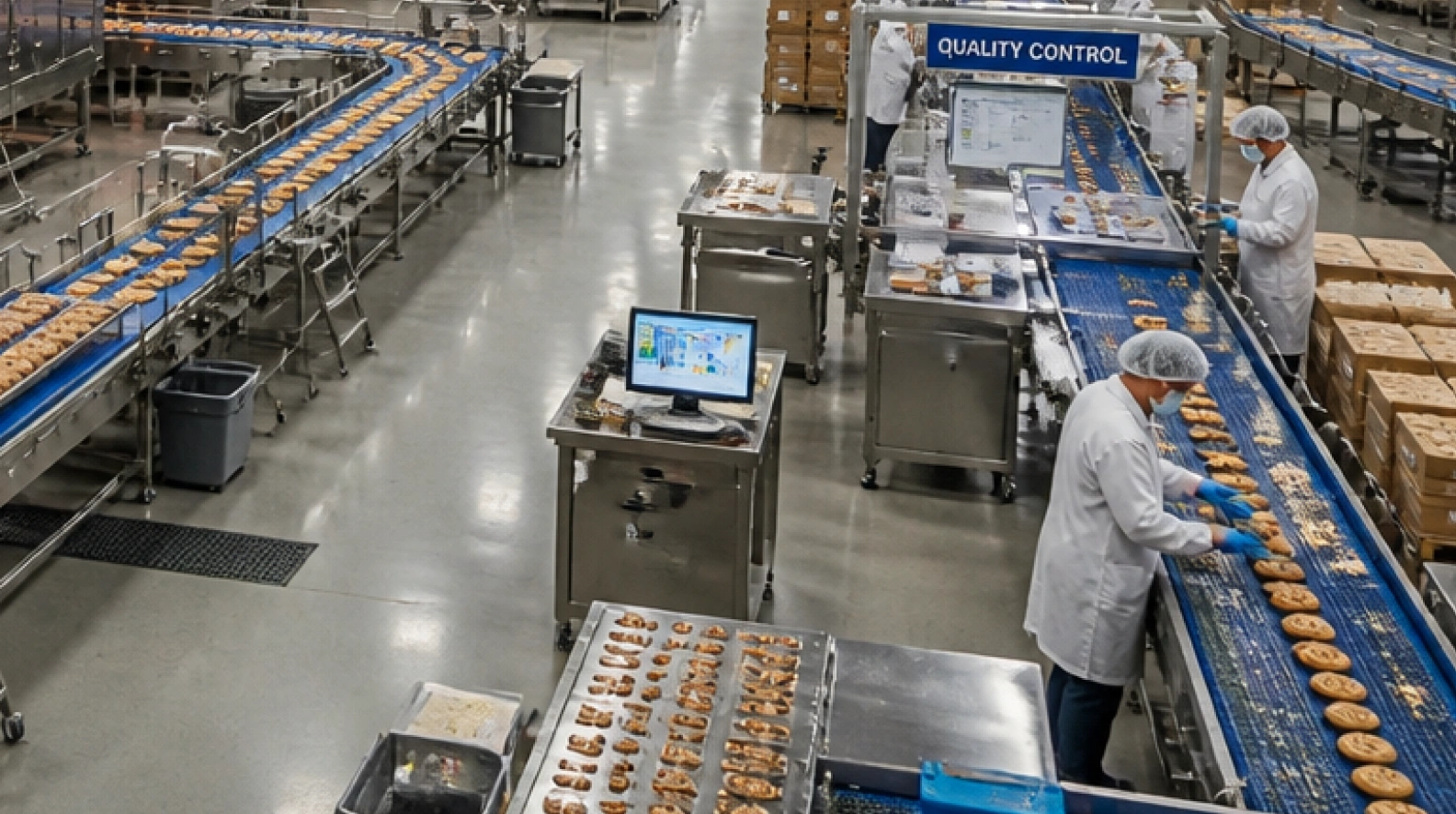
Food manufacturing challenges are becoming more complex in 2026 as manufacturers navigate rising ingredient costs, supplier disruptions, shifting demand patterns, and increasing pressure to improve operational efficiency across production and supply chain operations.
Running a food manufacturing operation in 2026 feels a little different than it did a few years ago. Costs move faster. Forecasts change constantly. Suppliers are harder to predict. And somehow everyone is still expected to move quicker while protecting margins at the same time.
That’s where a lot of food manufacturing challenges are creating pressure right now.
It’s not usually one massive issue causing problems. It’s a bunch of smaller manufacturing and production issues stacking on top of each other. Ingredient costs creep up. Production schedules shift. A supplier shipment comes in late. Raw material inventory suddenly looks off. Then teams spend the rest of the week trying to catch back up.
And honestly, that cycle gets expensive fast.
The manufacturers staying ahead are not necessarily the ones working harder. They’re the ones getting better visibility into procurement, inventory, supplier performance, forecasting, production capacity, and plant operations before problems spiral into something bigger.
Food Manufacturing Cost Challenges
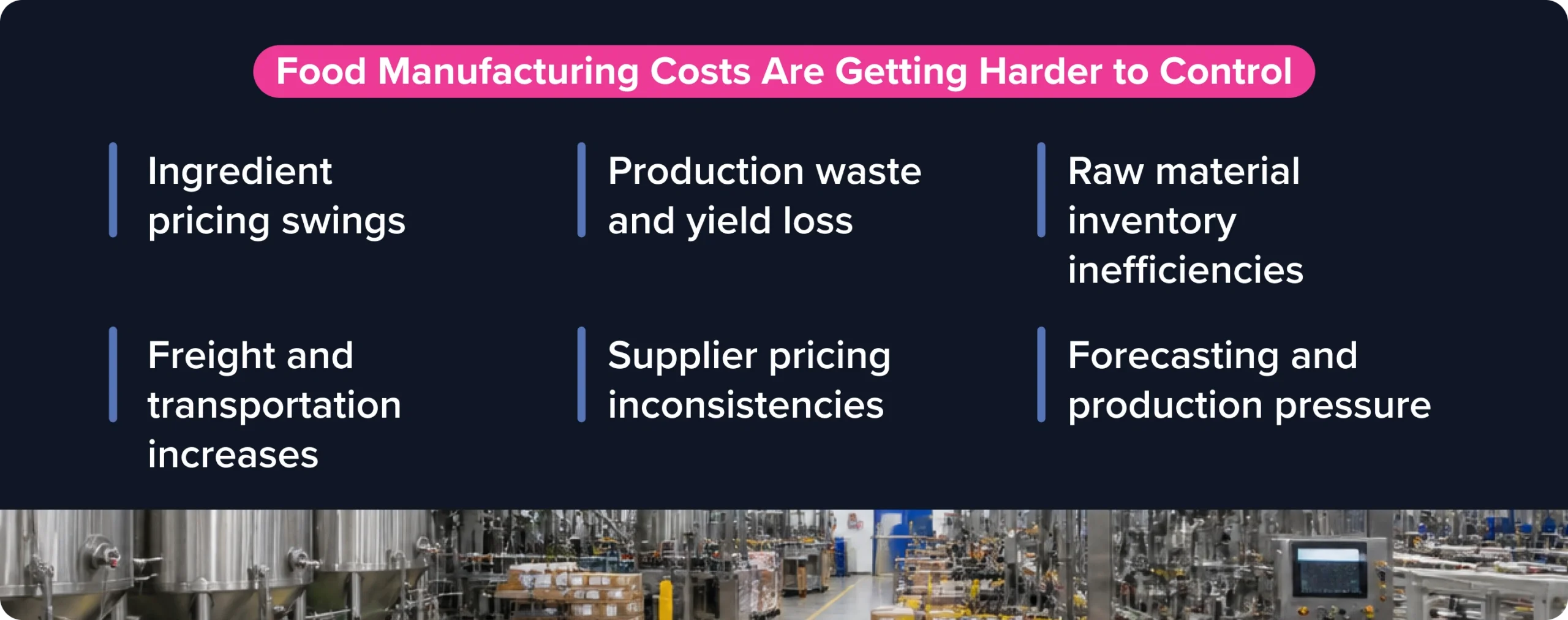
Margins are under pressure almost everywhere right now. Ingredients cost more. Freight costs more. Labor costs more. Even small inefficiencies feel bigger when teams are already trying to protect profitability.
Rising Raw Material and Ingredient Costs
Ingredient pricing has been all over the place lately, and most manufacturers are feeling it.
One month pricing stabilizes a little. The next month a commodity shifts, transportation costs rise, or suppliers start adjusting pricing again. Trying to build a reliable budget around that gets frustrating quickly.
A few common issues manufacturers are dealing with right now include:
- Ingredient costs changing faster than expected
- Supplier surcharges showing up unexpectedly
- Freight and transportation increases
- Commodity volatility across proteins, oils, grains, and dairy
- Backup suppliers costing significantly more than primary vendors
And when pricing changes happen too fast, teams usually end up making reactive purchasing decisions instead of strategic ones.
Waste, Yield Loss, and Production Inefficiencies
Waste does not always show up in obvious ways.
Sometimes it’s overproduction. Sometimes it’s raw materials sitting too long. Sometimes it’s inconsistent yields across production lines or facilities. On their own, those issues may not feel huge. But over time? They quietly chip away at margins.
Manufacturers are often dealing with things like:
- Extra ingredient waste during production runs
- Finished products expiring before shipment
- Downtime during line changeovers
- Inconsistent batching, portioning, or yield optimization
- Production line slowdowns tied to scheduling issues
None of that sounds dramatic individually. Together, though, it creates a pretty expensive problem.
Supplier Pricing and Contract Gaps
Supplier management gets complicated quickly when multiple facilities, vendors, and contracts are involved.
A lot of teams are still tracking pricing agreements manually or bouncing between spreadsheets, emails, and disconnected systems trying to confirm pricing and contract details. That leaves plenty of room for missed rebates, pricing discrepancies, and contract compliance issues.
And usually, teams do not notice the issue immediately. They realize it after costs have already climbed.
Limited Cost Visibility Across Procurement and Production
This is one of the biggest food manufacturing challenges right now. A lot of manufacturers simply do not have a clear view of where costs are slipping across procurement, plant operations, and production.
Procurement sees one thing. Production teams see another. Finance is pulling different reports entirely.
When data lives in separate places, it becomes much harder to answer basic operational questions like:
- Which ingredient suppliers are driving the highest costs?
- Where is the most waste happening across production lines?
- Which SKUs are becoming less profitable?
- Why are manufacturing costs fluctuating week to week?
- Where are purchasing inconsistencies showing up across facilities?
And when nobody has a clear picture, teams end up reacting instead of planning ahead.
Supply Chain and Supplier Challenges
Supply chains have improved compared to a few years ago, but that does not mean things feel stable. Most manufacturers are still dealing with disruptions, delays, and supplier uncertainty on a regular basis.
Multi-Supplier Dependencies and Sourcing Risks
Relying too heavily on one supplier can create problems fast.
If that supplier experiences labor shortages, transportation issues, inventory problems, or quality concerns, production schedules can suddenly shift overnight. Then teams are scrambling to find alternatives while trying not to drive costs even higher.
That’s why more manufacturers are trying to diversify suppliers. The challenge is that managing more suppliers also creates more complexity.
Now teams need visibility into:
- Supplier pricing
- Lead times
- Fill rates
- Quality consistency
- Contract compliance
- Inventory availability
Easier said than done sometimes.
Inconsistent Supplier Quality and Performance
Supplier inconsistency creates a ripple effect across manufacturing operations.
One shipment arrives perfectly. The next has quality issues, spec inconsistencies, or packaging problems that slow everything down during production.
Over time, those issues can lead to:
- More waste
- Production delays
- Failed quality checks
- Product inconsistency
- Customer complaints
- Extra labor tied to rework or adjustments
And honestly, many of these issues repeat themselves because teams do not always have clear visibility into ingredient supplier performance trends.
Delays, Shortages, and Inventory Imbalances
Inventory balancing feels like a constant moving target lately.
Some manufacturers are carrying extra raw material inventory because they are nervous about shortages. Others are trying to stay lean but end up dealing with stockouts that interrupt production schedules. Neither situation feels ideal.
Too much inventory creates waste and higher carrying costs. Too little inventory creates operational chaos.
Most teams are trying to find a balance somewhere in the middle while demand patterns continue changing week to week.
Limited Visibility into Supplier and Inventory Data
This is one of those problems that sounds smaller than it actually is.
A lot of manufacturers still have information scattered all over the place. Raw material inventory lives in one system. Supplier updates come through email. Procurement teams are tracking pricing in spreadsheets. Production teams are working off different numbers entirely. It gets messy fast.
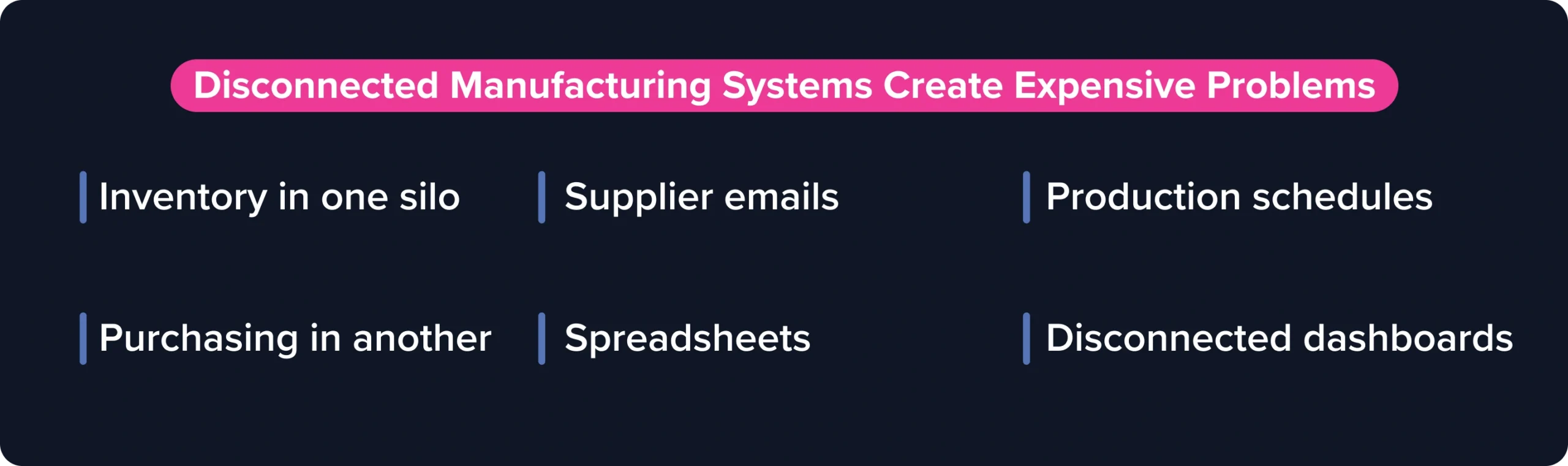
And usually the problem is not that teams are not working hard enough. It is that nobody has the full operational picture right away.
So instead of catching issues early, teams end up doing things like:
- Trying to figure out why raw material inventory suddenly looks off
- Calling ingredient suppliers to confirm shipment updates
- Double-checking purchasing and lot tracking numbers manually
- Realizing too late that a production-critical item is running short
- Pulling reports from five different places just to answer one question
That kind of back-and-forth eats up a lot of time during the week. And honestly, when manufacturing operations are already moving quickly, most teams do not have extra time to waste hunting down information all day.
Production Planning and Demand Forecasting Challenges
Trying to plan production lately has become one of the bigger food manufacturing challenges for many teams. One week demand is steady, the next week orders spike in one category and slow down in another. That makes forecasting a whole lot harder than it sounds on paper.
A lot of manufacturers are adjusting plans constantly just to keep up. And when forecasting is off, even by a little, it usually creates problems somewhere else in the operation. Inventory starts piling up, production schedules shift around, or teams suddenly find themselves short on ingredients they thought they had covered.
Balancing Push vs Pull Production
This is where things start getting tricky for a lot of manufacturers.
Produce too much, and inventory starts sitting around longer than anyone wants. Produce too little, and operations teams are suddenly scrambling to keep up with orders. Neither situation feels great when margins are already tight.
Some manufacturers try running larger batches to keep production moving efficiently and avoid constant line changeovers. That works fine until demand suddenly shifts and now there is extra product taking up freezer or warehouse space.
Others try staying leaner and producing closer to actual demand. That can help reduce waste, but it also means there is less breathing room when orders spike unexpectedly or suppliers miss a delivery window.
And honestly, demand has been unpredictable enough lately that teams are adjusting production schedules way more often than they used to. One week forecasts look solid. The next week something changes and everyone is back in planning meetings trying to rework the schedule again.
Forecast Inaccuracy and Demand Variability
Forecasting has gotten a lot harder lately. Demand patterns are changing faster, customer behavior is less predictable, and manufacturers are having to adjust plans more often than they used to.
Some weeks demand comes in stronger than expected and teams are rushing to keep up. Other times production gets planned around forecasts that suddenly do not match what customers are actually ordering anymore.
That is where things can get expensive.
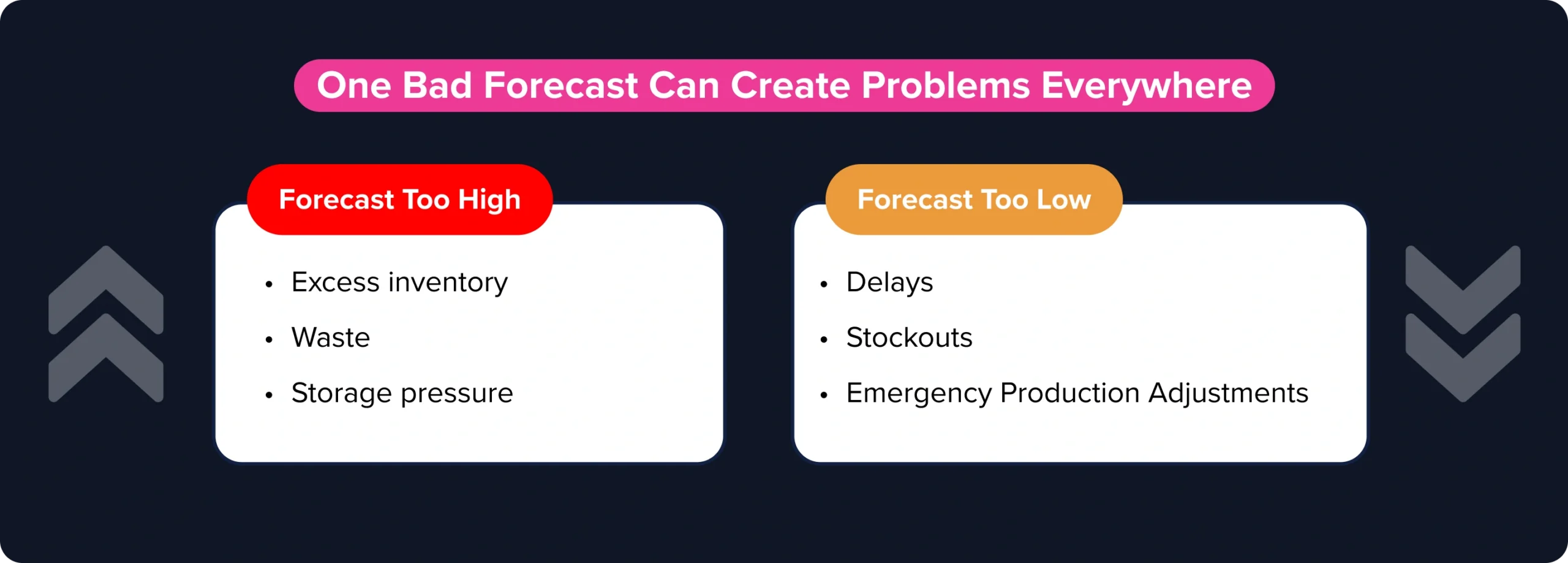
Too much inventory sitting around too long usually leads to waste, storage pressure, or production slowdowns later. But not having enough product ready creates a different problem entirely. Orders get delayed, inventory runs tight, and operations teams end up scrambling to catch back up.
A few things making forecasting more difficult right now include:
- Customer demand changing more frequently
- Seasonal patterns feeling less predictable
- Restaurant operators adjusting menus more often
- Consumers pulling back spending in some categories
- Supplier disruptions affecting availability
- Promotions creating sudden shifts in ordering behavior
Misalignment Between Production and Supply
Production planning only works when procurement, inventory, plant operations, and production teams are aligned.
When those teams are all working from different information, things start slipping through the cracks. Ingredients are missing during production runs. Excess raw materials pile up in storage. Emergency purchasing becomes more common.
That disconnect creates stress for manufacturing teams and usually increases costs at the same time.
Overproduction, Stockouts, and Inefficient Scheduling
Production scheduling sounds straightforward until demand changes unexpectedly.
Then suddenly manufacturers are dealing with too much product in one SKU category and not enough in another.
Overproduction ties up cash and increases waste. Stockouts interrupt fulfillment and impact customer relationships. And inefficient scheduling can create all kinds of operational issues, including:
- Equipment downtime
- Labor inefficiencies
- Production bottlenecks
- Inconsistent throughput across facilities
- Last-minute schedule adjustments
That constant back-and-forth wears manufacturing teams down over time.
Food Safety, Quality, and Compliance Challenges
Food safety has always mattered, but expectations around compliance and traceability keep getting higher. One issue can create financial, operational, and reputational problems very quickly.
Maintaining Consistent Product Quality
Consistency matters. Customers expect products to taste, look, and perform the same every time they order them.
The challenge is that maintaining consistency becomes harder when manufacturers are managing multiple facilities, suppliers, ingredients, production lines, and schedules all at once.
Even small inconsistencies can create larger quality problems later.
Allergen and Labeling Errors
Labeling errors are one of those problems that nobody can afford to overlook.
A single allergen mistake or packaging issue can create major safety concerns, compliance risks, and recall exposure. That’s why manufacturers are putting more focus on ingredient tracking, supplier communication, lot tracking, and labeling accuracy across operations.
Because honestly, one small oversight can turn into a very big problem.
Meeting Regulatory Requirements
Regulatory requirements are not getting simpler anytime soon.
Manufacturers are juggling food safety standards, documentation requirements, labeling regulations, traceability expectations, and customer compliance demands across multiple facilities and production environments.
Trying to manage all of that manually becomes difficult as operations grow.
Traceability and Audit Readiness Gaps
When audits or recalls happen, speed matters.
Teams need quick access to accurate production records, supplier information, inventory tracking, lot traceability data, and QA/QC documentation. But when systems are disconnected, pulling that information together can take far longer than it should.
And that delay creates unnecessary risk.
How to Overcome Food Manufacturing Challenges
There is no single fix for every operational issue manufacturers are dealing with right now. But improving visibility across procurement, production, inventory, supplier management, and plant operations can make a huge difference.
Improve Supplier and Procurement Visibility
The more visibility manufacturers have into ingredient supplier pricing, contracts, performance, and purchasing activity, the easier it becomes to catch issues early instead of reacting later.
That kind of visibility helps teams make smarter purchasing decisions and reduce unnecessary cost surprises.
Connect Production, Inventory, and Demand Planning
Disconnected systems create disconnected manufacturing operations.
When production, procurement, inventory, forecasting, and plant operations teams all work from the same operational data, planning becomes much easier and teams can respond faster when conditions change.
Use Real-Time Data for Faster Decision-Making
Manufacturing conditions can shift quickly. Really quickly sometimes.
Having access to real-time operational data helps teams respond faster to supplier issues, raw material shortages, production slowdowns, and changing demand before those issues grow into larger operational problems.
Tools that provide real-time foodservice market intelligence and operator purchasing visibility can help manufacturers respond faster to changing demand, supplier issues, and inventory disruptions while improving operational decision-making across procurement, production, and supply chain teams.
Reduce Costs Through Better Process and Supplier Control
Cost control is not always about making huge cuts.
A lot of times, it comes from tightening manufacturing processes, improving supplier oversight, reducing waste, improving throughput, and identifying inefficiencies earlier. Small improvements across multiple facilities can create significant long-term savings.
Strengthen Traceability and Compliance Systems
Better traceability systems help manufacturers stay more prepared during audits, recalls, and compliance reviews.
The faster teams can access accurate operational information, the easier it becomes to respond confidently when issues arise.
Overcome Food Manufacturing Challenges with Buyers Edge
Most food manufacturers are not looking for more complexity right now. They are trying to get a better handle on the day-to-day manufacturing and production issues that keep slowing teams down or driving costs higher than expected.
That could be ingredient supplier pricing changing unexpectedly. Raw material inventory is not lining up with production schedules. Forecasts are shifting halfway through the month. Or teams are spending too much time trying to pull information together from disconnected systems just to figure out what is going wrong.
That is where better visibility can make a big difference.
Buyers Edge Platform helps manufacturers gain better visibility into procurement activity, ingredient supplier performance, raw material and finished goods inventory movement, production trends, and operational data so teams can make faster decisions and spend less time reacting to problems after they happen.
If your team is trying to tighten up manufacturing operations, reduce inefficiencies, improve throughput, or strengthen visibility across production and supply chain processes, click here to visit BuyersEdgePlatform.com to learn more.
FAQs
What are the biggest food manufacturing challenges in 2026?
Honestly, a lot of manufacturers are dealing with the same thing right now: everything feels harder to predict. Ingredient pricing changes constantly, suppliers are less consistent, and demand can shift faster than teams expect.
A lot of operations are also feeling pressure from tighter margins, inventory balancing issues, labor challenges, production slowdowns, and forecasting that seems outdated almost as soon as it is finalized.
How can manufacturers reduce production and ingredient costs?
Usually, it starts with cleaning up the smaller operational issues that slowly eat away at margins.
Things like unnecessary waste, overproduction, raw material inventory sitting too long, supplier pricing inconsistencies, or production line slowdowns during schedule changes. None of those problems sounds huge on its own, but over time, they add up.
Most manufacturers are trying to get better visibility into where those costs are actually happening first.
What role do suppliers play in food manufacturing efficiency?
A bigger role than people sometimes realize.
If an ingredient supplier shipment shows up late, has quality issues, or suddenly changes pricing, it can throw production schedules off pretty quickly. Then manufacturing teams are stuck adjusting inventory, shifting schedules around, or trying to source replacements fast enough to avoid bigger delays.
That is why supplier consistency matters so much in manufacturing operations.
How can manufacturers improve supply chain visibility?
For a lot of manufacturers, it comes down to getting rid of disconnected operational information.
When raw material inventory lives in one system, supplier data lives somewhere else, and production teams are looking at completely different reports, it gets difficult to spot problems early.
The manufacturers improving visibility are usually finding ways to connect procurement, inventory, supplier, production, and forecasting data, so teams are not constantly piecing things together manually.
What causes inefficiencies in food manufacturing operations?
Usually, it is a bunch of smaller manufacturing issues stacking up over time.
Forecasts change. Production schedules shift. Inventory gets out of balance. Suppliers fall behind. Waste increases a little here and there. Teams end up reacting all day instead of planning ahead.
That constant scrambling is where a lot of inefficiencies start showing up.
How can data help solve food manufacturing challenges?
Good data helps manufacturers stop guessing so much.
Instead of waiting until costs rise or inventory problems get worse, teams can spot trends earlier and make adjustments faster. That could mean catching supplier issues sooner, improving forecasting, reducing waste, strengthening QA/QC visibility, or simply having a clearer picture of what is happening across operations day to day.