

Making great drinks is only part of running a bar. It’s about keeping the margins safe behind every pour. Liquor is one of the most profitable parts of your business, but if you don’t keep a close eye on your bar’s inventory, it can also be one of the easiest places to lose money. Small problems add up quickly, like pouring too much, missing counts, and not keeping track of waste. The good news is that you can stay in control, cut down on losses, and make sure your liquor program works for your bottom line instead of against it if you use the right bar inventory management techniques.
Why Bar Inventory Management Directly Impacts Profit
Let’s be real, liquor should be one of the highest-margin parts of your business. But without tight bar inventory management, those margins disappear fast.
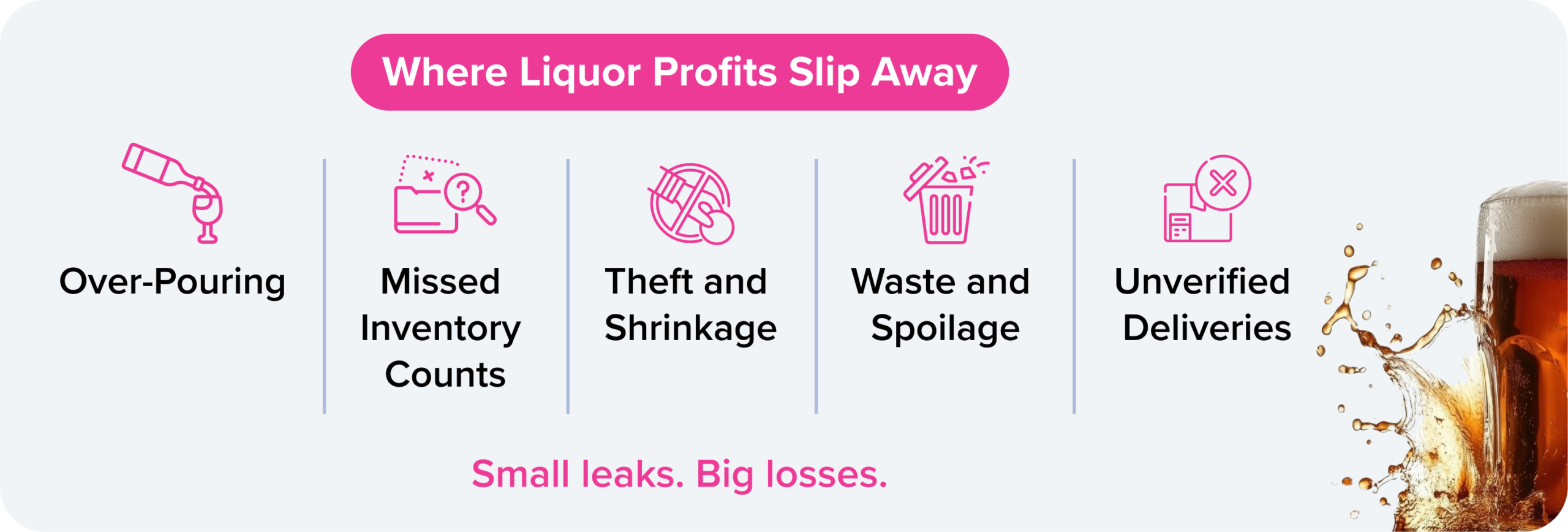
Every over-pour, missed count, or unverified delivery quietly eats into profit. And because it’s not always obvious, operators can go weeks or months before realizing how much they’re losing.
Strong bar inventory management gives you control over what’s actually happening behind the bar. It connects what you’re buying, what you’re selling, and what’s missing. When those three don’t line up, your profit takes the hit.
Core Principles of Bar Inventory Control
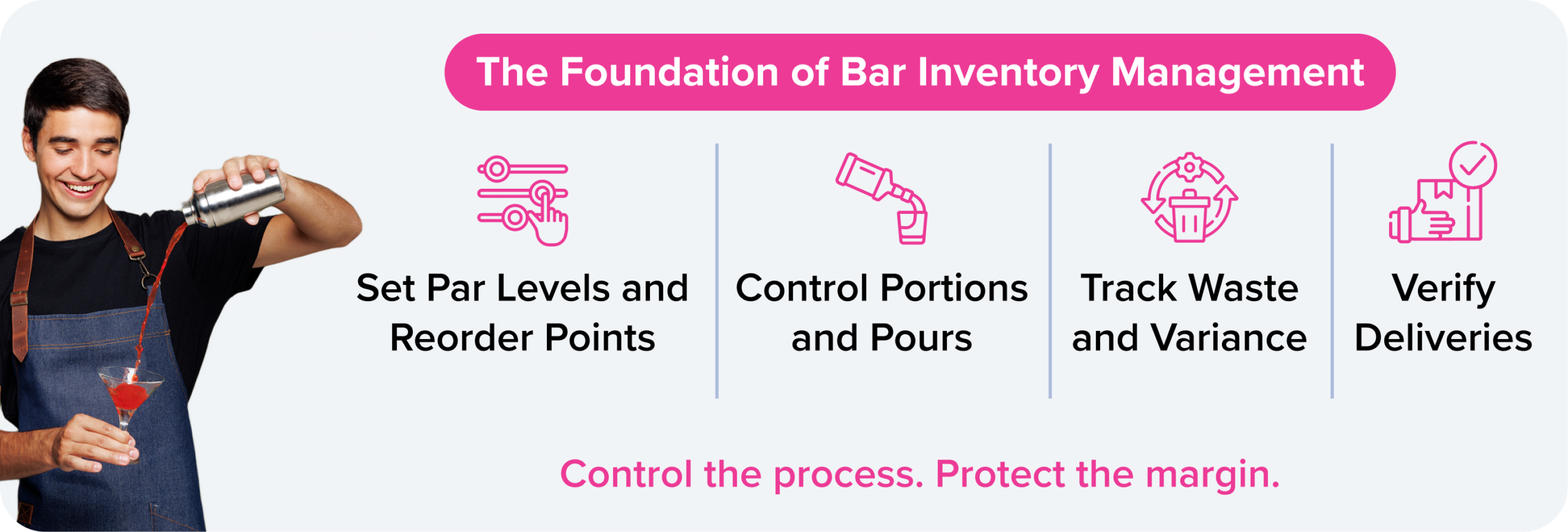
Setting Par Levels and Reorder Points
Running out of Tito’s on a Saturday night? That’s a problem. Sitting on cases of slow-moving liqueur? Also, a problem.
Bar inventory management starts with knowing exactly how much of each product you need on hand. Par levels help you stay stocked without over-ordering, while reorder points keep you ahead of demand.
The goal is simple: enough inventory to run smoothly, not so much that cash is sitting on the shelf.
Portion and Pour Control
This is where a lot of profit leaks happen.
A “heavy hand” might feel like good hospitality, but it adds up quickly. Even an extra half-ounce per drink can throw off your margins in a big way over time.
Standard pours, jiggers, and staff training are essential parts of bar inventory management. If every bartender pours differently, your numbers will never make sense.
Waste and Variance Tracking
Inventory isn’t just about what you have, it’s about what’s missing.
Variance is the difference between what you should have and what you actually have. And in bar inventory management, even small variances can signal bigger issues.
Spills, comps, over-pouring, or even theft all show up here. Tracking it consistently helps you catch problems early instead of reacting after the damage is done.
Vendor and Delivery Verification
You can’t manage what you never received.
Deliveries should always be checked against invoices before they hit your shelves. Shorted cases, incorrect items, or pricing discrepancies happen more often than most operators think.
Bar inventory management isn’t just internal; it starts the moment the product arrives at your door.
Unique Challenges in Bar Inventory Management
High Product Turnover
Liquor sells quickly, especially your main items. Without a consistent process, that constant flow makes it harder to keep track of accurate counts.
Things get messy fast if you miss a count or put off taking inventory.
Spoilage and Expiration Risks
Not everything behind the bar will last forever.
Some liqueurs, fresh juices, syrups, and garnishes have a shelf life. If you don’t keep track of and rotate your stock properly, you’re wasting money every time something goes bad.
Employee Theft and Over-Pouring
It’s not always on purpose, but it always costs a lot.
Bar inventory management needs guardrails to keep things from getting out of hand, whether it’s over-pouring, untracked comps, or something worse. Accountability and clear processes keep your team and your profits safe.
Breakage and Wastage
Bottles get dropped. Glassware breaks. Things happen.
But without tracking breakage, it just becomes another invisible cost. Strong bar inventory management accounts for these losses so they don’t quietly pile up.
Step-by-Step Bar Inventory Management Process
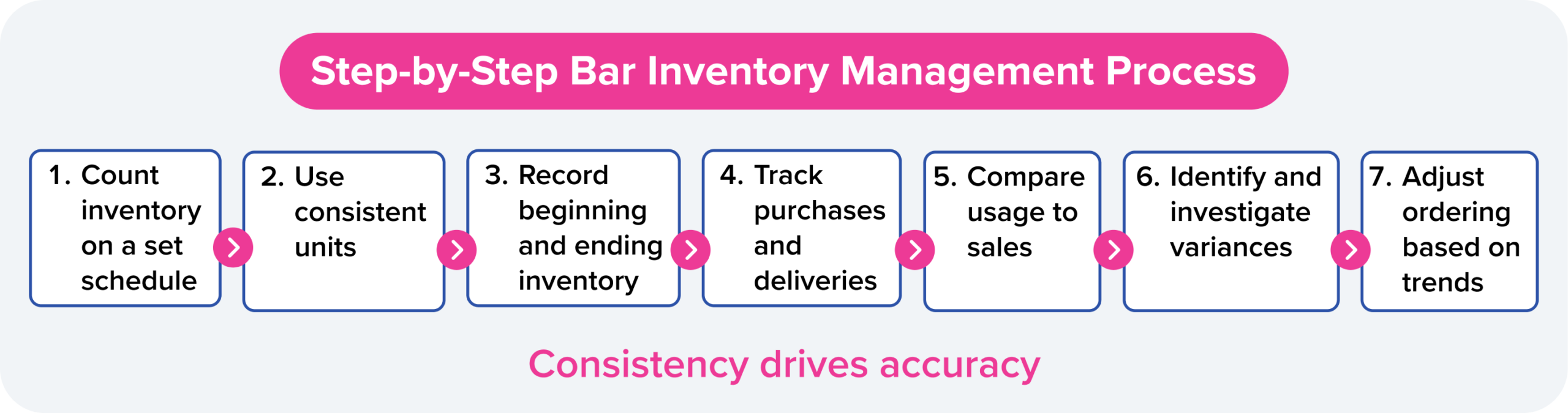
A solid bar inventory management routine doesn’t have to be complicated, but it does need to be consistent.
- Count inventory on a set schedule (weekly is standard for most bars)
- Use consistent units (bottles, ounces, or cases, just don’t mix them)
- Record beginning and ending inventory
- Track purchases and deliveries accurately
- Calculate usage and compare to sales data
- Identify variances and investigate immediately
- Adjust ordering based on real usage trends
The key is consistency. Same process, same timing, every time.
Using Bar Inventory Software to Improve Accuracy and Control
Manual counts and spreadsheets can only take you so far.
Bar inventory management software helps automate calculations, track variance in real time, and connect inventory directly to sales data. That means fewer manual errors and faster insights into what’s actually happening.
Instead of guessing where losses are coming from, you can see it clearly and act on it.
Key Metrics to Track Bar Inventory Performance
If you’re not tracking it, you can’t improve it.
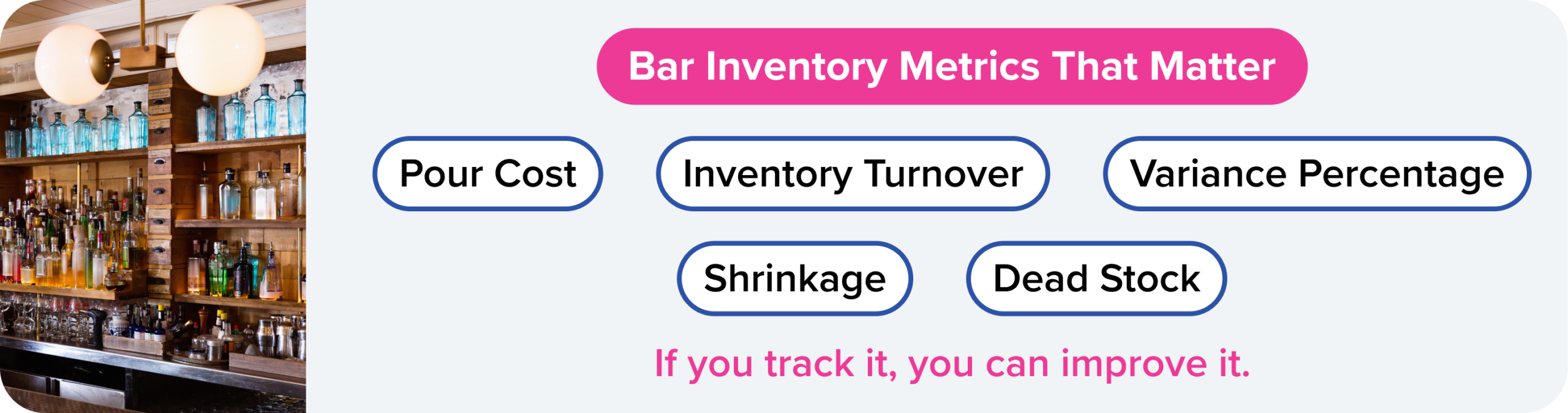
Here are a few key metrics every operator should watch as part of their bar inventory management strategy:
- Pour Cost: How much your liquor costs relative to sales
- Inventory Turnover: How quickly products are used and replaced
- Variance Percentage: The gap between expected and actual inventory
- Shrinkage: Loss from theft, waste, or over-pouring
- Dead Stock: Products that aren’t moving and tying up cash
These numbers tell the story of your bar. The goal is to keep them tight and predictable.
Final Words
Bar inventory management isn’t glamorous, but it’s one of the fastest ways to protect and improve your margins.
The operators who treat it like a priority, not a chore, are the ones who stay profitable. Because at the end of the day, every ounce matters.
Bar Inventory Management FAQs
How often should a bar take inventory?
Most bars should do bar inventory management counts once a week. More frequent spot checks on important items may help businesses that do a lot of business.
What is an ideal pour cost for bars?
Depending on your idea and pricing strategy, pour cost usually falls between 18% and 25%. Good bar inventory management helps keep it on track.
How can bars prevent over-pouring?
Use standard tools like jiggers, train your staff the same way every time, and keep a close eye on any differences in your bar inventory management process.
What does FIFO mean in bar inventory?
“First In, First Out” is what FIFO means. In bar inventory management, it means using older products before newer ones to cut down on waste and spoilage.
Click here to take control of your bar inventory management and start protecting your profits today.