
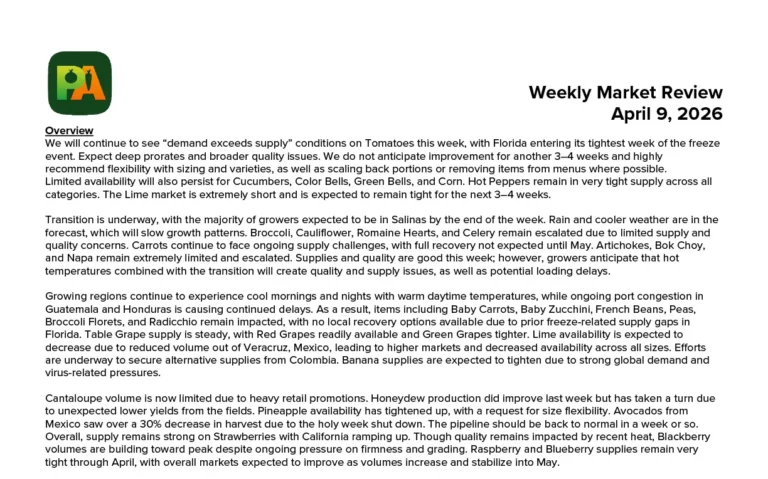
Alerts & What’s Trending Produce Tomatoes remain elevated around $40/carton with weak demand at that level. Lettuce rebounded off its price floor, and onions are seeing upward movement, especially reds. Outlook: Expect continued volatility. Tomatoes should ease once supply improves, while lettuce likely stays rangebound. Onion pricing may hold in the near term, but not all varieties have staying power. Grains Wheat markets surged due to worsening drought conditions in key growing regions, with no meaningful rain in the forecast. Outlook: There’s still room for upward movement in wheat. If drought conditions persist, expect continued pressure on grain-related costs, especially baked goods and feed-driven proteins. Dairy Cheese prices held steady, butter declined, and nonfat dry milk continues its aggressive rally. Milk supply is building seasonally, supporting production. Outlook: Cheese should remain relatively stable, but rising nonfat dry milk could quietly support pricing. Watch export activity, as global

Source: InsideTrack
Alerts & What’s Trending Produce Tomatoes remain volatile but showed signs of stabilizing last week. Avocado prices jumped due to temporary supply disruptions but are expected to ease. Broccoli saw a short-term rebound but is expected to decline again heading into May. Outlook: Expect continued volatility in key produce items. Build flexibility into menus and sourcing, especially for tomatoes and avocados. Grains Grain markets trended downward, with improved weather conditions easing drought concerns and putting pressure on corn prices. Soybean meal was the exception, moving higher. Outlook: Lower grain prices could eventually ease feed costs, which may help stabilize protein pricing over time. Dairy Dairy markets were mixed. Cheese and butter softened slightly, while nonfat dry milk surged to a 12-year high, though it may be nearing a peak. Milk production is increasing seasonally, supporting overall supply. Outlook: Stable-to-soft pricing on core dairy items like cheese and

Source: Source1
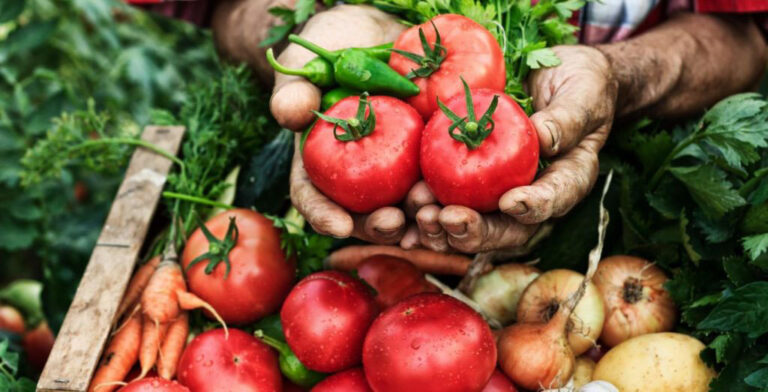
Alerts & What’s Trending Produce 24-count iceberg lettuce prices declined toward a $10/carton floor last week. Conversely, 25 lb. large Roma tomatoes surged near $40/carton again, extending volatility expected through April until Mexican and Eastern U.S. volumes improve. 48-count Hass avocados reached a year-to-date high pre-Semana Santa but remain deflated versus norms. Demand collapses previously tempered tomato spikes, suggesting a similar pattern ahead. For dining alliances, tomato price swings challenge menu costing, while avocados offer moderate upside potential. Outlook: Tomato volatility persists until late-month supply ramps; avocados likely climb through June but cap near $40/carton absent disruptions. Grains Grains showed mixed performance last week amid biofuel news, USDA planting/stocks reports, Middle East tensions, and weather, with soybean oil stalling post-March rally despite EPA’s strong 2026/27 biomass diesel mandate. Soybeans remained stable, unmoved by reports or EPA news, possibly awaiting delayed Trump-Xi trade talks in May. Crude oil weakness
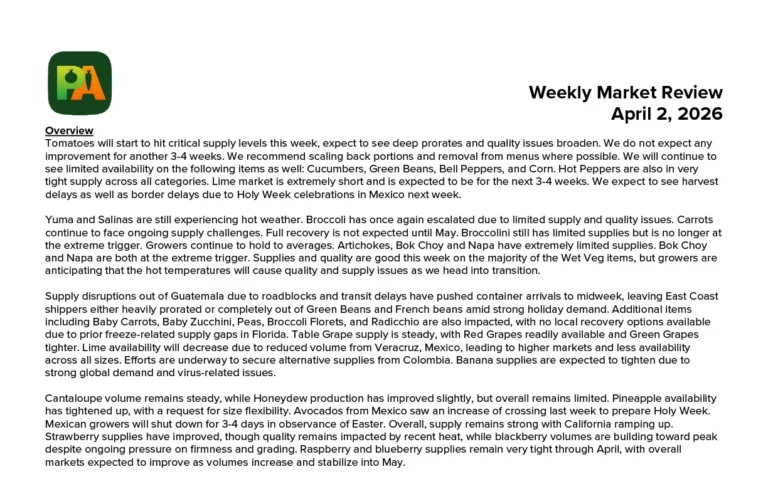
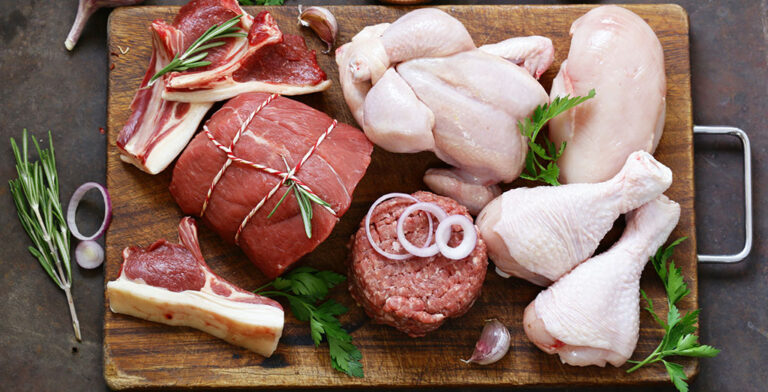
Alerts & What’s Trending Produce Iceberg lettuce prices continued to decline and are approaching the $10–$15 carton range, offering some seasonal relief. Tomatoes remain volatile, with supply gaps in the Eastern U.S. and limited support from Mexico keeping prices elevated. Meanwhile, 88-count California oranges are holding around $30 per carton, higher than typical for this time of year. Outlook: Expect continued volatility in tomatoes, while other produce items remain more stable with some upward pressure heading into summer. Grains Grain markets gained momentum late in the week following new renewable fuel policy updates, with stronger-than-expected biofuel mandates boosting soybean oil demand. However, the delay of import penalties to 2028 has created uncertainty around long-term demand recovery. Outlook: Expect increased volatility as policy developments and biofuel demand continue to influence grain pricing. Dairy Dairy markets were mixed, with cheese blocks rising to $1.6305 and nonfat dry milk jumping