Trying to predict food demand right now honestly feels a little like trying to predict the weather. One week operators are ordering aggressively because business is booming, and the next week traffic slows down, weather changes, or an event gets canceled and suddenly inventory is sitting longer than expected.
That’s why food demand forecasting has become such a major focus for distributors.
It’s not just about guessing what customers might order next month. It’s about using real purchasing patterns, inventory movement, and operational data to make smarter decisions before problems start piling up.
Because when forecasting is off, the problems usually start showing up pretty quickly across the operation.
- Maybe inventory starts sitting longer than expected.
- Maybe a high-volume product suddenly runs short.
- Maybe purchasing teams are rushing to adjust orders last minute.
- Maybe operators are dealing with substitutions or inconsistent availability.
And the tough part is that it’s usually not one major issue causing problems. In food distribution, smaller forecasting misses can snowball pretty quickly over time.
What Food Demand Forecasting Means for Distributors
At its core, food demand forecasting is exactly what it sounds like. It’s the process of predicting future product demand so distributors can plan inventory, purchasing, and replenishment more accurately.
But for distributors, it usually goes deeper than just “how much product do we need?”
You’re also trying to figure out:
- Which SKUs are moving faster than expected
- Which locations are seeing different buying patterns
- What products are becoming inconsistent
- Where supplier delays could create issues
- How seasonality is impacting orders
A distributor serving schools in the Midwest is going to see very different demand behavior than one supporting restaurants in tourist-heavy coastal markets. That’s why food demand forecasting has to be flexible and constantly evolving.
Why Accurate Food Demand Forecasting Is Critical
Food distribution moves fast. There’s not a lot of room for bad inventory decisions.
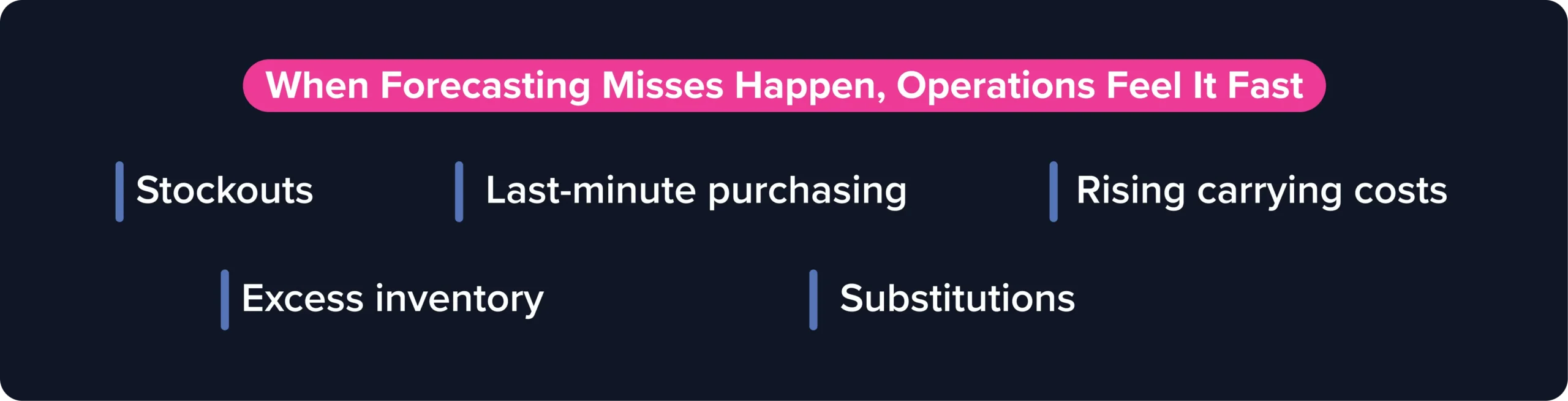
If demand gets underestimated, you run into stockouts, rushed purchasing, frustrated operators, and missed sales opportunities.
If demand gets overestimated, warehouses fill up with slow-moving inventory, spoilage risk increases, and carrying costs climb.
Neither scenario feels great.
Accurate food demand forecasting helps distributors find a better balance between supply and actual demand so operations run smoother overall.
It also helps teams stop operating in reaction mode all the time.
A lot of distributors are still relying heavily on spreadsheets, gut instinct, or static reports that are already outdated by the time someone reviews them. The problem is that customer behavior changes too quickly now for that approach to keep up consistently.
Key Data Inputs for Food Demand Forecasting
Good food demand forecasting depends heavily on visibility. The more data distributors can pull together, the easier it becomes to spot patterns and make smarter decisions.

Historical Sales and Demand Patterns
This is usually the starting point.
Looking at historical purchasing trends helps distributors understand:
- Seasonal demand shifts
- Recurring order patterns
- Product spikes
- Slower periods
- Customer buying habits
For example, maybe seafood demand jumps every year during Lent. Maybe frozen appetizer orders increase during football season. Maybe beverage movement spikes during summer months.
Historical data helps build a clearer picture of what “normal” demand actually looks like.
SKU-Level Demand and Product Movement
Not every product behaves the same way.
Some SKUs move consistently every single week. Others fluctuate constantly depending on weather, menu trends, promotions, or pricing.
That’s why food demand forecasting gets much more accurate when distributors look at demand at the SKU level instead of just broad categories.
Because saying “protein demand is increasing” is helpful.
But knowing chicken wings are moving faster in certain regions while frozen burger movement is slowing down? That’s much more actionable.
Location-Level Demand Variability
Different markets buy differently.
A distributor supporting college towns may see demand swings around school schedules. Tourist-heavy markets may experience major seasonal fluctuations. Weather can completely change buying patterns in certain regions.
That’s why forecasting across an entire network without looking at individual locations can create problems fast.
The more localized food demand forecasting becomes, the more accurate it usually gets.
Supplier Lead Times and Order Constraints
This is one area that can throw forecasts off quickly.
You might know demand is increasing, but if supplier lead times stretch unexpectedly or availability changes, purchasing plans suddenly become much more complicated.
Distributors have to factor in things like:
- Production schedules
- Import delays
- Supplier minimums
- Delivery windows
- Capacity limitations
Especially with volatile commodities or specialty products.
External Demand Signals (Weather, Events, Seasonality)
Honestly, sometimes outside factors impact food demand more than internal sales trends do.
A heat wave can increase beverage movement overnight. A major sporting event can spike demand for proteins and appetizers. Storms can completely shift ordering behavior in certain regions.
Food demand forecasting works better when distributors pay attention to external demand signals instead of only relying on historical reports.
How Food Demand Forecasting Works in Distribution
Forecasting has changed a lot over the last several years.
Most distributors are trying to move away from reactive purchasing and toward more real-time operational visibility.
Moving Beyond Manual and Spreadsheet-Based Forecasting
Spreadsheets work… until they don’t.
Once operations grow more complex, manually tracking purchasing trends across hundreds or thousands of SKUs becomes incredibly difficult to maintain accurately.
And honestly, a lot of teams spend more time updating spreadsheets than actually analyzing what the data is telling them.
That’s why many distributors are investing in systems that centralize purchasing, inventory, and demand data into one place instead of piecing everything together manually.
Leveraging Real-Time Demand Signals
This is where food demand forecasting becomes much more useful operationally.
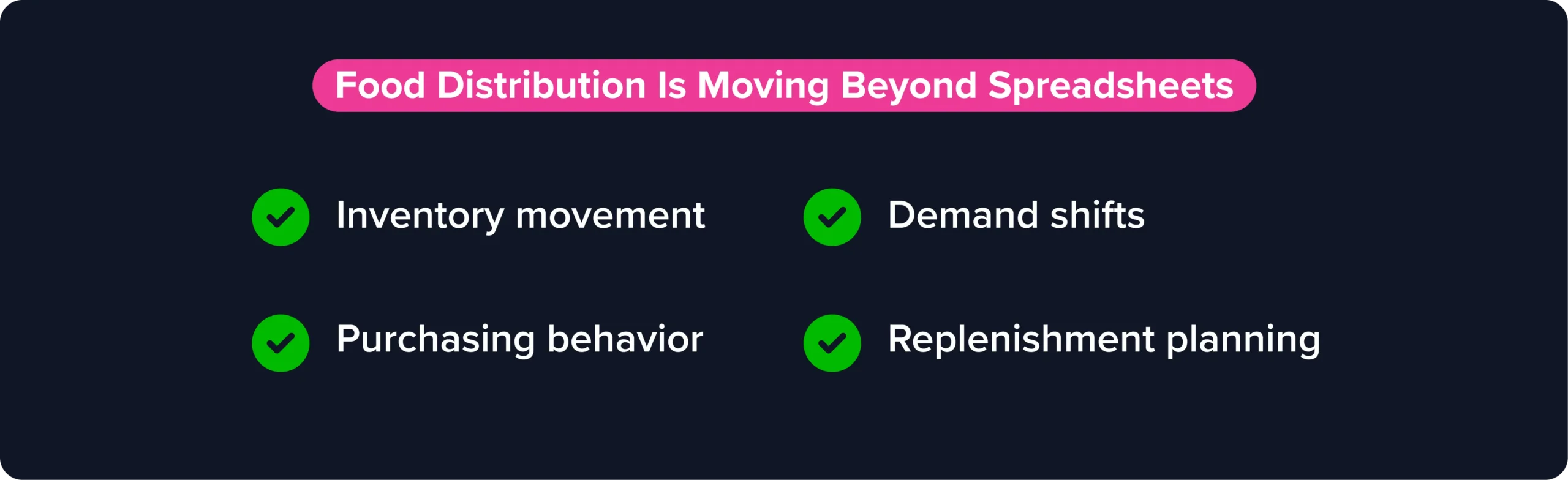
Instead of waiting for end-of-week reports, distributors can monitor demand changes as they happen.
That includes things like:
- Order velocity
- Inventory movement
- Customer purchasing shifts
- Regional demand spikes
- Sudden volume increases
The faster teams can spot changes, the faster they can adjust inventory and purchasing decisions.
Automating Replenishment and Order Planning
Manual replenishment planning eats up a lot of time.
Modern food demand forecasting systems help automate parts of the purchasing process by recommending reorder quantities based on:
- Current inventory
- Forecasted demand
- Supplier lead times
- Historical movement
- Safety stock levels
That helps reduce some of the constant manual guesswork purchasing teams deal with every day.
How Distributors Improve Forecast Accuracy
Forecasting is never going to be perfect. Demand changes too often for that.
But distributors can absolutely improve accuracy over time.
Forecast at the SKU and Location Level
Broad forecasting models usually miss smaller demand shifts happening at individual locations.
Forecasting by SKU, territory, warehouse, or customer segment gives distributors a much more detailed view of actual demand behavior.
And honestly, that level of visibility matters a lot when margins are tight.
Align Sales, Procurement, and Operations
One of the biggest forecasting issues usually isn’t technology.
It’s communication.
Sales teams often know about upcoming promotions or customer growth before procurement teams do. Operations teams may spot inventory bottlenecks before purchasing teams catch them.
When those teams operate separately, forecasting gaps start happening fast.
Build Feedback Loops from Orders and Demand
The best food demand forecasting strategies keep evolving.
Distributors that regularly review forecast performance can spot where assumptions were off and make adjustments moving forward.
Over time, those feedback loops help forecasting become much more reliable.
Segment Products by Demand Behavior
Some products are extremely stable. Others are unpredictable every single week.
Trying to forecast both the same way usually creates problems.
Segmenting products based on demand behavior helps distributors apply more realistic forecasting strategies across different categories.
How to Measure Demand Forecast Performance
Food demand forecasting only matters if it’s actually improving operations.
Forecast Accuracy and Demand Variance
This measures how close projected demand was to actual demand.
If forecasts constantly overshoot or undershoot inventory needs, teams can identify where adjustments need to happen.
Fill Rate and Service Level Impact
Poor forecasting usually shows up operationally pretty quickly.
If distributors are struggling with fill rates, substitutions, or inventory shortages, forecasting accuracy is often part of the issue.
Waste Reduction and Inventory Efficiency
This is a big one, especially for fresh products.
Better food demand forecasting helps reduce:
- Spoilage
- Excess inventory
- Slow-moving product buildup
- Emergency purchasing
Which helps improve inventory efficiency overall.
Common Challenges in Food Demand Forecasting
Even strong forecasting systems run into challenges.
A few of the biggest ones include:
- Inconsistent data
- Rapid demand swings
- Supplier disruptions
- Limited inventory visibility
- Weather-related demand shifts
- Seasonal fluctuations
- Last-minute customer changes
- Manual operational processes
The reality is that food distribution is unpredictable sometimes. Forecasting is really about improving visibility and making faster, smarter adjustments when conditions change.
Connecting Forecasting to Procurement Decisions
This is where food demand forecasting becomes especially valuable.
Because forecasting is not just about inventory. It directly impacts procurement strategy too.
Optimize Order Timing and Quantities
Better forecasting helps distributors avoid over-ordering while still protecting inventory availability.
That balance becomes really important when pricing volatility increases.
Reduce Cost Variability
When procurement teams have better visibility into future demand, they can plan purchases more strategically instead of scrambling during shortages or price spikes.
Improve Contract Compliance
Food demand forecasting also helps distributors align purchasing behavior more closely with supplier agreements and projected volume commitments.
That visibility helps support stronger contract utilization over time.
Final Thoughts
Food demand forecasting has become a huge part of running a more efficient distribution operation.
Distributors are dealing with tighter margins, more volatile demand patterns, rising costs, and constant supply chain pressure. Guesswork just doesn’t hold up the way it used to.
The distributors improving food demand forecasting today are usually the ones gaining better visibility into inventory, purchasing behavior, operational trends, and demand movement across their network.
And honestly, that visibility makes a massive difference when operations start getting complicated.
Want to improve visibility into purchasing, inventory movement, and operational forecasting? Click here to connect with the Buyers Edge Platform team.
FAQs
What is food demand forecasting?
Food demand forecasting is basically a way for distributors to make a more educated guess about what customers are actually going to need in the weeks ahead. Instead of waiting until products start running low or warehouses start getting overloaded, teams use past orders, purchasing patterns, and inventory data to plan ahead a little more strategically.
In food distribution, things change constantly. One product suddenly takes off because of a menu trend, another slows down because of pricing, and weather can completely change ordering behavior overnight. Food demand forecasting helps distributors stay a step ahead so they are not constantly reacting to problems after they already happened.
How do distributors accurately forecast demand?
Honestly, the distributors that forecast demand the best are usually the ones paying attention to the details every day instead of relying on one giant report once a month. They are watching what products are moving faster, which customers are changing buying habits, where inventory is sitting too long, and how supplier timelines are shifting.
A lot of teams also break forecasts down by SKU and location because demand is rarely consistent across an entire network. A product that flies out of the warehouse in one region might barely move somewhere else. Looking at demand that closely helps distributors avoid overbuying in some areas while running short in others.
What factors affect food demand forecasting?
There are honestly a ton of moving pieces that affect food demand forecasting. Weather is a big one. A stretch of hot weather can suddenly increase beverage and grilling product demand almost immediately. Major sporting events, holidays, school schedules, and tourism seasons can all impact purchasing patterns too.
Then you have supplier issues, pricing changes, freight delays, labor shortages, and menu trends layered on top of that. Sometimes demand changes because operators are trying to cut costs. Other times it changes because consumer behavior shifts. That’s why forecasting in food distribution is never really “set it and forget it.” Teams are constantly adjusting.
How often should forecasts be updated?
Most distributors are updating forecasts pretty regularly now because demand changes too fast not to. Some teams review forecasting data every week, while others are checking inventory movement and purchasing trends daily, especially for fresh products or high-volume categories.
The reality is that a forecast built a month ago may already be outdated depending on what’s happening in the market. If supplier lead times shift, weather changes, or customer demand suddenly spikes, distributors need to react quickly. That’s why more operations are moving toward real-time visibility instead of relying on static reports.
Can AI improve forecasting accuracy?
Yeah, it definitely can. A lot of distributors are turning to AI because there’s simply too much purchasing and inventory data for teams to sort through manually all the time.
AI can help spot patterns that might otherwise get missed, especially when demand starts shifting quickly. It can also help teams identify unusual purchasing behavior, inventory risks, or changes in ordering trends earlier than traditional forecasting methods usually would.
That doesn’t mean technology replaces operational experience because it doesn’t. Teams still need people who understand the business. But AI can absolutely help distributors make faster decisions and improve food demand forecasting accuracy when things start moving quickly.