
Restaurant finance has become one of the biggest areas of focus for operators trying to protect margins while managing rising food, labor, and operational costs.
One week sales look strong. The next week profits feel tighter than expected even though the restaurant stayed busy.
Usually, it’s not one major issue causing the pressure either.
It’s food costs slowly climbing. Labor running heavier than planned. Vendor pricing changes slipping through unnoticed. Inventory getting over-ordered. Waste adding up quietly in the background.
That’s why more operators are paying closer attention to restaurant finance and the operational decisions affecting profitability every single day, not just when month-end reports come out.
The restaurants staying ahead right now are improving visibility into purchasing, labor, inventory, and financial performance so they can catch smaller problems earlier before they turn into larger margin issues.
Because in this industry, profitability rarely disappears all at once. It usually happens one small cost at a time.
Understanding Restaurant Finance Management
Restaurant finance management is really about understanding how money moves through the business.
Not just sales.
Everything.
Food purchasing. Labor. utilities. Payroll. Inventory. Vendor invoices. Waste. Menu pricing. Profit margins. All of it connects together whether operators realize it or not.
And that’s where things get tricky sometimes.
A lot of restaurants are still trying to manage restaurant finance with spreadsheets, handwritten inventory counts, disconnected systems, or reports that are already outdated by the time someone reviews them.
Meanwhile costs keep changing in real time.
Chicken prices move. Produce fluctuates. Labor gets tighter. Utility bills jump. Delivery fees increase. Before long, operators are trying to solve profitability problems without having a clear picture of what caused them.
Good restaurant finance management helps operators stay ahead of that.
It gives restaurants a better understanding of:
- Where margins are slipping
- Which costs are climbing fastest
- What menu items are actually profitable
- Whether labor is aligned with sales
- How operational decisions affect the bottom line
Because at the end of the day, revenue alone doesn’t tell the full story.
The Key Financial Metrics Every Restaurant Should Track
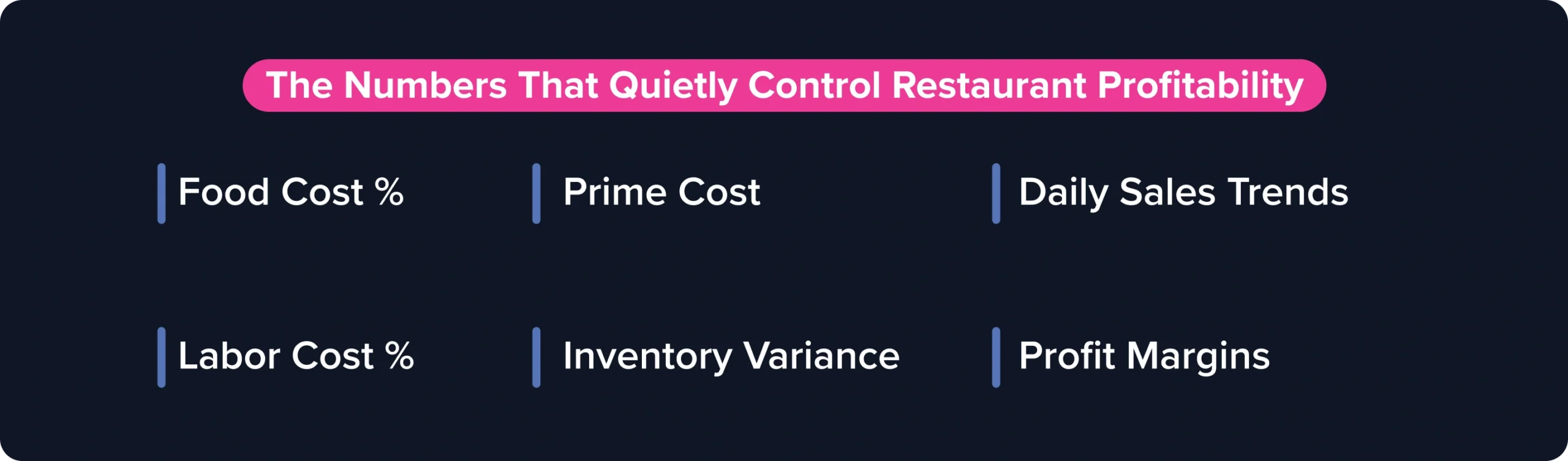
Sales and Revenue
Sales are important. Obviously.
But looking at total revenue alone doesn’t always tell operators much about what’s really happening financially.
For example, maybe sales are technically up, but labor climbed even faster. Or maybe certain menu categories are performing well while others are dragging profitability down quietly in the background.
That’s why operators need to look deeper than just top-line numbers.
Strong restaurant finance management means tracking:
- Daily sales
- Weekly sales trends
- Average check size
- Sales by menu category
- Sales by daypart
- Location performance
- Seasonal traffic patterns
The more visibility operators have into revenue patterns, the easier it becomes to make smarter decisions.
Cost of Goods Sold (COGS)
COGS is one of the biggest pressure points in restaurant finance.
It covers the direct cost of food and beverage products used to make menu items. And lately, those costs have been all over the place.
Operators have been dealing with inflation, supply chain disruptions, product shortages, freight increases, and supplier pricing changes that seem to happen overnight sometimes.
Then you add in spoilage, over-portioning, waste, or inventory mistakes and things can get expensive quickly.
That’s why restaurants that closely monitor purchasing and inventory usually have a much easier time controlling profitability.
Food Cost Percentage
Food cost percentage tells operators how much of their revenue is being spent on food.
And honestly, this number can shift faster than people think.
Maybe ingredient pricing changed. Maybe portion sizes started creeping larger during busy shifts. Also, maybe waste increased because prep levels were too high heading into a slow week.
Small operational issues can move food cost percentage pretty quickly.
That’s why restaurant finance management works better when operators monitor food costs consistently instead of waiting until the end of the month to find problems.
Because by then, the money is already gone.
Labor Cost Percentage
Ask most operators what’s stressing them out right now and labor usually comes up pretty quickly.
Schedules constantly change. Somebody calls out. Overtime stacks up. One unexpectedly busy weekend throws the whole labor plan off balance.
Then suddenly payroll looks way heavier than expected.
Labor cost percentage measures how much revenue is being spent on staffing expenses like:
- Wages
- Overtime
- Payroll taxes
- Benefits
- Employee-related costs
And in restaurant finance, labor is one of the hardest costs to balance.
Cut too aggressively and service suffers.
Staff too heavily and margins disappear.
That balancing act gets harder when operators don’t have clear visibility into scheduling and labor trends.
Prime Cost
Prime cost combines a restaurant’s two biggest expenses:
- Food costs
- Labor costs
For most restaurants, those two categories make up the majority of operational spending.
That’s why prime cost is such an important restaurant finance metric.
If food costs climb while labor also runs high, profitability gets squeezed from both directions at the same time.
Operators who consistently monitor prime cost usually have a much stronger understanding of overall financial performance.
Gross and Net Profit Margins
A lot of restaurants focus heavily on sales growth.
But sales don’t always equal profit.
Gross profit margin measures what’s left after direct operational costs like food and labor are removed.
Net profit margin goes further and looks at what remains after all expenses are accounted for, including:
- Rent
- Utilities
- Insurance
- Software
- Licensing
- Maintenance
- Other operating costs
And honestly, this is where many operators get frustrated.
Restaurants can stay busy while still struggling financially if costs aren’t being managed closely.
That’s why restaurant finance management matters so much right now.
The Main Cost Areas That Affect Profitability
Food and Inventory Costs
Food costs are unpredictable enough already before waste gets involved.
Inventory issues quietly drain profitability in a lot of restaurants. Over-ordering, spoilage, inconsistent portioning, duplicate purchasing, and poor inventory visibility all create financial pressure.
And sometimes operators don’t realize how much product is actually being lost until they start digging into the numbers.
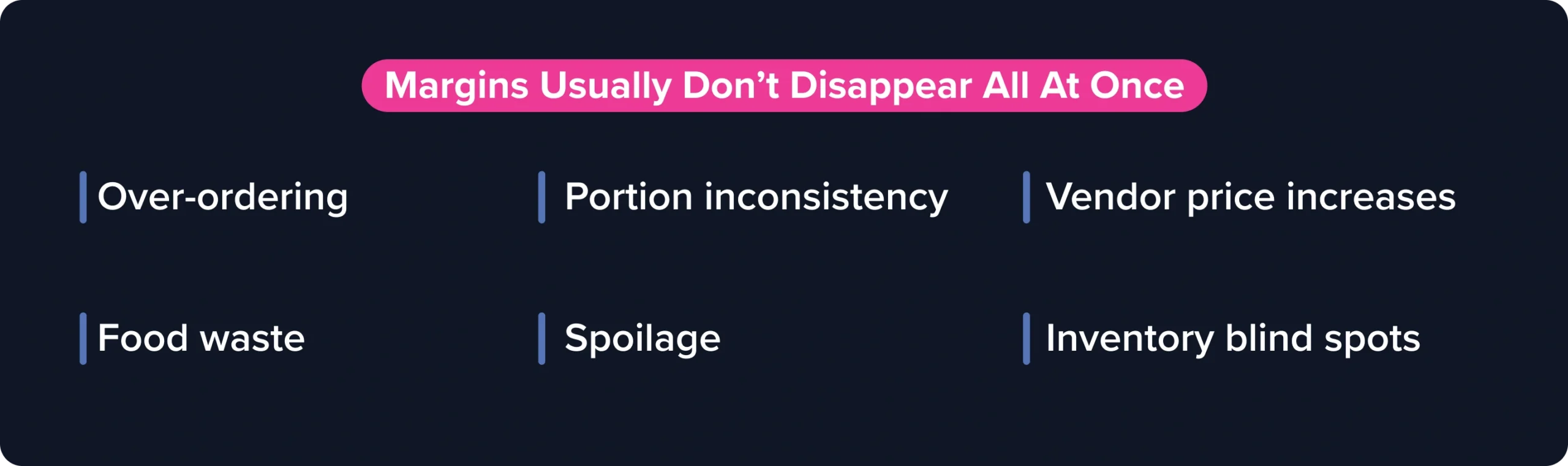
The tricky part is that inventory problems usually don’t look dramatic in the moment.
It’s small stuff.
Extra cases sitting too long. Prep getting tossed at the end of the night. Products getting ordered “just in case.” Vendor pricing changes slipping through unnoticed.
But over time, those small leaks add up fast in restaurant finance.
Labor and Staffing Costs
Labor pressure hasn’t really eased up much for restaurants.
Operators are still trying to balance staffing shortages, retention challenges, scheduling issues, rising wages, and guest expectations all at the same time.
That gets expensive quickly.
Especially when schedules are built more on instinct than actual sales forecasting.
Restaurants that align labor scheduling more closely with business volume usually have a much easier time controlling labor costs without sacrificing service quality.
Fixed Costs (Rent, Utilities, Licensing)
Some costs are harder to control because they don’t fluctuate much day to day.
Rent is still rent. Utility bills still show up every month. Licensing fees, insurance, subscriptions, and other overhead costs keep coming whether business is slow or not.
And lately, many operators have seen those fixed expenses climb too.
That’s why strong restaurant finance management often focuses heavily on controlling the operational costs operators can influence more directly.
Variable Operating Expenses
Variable expenses tend to fly under the radar because they don’t always look huge individually.
Things like:
- Cleaning products
- To-go packaging
- Smallwares
- Linen services
- Credit card processing fees
- Equipment repairs
- Delivery costs
None of those seem massive on their own.
But when multiple operational expenses start climbing at the same time, profitability starts tightening pretty quickly.
How to Control Restaurant Finances and Improve Profitability
Track Daily Costs and Sales
Waiting until month-end reporting to review restaurant finance performance usually creates problems.
Operators need visibility while the business is actively moving.
Not three weeks later.
Daily reporting helps restaurants catch issues faster:
- Food cost spikes
- Inventory problems
- Labor overages
- Sales slowdowns
- Purchasing inconsistencies
The faster operators spot financial problems, the easier they are to fix.
Control Food and Inventory Spending
Inventory control matters more than a lot of operators realize.
Restaurants improve restaurant finance performance when they:
- Count inventory consistently
- Reduce waste
- Tighten portion control
- Monitor vendor pricing
- Review purchasing trends regularly
And honestly, this doesn’t always require massive operational changes either.
Sometimes profitability improves just from catching smaller mistakes earlier.
Manage Labor Through Better Scheduling
Labor scheduling works better when it’s tied to actual business trends instead of guesswork.
Historical sales data helps operators understand:
- Busy dayparts
- Slower shifts
- Seasonal traffic patterns
- Staffing needs by location
That visibility helps restaurants avoid overscheduling while still protecting service levels.
And when labor costs are one of the biggest expenses in restaurant finance, those scheduling improvements matter.
Set Menu Prices Based on Actual Costs
A lot of restaurants delay menu price increases because they’re worried about guest reaction.
Which is understandable.
But if ingredient costs have climbed significantly, menus sometimes need to reflect that reality.
Otherwise margins slowly disappear in the background.
Restaurant finance management works better when operators understand:
- Recipe costs
- Ingredient inflation
- Contribution margins
- Menu profitability
Because pricing decisions shouldn’t be based on guesswork.
Monitor and Reduce Operational Expenses
Not every financial issue comes from food or labor.
Sometimes it’s operational spending that slowly gets out of control.
Duplicate subscriptions. Rising vendor fees. Utility waste. Equipment maintenance issues. Purchasing inefficiencies.
That’s why operators should regularly review expenses instead of assuming smaller costs are staying consistent.
Because they usually aren’t.
The Role of Software in Restaurant Finance Management
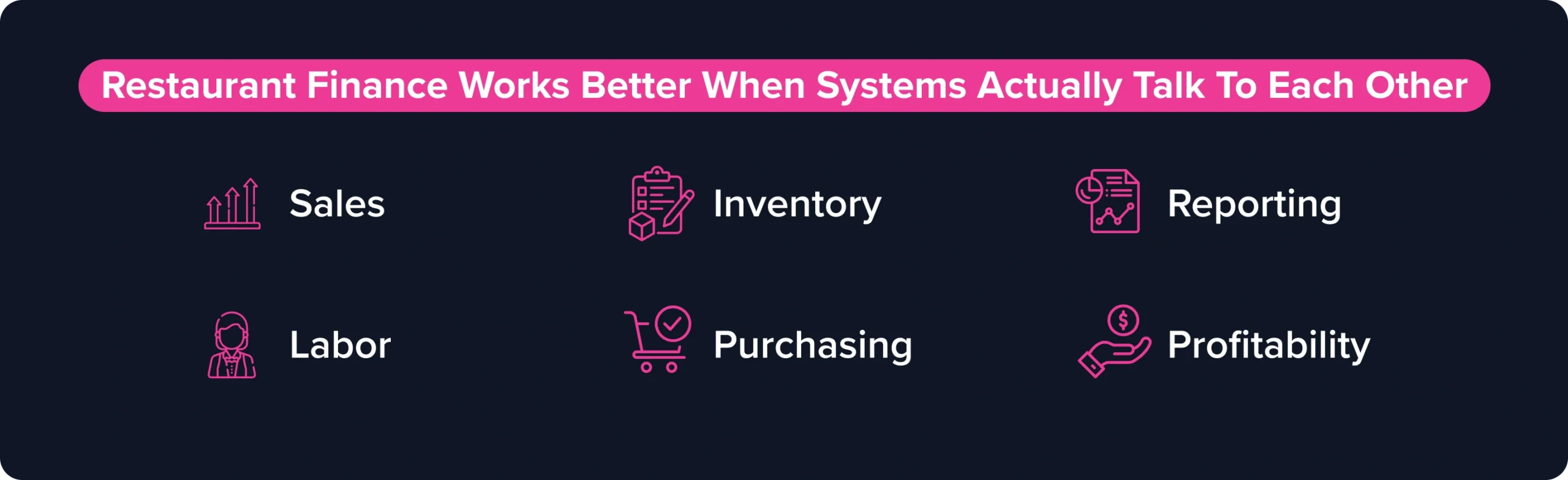
POS Systems for Revenue Tracking and Reporting
Modern POS systems do a lot more than process payments now.
They help restaurants track:
- Revenue trends
- Menu performance
- Traffic patterns
- Daypart sales
- Reporting data
That visibility gives operators a much clearer picture of restaurant finance performance in real time.
Inventory and Procurement Tools for Cost Control
Inventory and procurement platforms help restaurants tighten control over purchasing and food costs.
They make it easier to:
- Monitor inventory usage
- Catch pricing discrepancies
- Reduce waste
- Improve purchasing consistency
- Track supplier performance
And honestly, better procurement visibility can make a huge difference in restaurant finance management.
Especially for multi-unit operations.
Accounting Software for Financial Reporting
Restaurant accounting gets messy fast when systems aren’t connected properly.
Accounting software helps operators organize financial data, track invoices, monitor cash flow, and simplify reporting.
Instead of chasing paperwork or manually pulling reports together, operators can spend more time actually analyzing the business.
Labor and Payroll Systems for Workforce Cost Management
Labor software helps restaurants forecast staffing needs more accurately while reducing unnecessary overtime and scheduling inefficiencies.
That matters because labor issues usually show up financially before operators fully realize what’s happening operationally.
And in restaurant finance, payroll mistakes add up quickly.
Analytics Tools for Financial Insights and Forecasting
This is where restaurants start getting more proactive instead of reactive.
Analytics platforms help operators spot trends earlier, forecast future performance, and identify operational problems before they become expensive.
Because honestly, most financial problems don’t happen overnight.
There are usually warning signs first.
Restaurants just need visibility into the data early enough to act on it.
Conclusion
Margins usually don’t disappear all at once in this industry.
It’s usually a little bit here and there.
A few extra labor hours every week. Vendor pricing changes nobody caught fast enough. Inventory getting over-ordered. Menu prices that haven’t been updated even though ingredient costs climbed months ago.
That’s why restaurant finance can’t just live inside spreadsheets anymore.
Operators need visibility while the business is actually running. During ordering. During scheduling. And during service.
That’s where better financial decisions happen.
And honestly, restaurants that stay profitable long term usually aren’t making huge dramatic changes overnight. They’re just paying closer attention to the numbers consistently before smaller problems turn into expensive ones.
FAQs
What is restaurant finance management?
Restaurant finance management is the process of tracking and managing a restaurant’s financial performance. That includes monitoring sales, labor, food costs, inventory, cash flow, operational expenses, and profitability to help operators make smarter business decisions.
What are the most important financial metrics for restaurants?
Some of the biggest restaurant finance metrics operators track include food cost percentage, labor cost percentage, prime cost, sales revenue, Cost of Goods Sold (COGS), and profit margins. These numbers help restaurants understand where money is being spent and where profitability may be slipping.
How can restaurants control costs effectively?
Restaurants usually improve cost control by reducing waste, tightening inventory management, improving labor scheduling, monitoring vendor pricing closely, reviewing operational expenses regularly, and improving visibility into purchasing and financial data.
What is prime cost in restaurant finance?
Prime cost combines a restaurant’s food costs and labor costs. Since those are typically the two largest operational expenses, prime cost is considered one of the most important metrics in restaurant finance management.
How can restaurants improve profitability?
Restaurants improve profitability by controlling food and labor costs, pricing menus accurately, reducing waste, improving operational efficiency, and staying closer to their financial data throughout daily operations.
What tools help manage restaurant finances?
Restaurants often use POS systems, accounting software, inventory platforms, procurement tools, labor scheduling systems, payroll software, and analytics platforms to improve restaurant finance visibility and operational decision-making.