
Running a hospitality business has never been easy, but let’s be honest, the pressure right now feels heavier than it did even a few years ago. Costs are higher. Labor is tighter. Guests are more selective. And operators are expected to juggle all of it while still delivering great experiences, every single day.
The good news? These hospitality industry challenges are real, but they’re not unsolvable. The key is knowing where the pressure points are and taking a smarter, more connected approach to managing them.
What Are Hospitality Industry Challenges?
Challenges in the hospitality industry are the operational, financial, and strategic problems that make it harder for hotels, restaurants, casinos, and other businesses that rely on hospitality to run smoothly and make money.
Some problems are easy to see, like rising food prices or not having enough staff. Some things, like inconsistent pricing, disconnected systems, or not being able to see where money is really going, slowly eat away at profits. Those “small” problems build up over time.
Why Hospitality Industry Challenges Matter Today
Hospitality has always been demanding, but the margin for error right now is razor thin. Guests expect more for their money. Competition is everywhere. And even small operational hiccups can snowball into real financial pain if they go unchecked.
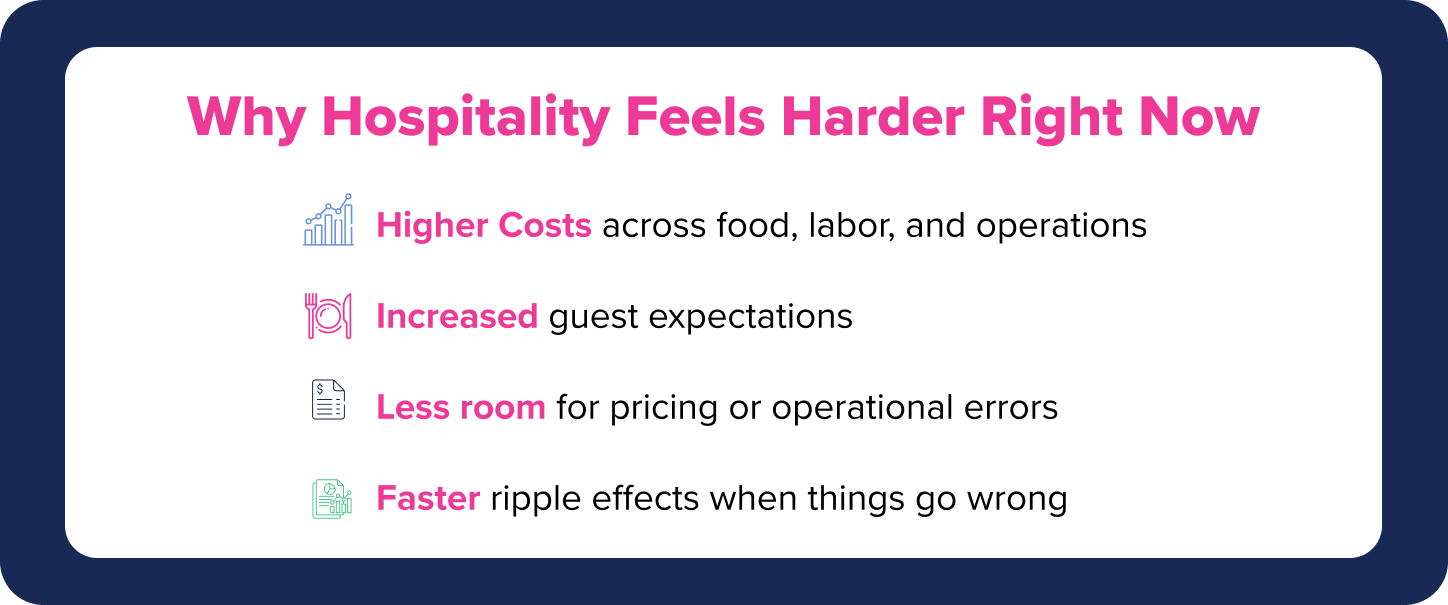
What makes today different is how quickly problems show up. A pricing issue here, a staffing gap there, a supplier miss at the wrong time, and suddenly margins tighten, teams feel burned out, and the guest experience takes a hit. When hospitality businesses ignore these challenges or try to push through them without support, the consequences show up fast.
On the flip side, operators who take a closer look at how their business actually runs are in a much stronger position. With better visibility and smarter processes, it becomes easier to protect profitability, reduce stress on teams, and build an operation that can handle whatever comes next.
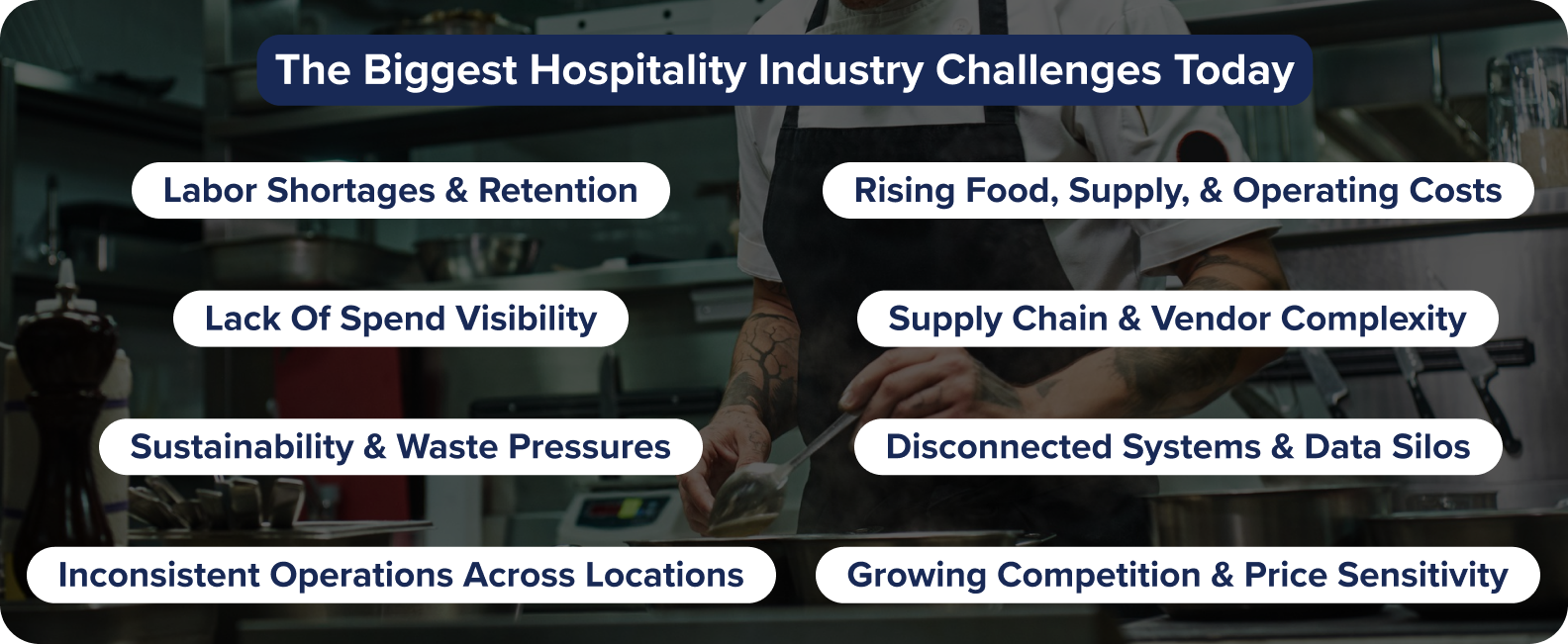
The Biggest Hospitality Industry Challenges Businesses Face
Labor Shortages and Workforce Retention
Ask almost any hospitality leader what keeps them up at night, and staffing is near the top of the list. Hiring is hard. Keeping good people is even harder. High turnover means constant onboarding, training costs that never seem to end, and teams that are stretched thinner than they should be.
When staff is short, service consistency suffers. Small mistakes creep in. Morale dips. And leadership ends up spending more time putting out fires than improving the business.
Rising Food, Supply, and Operating Costs
Costs have climbed across the board, and hospitality businesses feel it every day. Food prices fluctuate. Supplies cost more. Utilities and services aren’t getting cheaper. All of it makes planning and budgeting feel like aiming at a moving target.
Without a clear view into pricing and spend, those increases often slip through quietly. Over time, they chip away at margins without anyone noticing until it’s too late.
Lack of Spend Visibility and Cost Transparency
One of the most common frustrations in hospitality is not knowing exactly where money is going. Spend data lives across invoices, distributors, contracts, and systems that don’t always line up.
When information is scattered, it’s tough to catch pricing inconsistencies, billing errors, or purchasing patterns that could be improved. Decisions end up being based on assumptions instead of facts.
Supply Chain Disruptions and Vendor Management Issues
Even as supply chains stabilize in some areas, disruptions are still part of the reality. Products go out of stock. Substitutions happen. Delivery schedules change. Managing those issues across multiple vendors and locations adds another layer of complexity.
Without centralized oversight, vendor performance, pricing, and contract compliance can be difficult to track consistently.
Sustainability, Waste, and Environmental Pressures
Sustainability expectations continue to rise. Guests, residents, and partners want to know where food comes from and how waste is managed. At the same time, food waste remains one of the biggest silent cost drains in hospitality.
The challenge isn’t choosing between sustainability and profitability. It’s figuring out how to support both without adding more complexity to already busy operations.
Disconnected Systems and Data Silos
Many hospitality businesses rely on a mix of tools that weren’t designed to work together. Procurement data lives in one place. Financial data lives in another. Operational insights are spread across spreadsheets and reports.
That disconnect slows teams down and makes it harder to get a clear picture of what’s really happening across the business.
Maintaining Consistency Across Multiple Locations
For multi-location hospitality groups, consistency is a constant battle. Pricing, product quality, supplier performance, and processes all need to align across locations.
Without centralized visibility and standards, variation creeps in. Over time, that inconsistency impacts costs, operations, and the guest experience.
Growing Competition and Price Sensitivity
Guests are paying closer attention to value. Hospitality brands are competing not only on experience, but on pricing and perception. Discounting might bring people in the short term, but it’s rarely a sustainable strategy.
Long-term success comes from controlling costs behind the scenes while continuing to deliver quality upfront.
How Hospitality Businesses Can Solve These Challenges
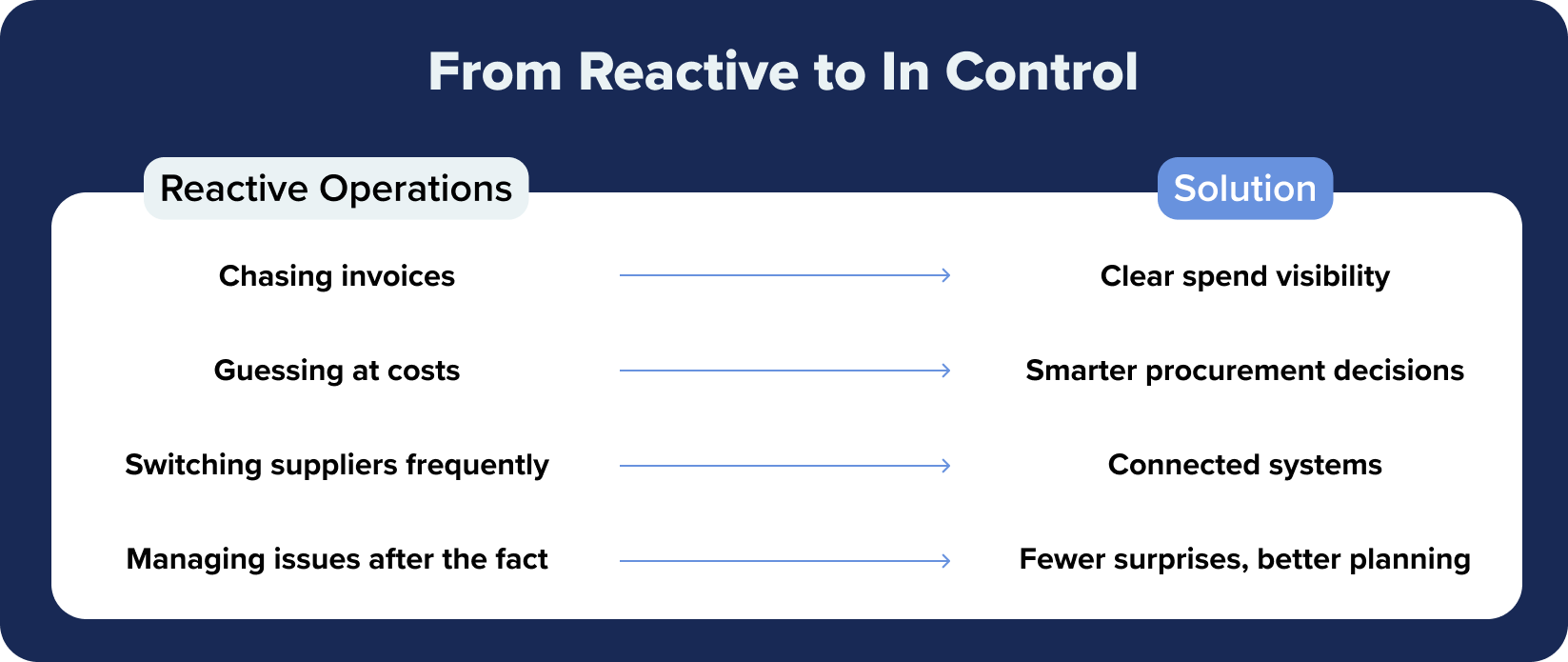
There isn’t a magic button that can fix problems in the hospitality industry. Most of the time, progress is made by making a series of smarter choices that make things easier over time. Operators usually focus on these areas first because they have the biggest impact on the whole business.
Strengthening Cost and Spend Management
First and foremost, operators need to know exactly how much they are spending. Not guesses. Not the same as averages. Real numbers. When teams know what they’re spending, where costs are going up, and which line items need attention, they can fix problems before they happen instead of after they lose money.
Improving Procurement and Supplier Management
When procurement is planned ahead of time, it works best. That means picking suppliers who can always deliver, being clear about what you want, and not constantly switching just to get a better deal. Strong relationships with suppliers make things more stable and less likely to go wrong, especially when you have to deal with them in different places.
Using Data to Drive Smarter Decision-Making
Data should help you make decisions faster, not slower. Leaders can find patterns more quickly and act with confidence when they can easily find information about prices, purchases, and usage all in one place. It moves decision-making away from gut feelings and toward what is actually going on in the business.
Streamlining Operations With Integrated Technology
A lot of hospitality teams already have what they need. The issue is that those tools don’t always work together. When systems are connected, teams don’t have to spend as much time looking for information, reconciling numbers, or doing the same work twice. Operations are easier to handle and run on a daily basis. When integrated systems are powered by AI, operations don’t just run smoother — they start anticipating needs before small issues reach guests.
Reducing Waste Through Better Forecasting and Controls
Most of the time, people don’t mean to waste things. It happens when you order too much, when your forecasts are out of date, or when you can’t see how much you’re using. Better controls and forecasting help operators match purchases with actual demand, which cuts down on waste and loss without lowering quality.
Aligning Sustainability Goals With Financial Performance
Financial goals don’t have to be separate from sustainability goals. In practice, things like cutting down on waste, making better sourcing choices, and tightening operations often help both. Sustainability is not an extra burden when it is thought about in a smart way; it is part of running a smarter business.
How the Buyers Edge Platform Helps Address Hospitality Industry Challenges
Many hospitality businesses know what their challenges are. The harder part is fixing them without adding more work, more tools, or more confusion for already stretched teams.
That’s where the Buyers Edge Platform comes in.
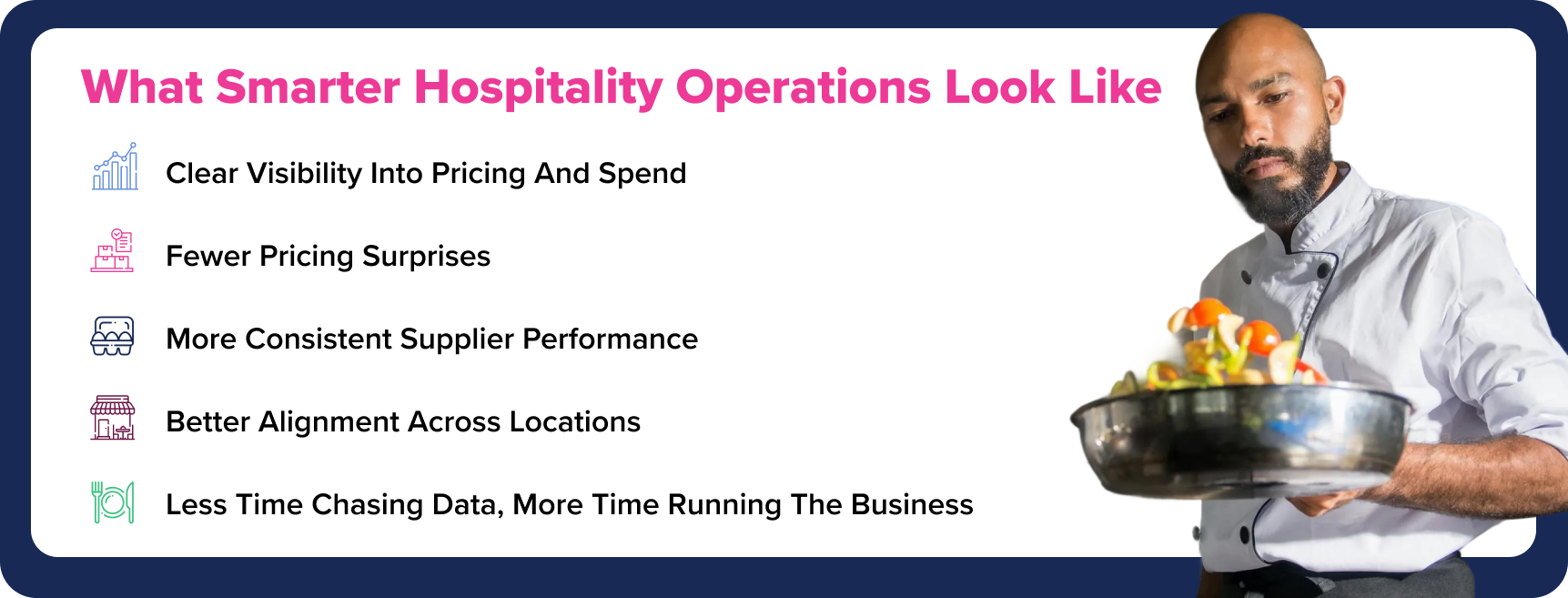
Instead of looking at labor, costs, suppliers, and systems as separate problems, the platform helps operators see how everything connects. By bringing spend data, pricing information, and supplier insights together, hospitality leaders can finally get a clear picture of what’s happening across their business.
With better visibility into purchasing and pricing, operators can catch inconsistencies, understand cost drivers, and make adjustments before small issues turn into bigger ones. It also makes it easier to manage suppliers, maintain consistency across locations, and reduce waste without sacrificing quality or service.
Most importantly, the Buyers Edge Platform helps teams move out of reactive mode. Decisions become more informed. Processes feel more manageable. And leaders spend less time chasing answers and more time focusing on growth, guests, and long-term performance.
If you’re ready to see what clearer visibility and smarter purchasing decisions can look like, click here to explore how the Buyers Edge Platform helps hospitality businesses take control of their spend.
What This Means for Hospitality Businesses
The problems that the hospitality industry faces aren’t new, but they seem to be different now. Costs go up faster. People have higher hopes. And small problems don’t stay small for long.
The companies that do the best in this environment don’t do everything perfectly. They are paying more attention. They have better information. And they’re making systems that help people make better decisions over time.
It’s not enough to just get through the next busy season. It’s to make the business feel more stable, more flexible, and easier to run, even when things are tough.
FAQs
What challenges impact profitability the most in hospitality businesses?
The biggest things that hurt profits are not having enough workers, rising food and operating costs, not being able to see how much money is being spent, and not managing waste. If you don’t keep a close eye on these areas, margins can drop faster than you think.
How can hospitality groups control costs during economic uncertainty?
To keep costs down, you need to know where your money is going. Operators can quickly adapt and make smart choices when things change if they can see prices, buying patterns, and supplier performance clearly.
Why is spend visibility a growing issue in hospitality operations?
As hospitality businesses grow and add more vendors, systems, and locations, their spending data often gets broken up. It’s harder to find problems, spot trends, or find ways to make things run more smoothly without a centralized view.
How can multi-location hospitality businesses manage consistency?
When pricing, suppliers, and buying standards are all managed from one place, consistency gets better. Sharing data and having clearer oversight help make sure that every location is following the same rules.
Can technology help solve hospitality industry challenges without increasing overhead?
Yes. When used correctly, technology can make things easier, cut down on manual work, and find ways to save money that often make up for the cost of the tools themselves.