If you’re not brave, you shouldn’t run a restaurant. Every day is a new challenge, whether it’s keeping the budget in check, managing staff, keeping quality high, or going above and beyond what customers expect. But the best managers know that even the busiest kitchen can run well with the right tools, systems, and leadership.
These restaurant management tips will help you improve your team, make operations more efficient, and make more money, whether you run one location or a growing multi-unit business — all while creating a memorable guest experience.
Proven Tips to Manage a Restaurant Effectively
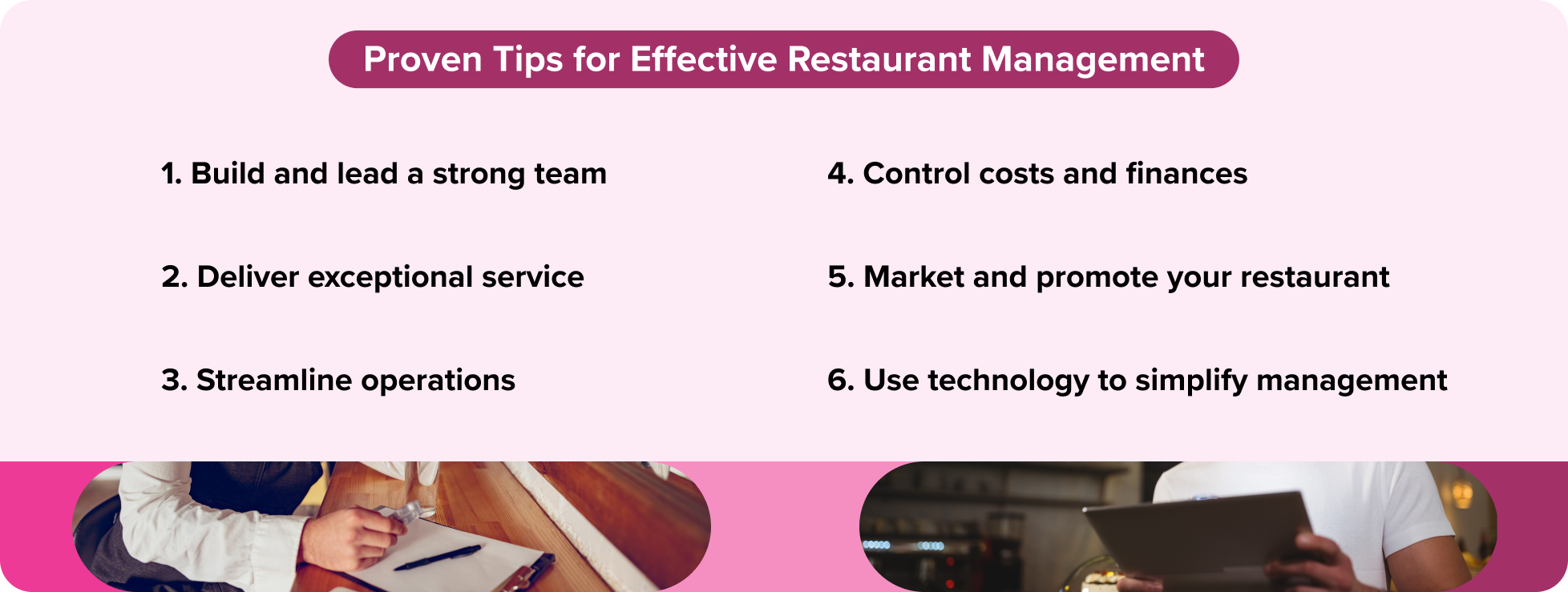
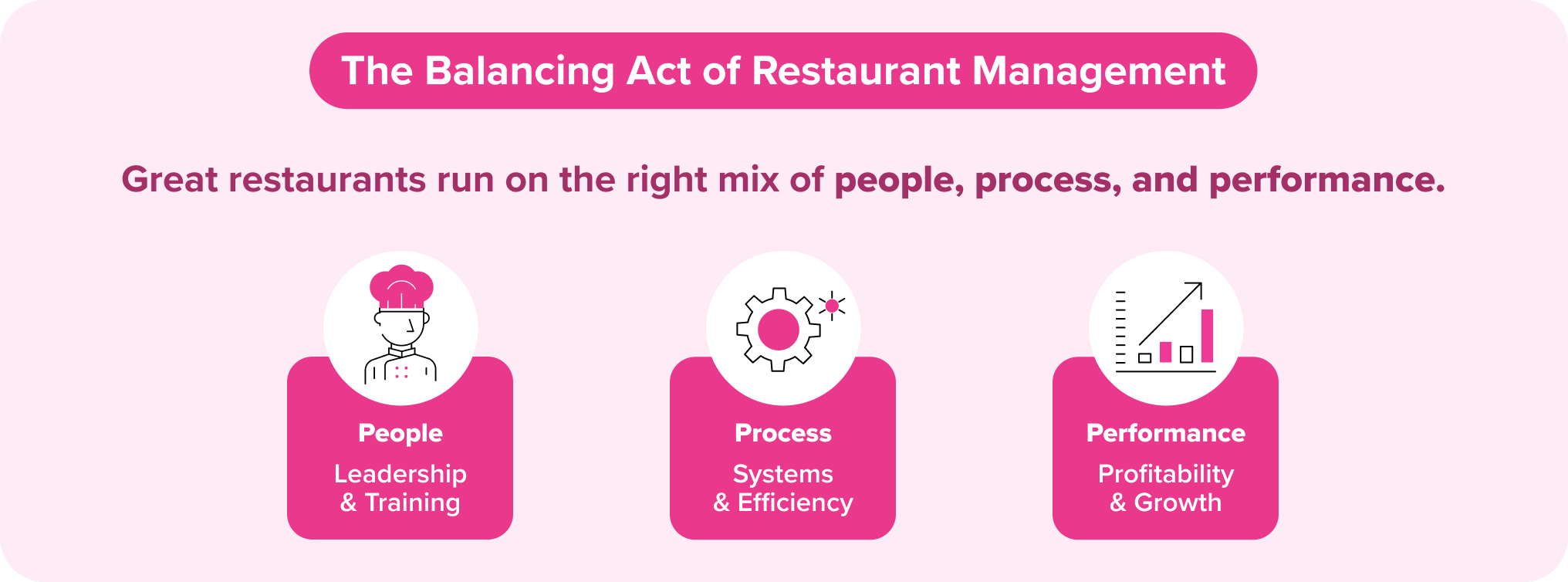
To run a successful restaurant, you need to find the right balance between people, process, and performance. Here are some tried-and-true ways to make sure your foodservice business runs smoothly and makes money.
1. Build and Lead a Strong, Motivated Team
Ask yourself this: Would you want to work for you?
Your staff sets the tone for your guest experience. When they feel supported and valued, it shows in every interaction.
Tips to strengthen your team:
- At the start of each shift, have a quick meeting to make sure everyone is on the same page about goals and priorities.
- Give people ongoing training and mentorship to help them grow in their careers.
- Say thank you in public for wins; it can mean a lot.
Scenario: If your line cooks are leaving often, it might not be the job itself but a lack of praise or unclear expectations. Addressing that early can turn disengagement into loyalty.
2. Deliver Exceptional Customer Service
How often do you truly observe your dining room?
The key to great service isn’t just politeness — it’s awareness. Guests remember how they feel more than what they eat.
Ways to elevate your service:
- Teach your staff how to read body language and guess what people need.
- Give servers the power to fix small problems right away.
- To rebuild trust, follow up on guest complaints in person.
Scenario: A guest mentions their food took longer than expected. Your server brings you a free appetizer and updates the table with a smile, turning your anger into gratitude.
3. Streamline Operations for Maximum Efficiency
In the restaurant business, being efficient can mean the difference between living and thriving.
Ask yourself:
- Are you still counting your stock by hand?
- Do your teams communicate effectively across shifts?
- Can you spot cost leaks before they hit your P&L?
Efficiency checklist:
- Standardize recipes to keep the quality high and keep the cost of food down.
- Use tools for scheduling and keeping track of your inventory to save time and cut down on waste.
- Look over your processes on a regular basis to see where technology could be useful.
When processes are consistent, your operation can handle volume spikes without missing a beat.
4. Manage Finances and Control Costs Effectively
Running a restaurant without being able to see the money clearly is like cooking without measuring the ingredients: you might get lucky, but it’s dangerous.
Smart managers:
- Check P&L statements and other important reports every week.
- Compare prices to make sure you’re getting the best deal.
- Track rebates and incentives to capture hidden savings.
Automating reporting and looking at spending patterns can help you find ways to save money without having to go through spreadsheets. This will give you more time to run your business.
5. Market, Brand, and Promote Your Restaurant
Your marketing should reflect your restaurant’s personality as much as your menu does.
Ask yourself:
- What story does your brand tell?
- When’s the last time you refreshed your online presence?
Marketing quick wins:
- Post pictures of your team or behind-the-scenes photos on social media.
- To get more people to see you, work with local farms, breweries, or events.
- Use information about your customers to plan sales and reward repeat customers.
Scenario: A simple “meet the chef” video or post introducing your staff can build connection and encourage guests to return for the experience — not just the meal.
6. Use Technology to Improve Restaurant Management
In today’s restaurant landscape, technology isn’t optional — it’s essential.
Digital tools can make the hardest parts of management easier, like AI-driven forecasting and automated accounting. Technology brings together purchasing, analytics, and financial insights into one system, giving operators the power to make better, faster choices.
Top tech tools to explore:
- Back-office software for recipe costing, bookkeeping, and financial exports.
- Procurement platforms for price verification and spend analytics.
- Market forecasting systems for commodity data and performance insights.
Scenario: Implementing a digital back-office tool can reduce manual reporting by hours each week — giving managers more time to focus on guest satisfaction.
Common Mistakes to Avoid
Even experienced managers make costly mistakes. The key is identifying and addressing them before they affect profits or guest experience.
Poor Staff Training
Inconsistent training leads to inconsistent results.
Avoid this by:
- Creating SOPs for every role.
- Incorporating shadow shifts for hands-on learning.
- Refreshing training quarterly to reinforce standards.
Scenario: A restaurant struggling with slow table turns discovered that servers weren’t using handheld POS systems properly. A short refresher training fixed the issue overnight.
Ignoring Customer Feedback
Your guests are giving you valuable data — are you listening?
Best practices:
- Check reviews every week and answer them right away.
- Keep an eye on patterns in feedback that happen over and over again to find areas that need work.
- During team meetings, talk about what customers like and what they think.
Listening to feedback builds trust and ensures your guests feel heard.
Inefficient Operations
Operational bottlenecks cost time and money.
Solutions to explore:
- Check your delivery schedules and prep lists.
- Train employees to do more than one job when you don’t have enough of them.
- Use data to find items that aren’t selling well and make ordering easier.
A few simple process changes can make a big difference in daily performance.
Overlooking Marketing Opportunities
If you’re not marketing consistently, you’re invisible.
How to stay top-of-mind:
- Make sure your Google Business profile is always up to date.
- Use social media to connect with people in your area.
- Start simple loyalty programs for guests who come back.
Even small marketing efforts can help you build stronger, lasting relationships with your customers.
Emerging Trends in Restaurant Management
The restaurant industry is evolving fast. Staying ahead of trends helps you attract modern diners and retain great employees.
1. Sustainability and Eco-Friendly Practices
Today’s consumers want to know where their food comes from and how it impacts the planet.
Sustainable steps to consider:
- Get your goods from nearby places to lower your carbon footprint. Click here to learn more about regional sourcing.
- For takeout, use packaging that can be composted or recycled.
- Use creative menu repurposing to cut down on food waste.
Sustainability isn’t just a trend — it’s becoming an expectation.
2. Digital Ordering, Delivery, and Contactless Solutions
Convenience is king.
Digital trends driving growth:
- QR code menus that update instantly.
- Contactless payment systems that boost speed and safety.
- Online ordering platforms that simplify takeout and delivery.
Ask yourself — how easy is it for customers to order from you right now? If it takes more than a few clicks, it’s time to optimize your process.
3. Strategies for Keeping Employees Healthy and Happy
Happy workers make guests happy.
Retention strategies that work:
- Give people fair pay and schedules that they can count on.
- Celebrate the team’s big events and successes.
- Give people chances to learn and grow.
A culture that values its workers makes them work harder and stay longer.
4. Recommended Tools
It’s like cooking without a stove if you don’t have the right technology to run a restaurant.
Top tools for smarter management:
- Accounting, reporting, and automation systems for the back office.
- Platforms for procurement that give you a clear view of spending and supplier management.
- Tools for gathering market intelligence to keep an eye on price changes and trends.
- Dashboards that bring together data to make decisions easier.
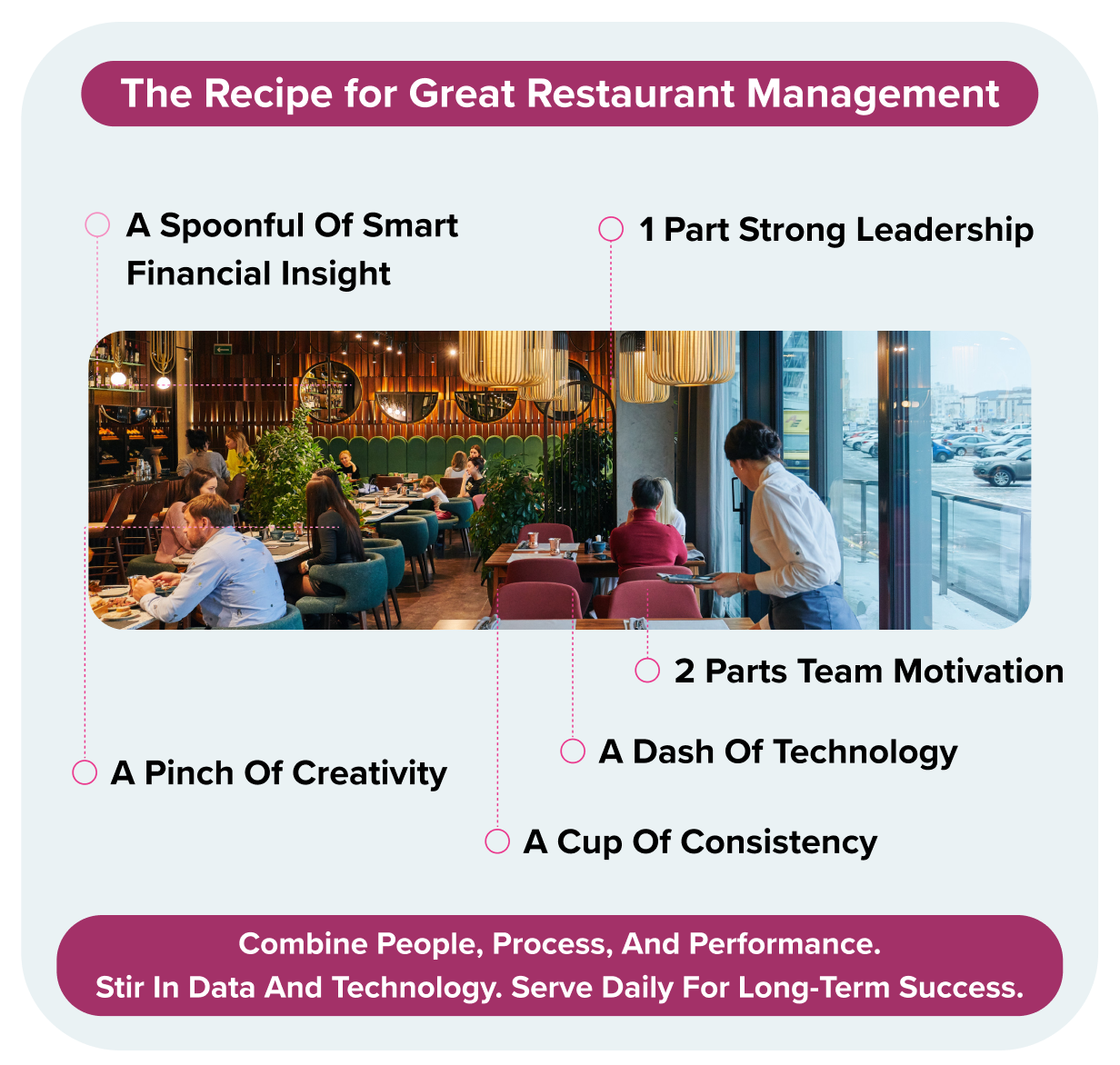
Running a restaurant is both an art and a science. You can turn everyday problems into chances to grow by using data to lead, giving your team power, and using technology.
It’s not about doing more; it’s about managing better. Restaurant owners can get a better understanding of and control over every part of their business, as well as more confidence, as long as they have the right tools and strategies. They can do this while still focusing on what really matters: making guests happy and making their brand profitable in the long run.