

On the surface, produce feels simple. It’s lettuce, tomatoes, onions, berries. Order it, receive it, prep it, plate it.
But anyone running multiple restaurant locations knows the truth: produce is one of the most volatile, operationally demanding, and risk-sensitive categories in foodservice. It is highly perishable. It is exposed to weather and global supply shifts. It varies by region, grower, and season. And it touches nearly every menu item in your operation.
When you scale from five locations to fifty, or from fifty to five hundred, that “simple” category becomes a moving target.
This is where a produce management partner changes the equation. Instead of each location navigating the chaos alone, a structured produce program centralizes oversight, stabilizes sourcing, and introduces accountability across the entire system. Operators gain back time, reduce variability, and create consistency guests can taste.
The Challenge: Why Produce Is Harder Than It Looks
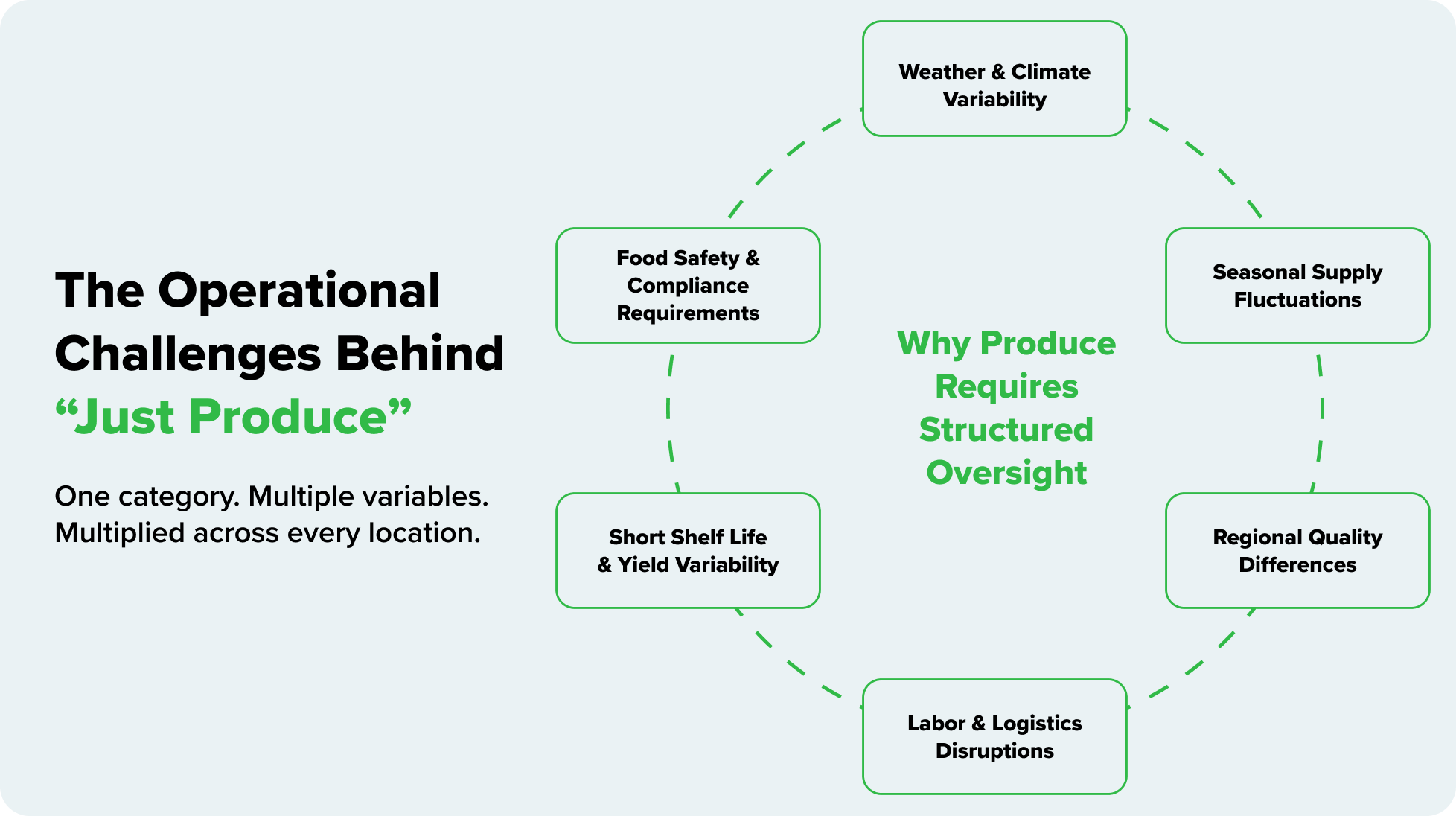
High Volatility
Produce pricing can shift weekly, sometimes daily. Weather events, droughts, freezes, transportation delays, labor shortages, and import restrictions all influence availability and cost.
Without structured oversight, multi-unit produce procurement becomes reactive instead of strategic. Units may pay different prices. Substitutions become inconsistent. Forecasting becomes guesswork.
Quality Inconsistencies
Produce does not behave like packaged goods. It changes with seasonality and region. Two cases of romaine from different fields at different times of the year may look and perform differently. Shelf life can vary dramatically.
For multi-unit brands, this creates menu inconsistency and guest dissatisfaction.
Labor Strain
Unit-level managers often spend hours each week dealing with problems related to produce:
- Taking care of replacements
- Going over bills
- Handling credits
- Talking to distributors
- Dealing with complaints about quality
That’s time that could have been spent leading teams or serving guests.
Limited Visibility
As systems get bigger, it gets harder to keep track of pricing trends, how well distributors are doing, or whether all locations are following the rules.
Many operators don’t have a clear, central view of how much they are paying for produce across their entire area or if each unit is ordering what it needs.
How a Produce Management Partner Simplifies Operations
1. Centralizedd Produce Program Management
A true produce management partner does more than deliver product. They manage the whole entire program.
That includes procurement strategy, quality assurance, logistics coordination, vendor communication, reporting, performance monitoring, and more.
Instead of juggling multiple growers, distributors, and regions, operators work through one structured program with dedicated account management.
2. Streamlined Sourcing & Procurement
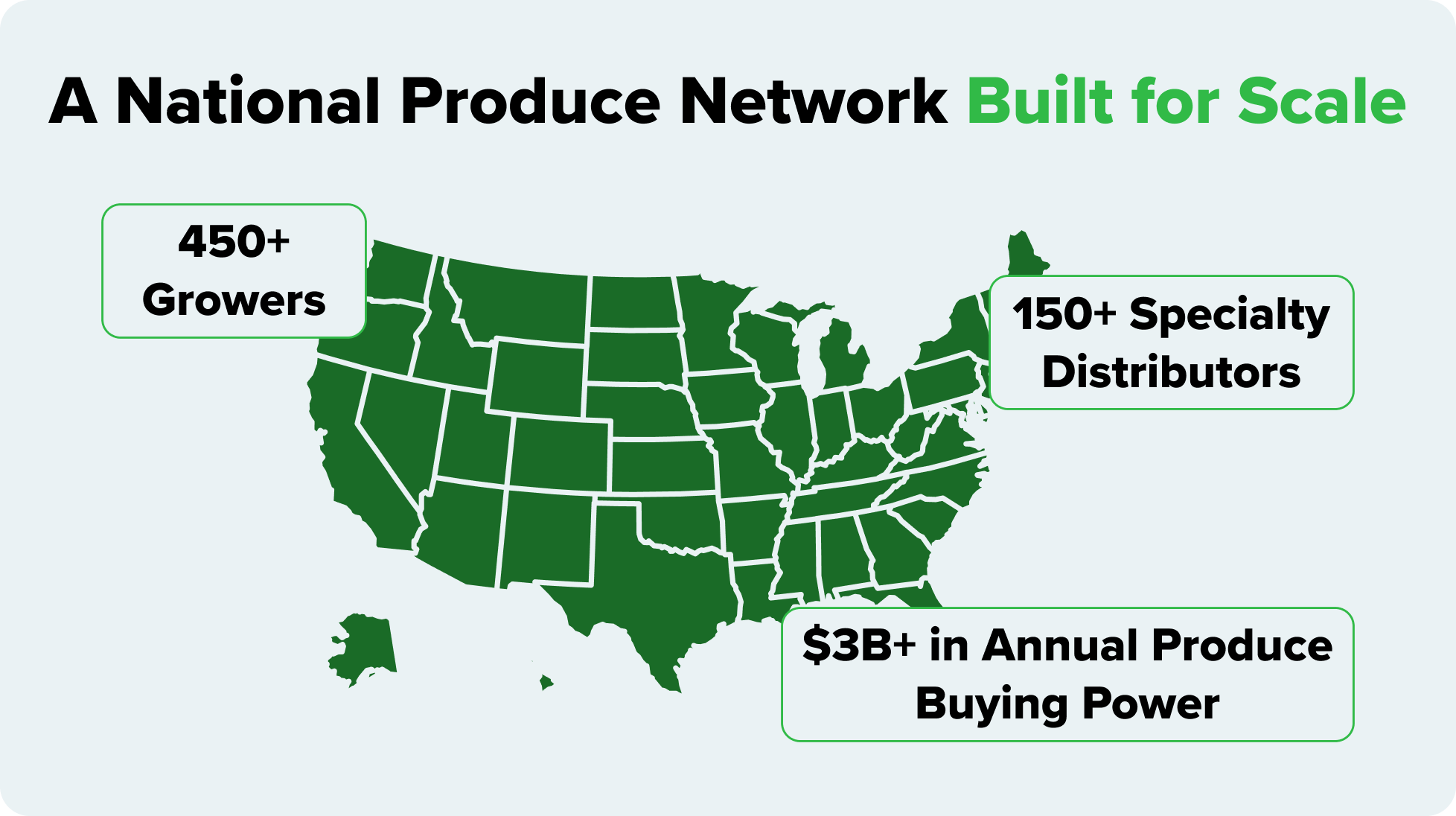
Through a national network of 450+ growers and 150+ specialty distributors, BEP Fresh delivers scale and stability. With over $3B in produce buying power, sourcing is proactive, not reactive.
This allows operators to:
- Leverage negotiated pricing structures
- Maintain consistent SKUs across locations
- Reduce regional variability
- Stabilize supply during tight markets
It also clarifies the difference between a distributor and a true produce management partner. A distributor delivers products. A produce management partner oversees the sourcing strategy, pricing structure, compliance, and long-term performance of that network.
That distinction matters for multi-unit foodservice produce sourcing.
3. Quality Assurance From Field to Fork
Produce management services include on-the-ground oversight.
- Grower and shipper audits
- Distributor performance scorecards
- Food safety compliance
- Rapid issue resolution
- Credit and claim management
If there is a quality concern, resolution is coordinated centrally, not left to a single general manager to navigate.
Financial Benefits That Directly Impact the P&L
1. Cost Control & Pricing Consistency
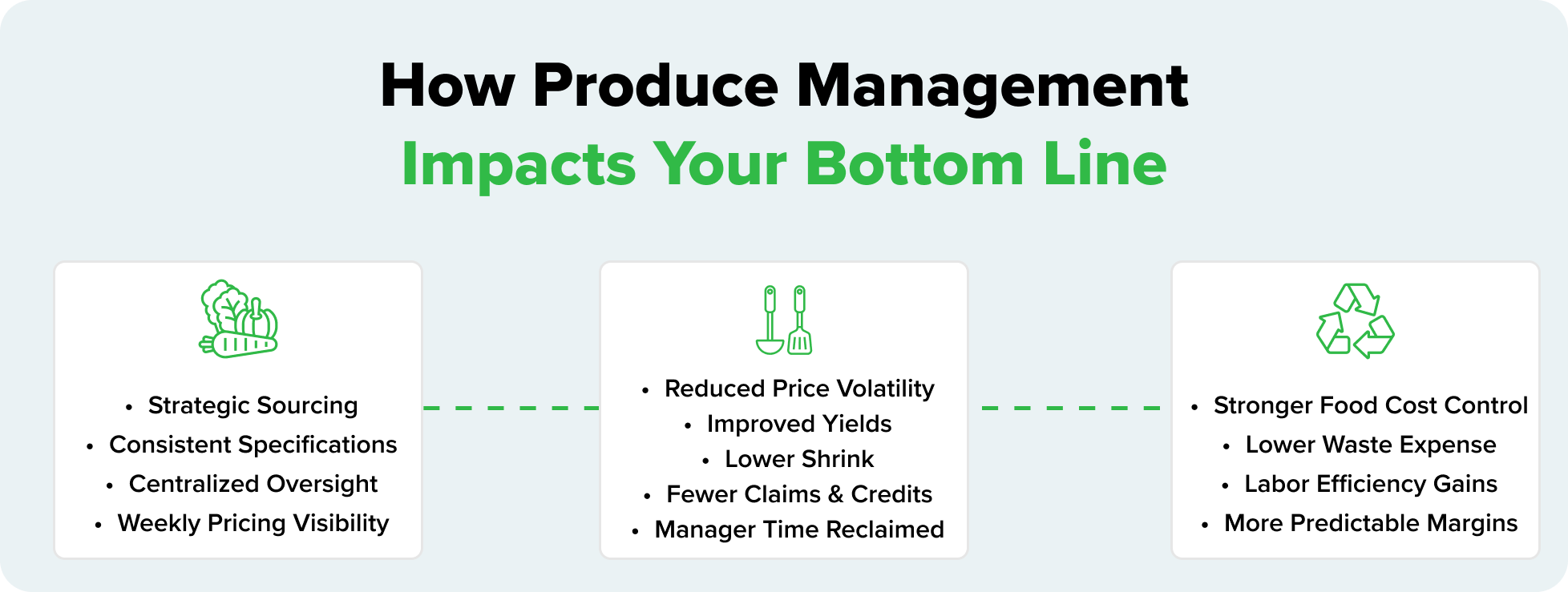
Structured produce programs lower volatility by using strategic sourcing, making predictions, and sending out clear weekly reports.
Operators can see trends and plan accordingly instead of having different prices for each unit and supply issues.
2. Less Waste, Better Yields
Better consistency in products leads to:
- Less shrinkage
- Longer shelf life
- More reliable yields
- Cleaner prep work
When actual menu use matches specifications, waste goes down and profits go up.
3. Time Savings = Labor Savings
Hours spent fixing problems with produce are costly hours.
Managers can focus on staffing, service, and operational performance again because they don’t have to check prices, track down credits, or call vendors all the time.
Data & Technology: Visibility Across Every Unit
Modern produce management is powered by technology.
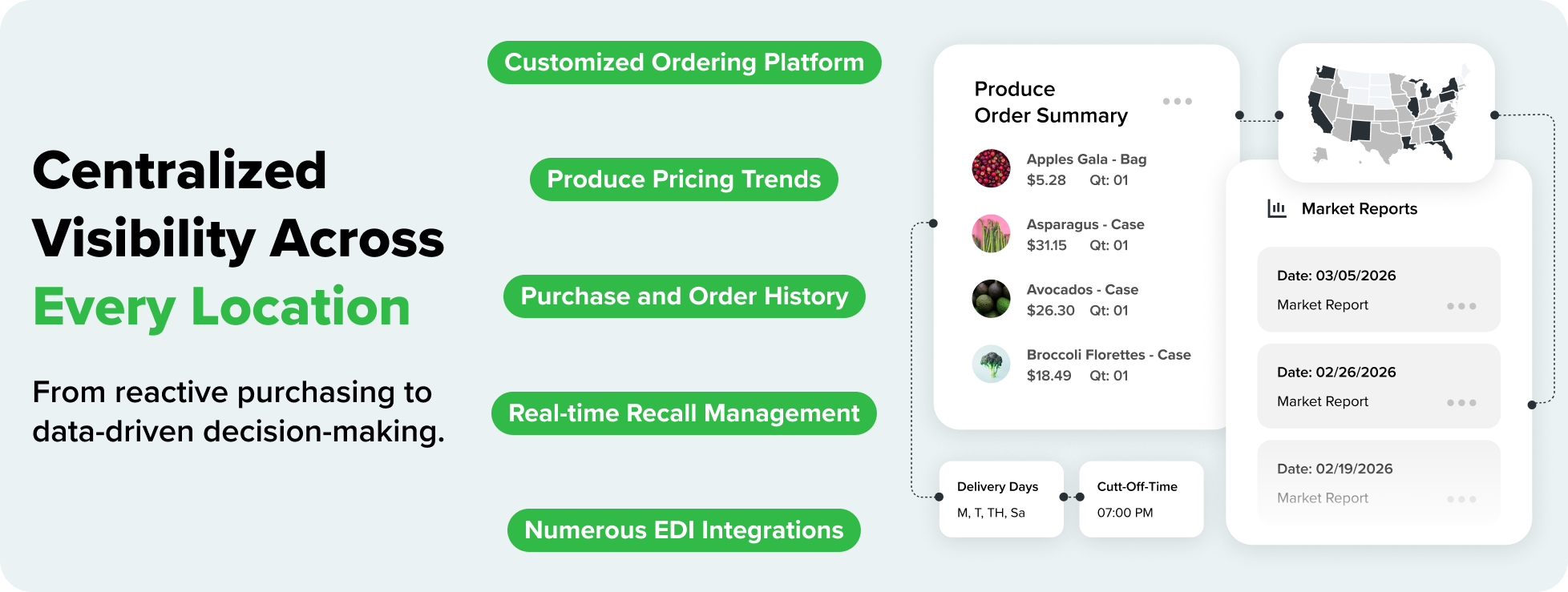
BEP Fresh provides centralized dashboards that show:
- Weekly pricing trends
- Order and purchase history
- Distributor performance
- Compliance tracking
- Recall management
For multi-unit operators, this visibility changes decision-making.
Outliers can be identified. Regional pricing differences become clear. Performance can be benchmarked across brands or locations.
Instead of guessing, leadership teams act on data.
Resilient Supply Chain & Risk Management
Weather events, market disruptions, and recalls are not hypothetical. They are operational realities.
A structured produce management partner introduces contingency planning and rapid rerouting across a national network.
Live recall response, FSMA compliance, and real-time communication protect both brand reputation and guest safety.
During shortages or food safety events, scale matters. So does centralized coordination and having a partner you can trust.
Sustainability & Social Responsibility
Today’s operators and consumers expect more transparency from the supply chain.
Produce management partners provide:
- Traceability from grower to unit
- Access to locally grown items when available
- Sustainability oversight
- Vendor qualification and compliance management
These capabilities support both operational responsibility and brand positioning.
The Result: Simpler Operations, Better Quality, and More Time to Run the Business
When produce strategy is fragmented, operators spend time reacting.
When produce is centrally managed, they gain consistency, control, and confidence.
A structured produce management partner transforms multi-unit produce management from a daily operational burden into a strategic advantage.
Through scale, oversight, technology, and dedicated expertise, BEP Fresh, including Produce Alliance and Fresh Concepts, delivers high-performance produce solutions designed for foodservice leaders.
The result is straightforward:
- Stabilized pricing
- Stronger quality standards
- Reduced waste
- Better data visibility
- Resilient supply chains
- More time to focus on growth
Next Steps
Early in your evaluation? See how produce management works and talk to someone about your current produce program.
Already exploring options? Talk to a produce specialist andlearn why BEP Fresh is the best solution for you.
Ready to take action? Request a custom savings analysis and explore how BEP Fresh can tailor a produce management program to your operation.