
Few things affect a bar’s bottom line more than the price of alcohol. When liquor is priced with purpose, it usually has some of the highest margins in a food service business.
It’s not enough to just add a standard markup to the price of liquor in a bar. You need to know how much things cost, understand your idea, and have a plan that fits with what guests want and how the market works.
No matter if you own a neighborhood sports bar, an upscale cocktail lounge, or a multi-unit restaurant with a strong bar program, getting the prices right for alcohol protects your profits, boosts sales, and helps your business grow over time.
Key Factors That Influence Liquor Pricing in Bars
When deciding how much to charge for drinks in a bar, owners need to think about a number of factors that will affect how much money they make.
Cost of Goods Sold (COGS) and Pour Cost
The cost of goods sold (COGS) is the basis for alcohol prices. Pour cost is the most important number in COGS for bars.
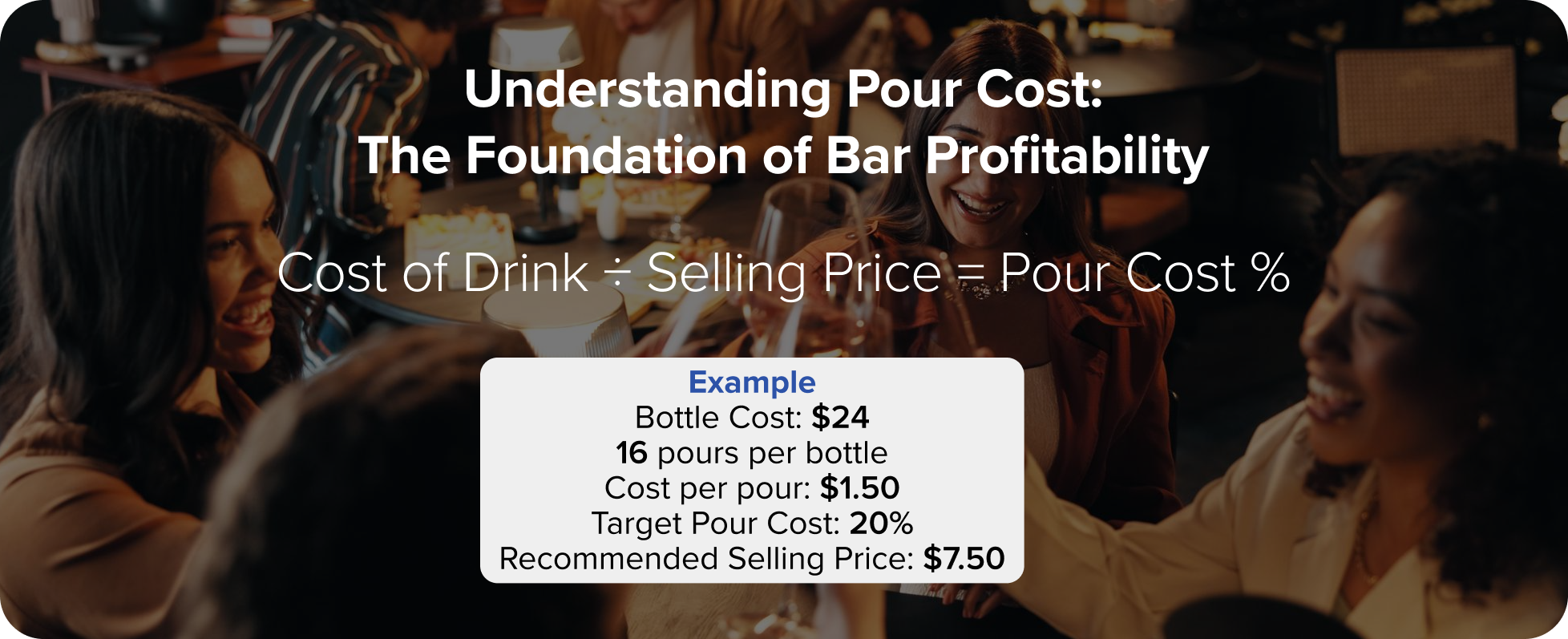
The cost of pouring is figured out as:
Cost of the drink ÷ Selling price = Pour cost percentage
If a 1.5 oz pour of vodka costs $1.50 and you sell the drink for $10, your pour cost is 15%.
Operators usually aim for:
- 15% to 25% pour cost for cocktails and spirits
- 20–30% for beer
- 30–40% for wine
It’s very hard to learn how to price liquor in a bar well if you don’t know your true pour cost.
Bar Concept, Location, and Customer Demographics
A cocktail lounge on the roof of a big city building can charge more than a neighborhood bar. Your idea sets the limit.
Important things to think about are:
- Markets in cities, suburbs, and rural areas
- Traffic from tourists vs. traffic from locals who come back
- Positioning based on premium vs. Value
Knowing how your customers spend money is an important part of your alcohol pricing strategy.
Competitive Pricing and Market Benchmarks
Guests compare prices, even if they don’t mean to. Do regular competitive audits to find out:
- Average cost of a domestic draft
- Prices for standard well drinks
- Standards for high-end cocktails
If you know your local area, you can make sure that your prices seem planned, not random.
Demand, Volume, and Sales Mix
Sometimes, items with a lot of sales can have slightly lower margins and still make a lot of money. On the other hand, specialty cocktails with lower volume often need higher margins to make up for the time and money spent on making them.
Not just your cost sheet, but also your sales mix should help you set your prices.
Waste, Spillage, and Shrinkage
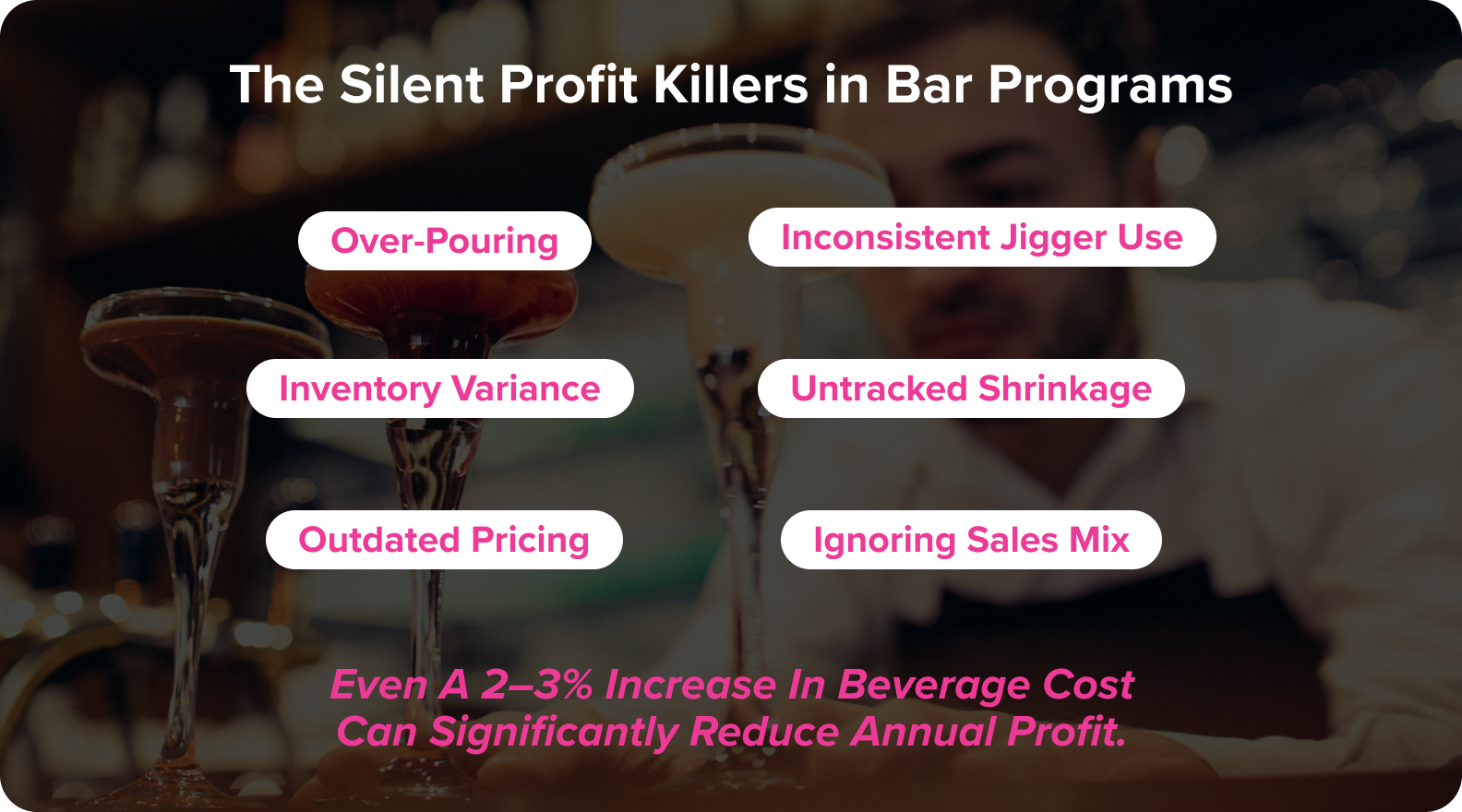
Variance is a quiet killer of margins. Over-pouring, stealing, and using the jigger wrong all affect the true cost.
If you are trying to figure out how to price drinks in a bar without taking shrinkage into account, you are not taking into account your real costs.
Pour Cost and Target Margins
The cost targets for pour vary by concept, but most profitable bars try to keep their overall drink cost between 18% and 24%.
To set prices:
- Find out how much the bottle costs.
- Find out how many pours are in each bottle (a standard 750 ml bottle has about 16 1.5 oz pours).
- Find out how much each pour costs.
- Use the percentage of your target pour cost.
If a bottle costs $24:
- $24 ÷ 16 pours = $1.50 per pour
- At a 20% target pour cost → $1.50 ÷ 0.20 = $7.50 selling price
This organized method takes the guesswork out of how to set prices for drinks in a bar and keeps the margins the same.
How to Price Different Types of Alcohol
Different types of alcohol act in different ways. A pricing model that works for everyone is rare.
How to Price Beer
The price of beer depends a lot on its format:
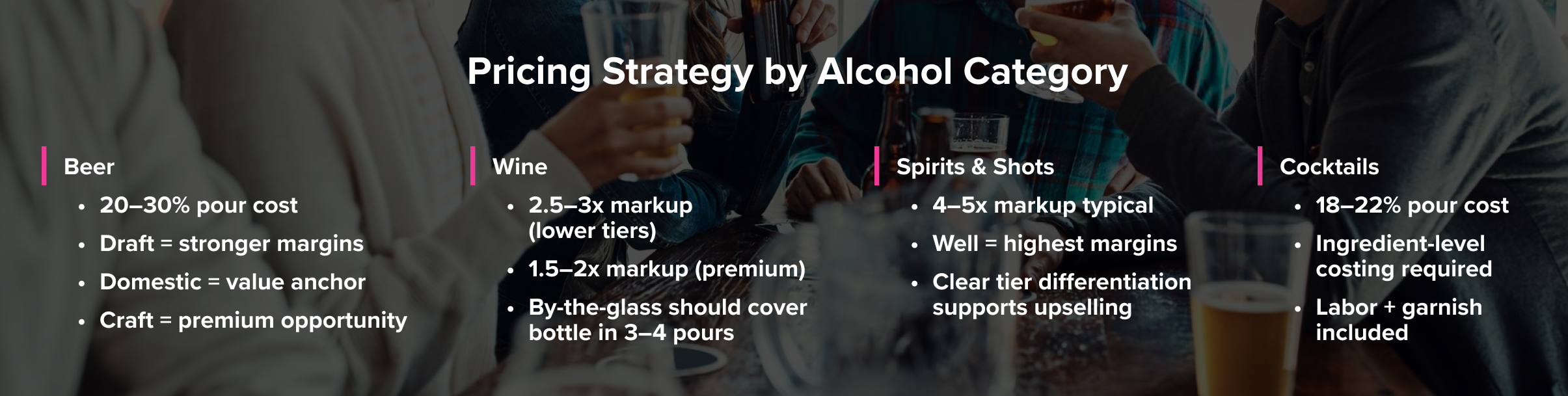
- Draft beer usually has higher profit margins than packaged beer.
- Craft selections can cost more.
- People often think of domestic beers as being worth more than they are.
Most bars aim for a 20–30% pour cost for beer, taking into account the amount of beer in the keg and how much they expect to waste.
How to Price Wine
There are often tiered markup structures for wine prices:
- Bottles that cost less may have a markup of 2.5 to 3 times.
- Some premium wines may cost 1.5 to 2 times as much.
The price per glass should cover the cost of the bottle in three to four pours, which will keep it from going bad.
How to Price Spirits and Shots
Well liquors usually have the highest profit margins, so they should be priced in a way that encourages sales. Brand equity and perceived value are more important for premium and top-shelf spirits.
Clear differences between the well, call, and premium tiers help with upselling.
How to Price Cocktails
Cocktails need to have their costs broken down by ingredient.
Add:
- Base spirit
- Modifiers and garnishes
- Parts that take a lot of work to prepare
Signature cocktails can cost between 18% and 22% of the total cost of the drink, depending on how complicated it is and where it is served. When figuring out how much to charge for drinks in a bar for craft programs, it’s important to be consistent.
Liquor Markup and Industry Pricing Benchmarks
Some common industry standards are:
- 4–5 times the price of spirits
- Beer is marked up by 2 to 3 times
- Wine is marked up by 2 to 3 times
But getting the right percentage of beverage costs is more important than having rigid multipliers. Smart operators put margin performance ahead of random markups.
Menu Engineering and Alcohol Pricing Strategy
Just having a good price doesn’t make you money. Placement and presentation are just as important.
Using Menu Placement to Drive High-Margin Drinks
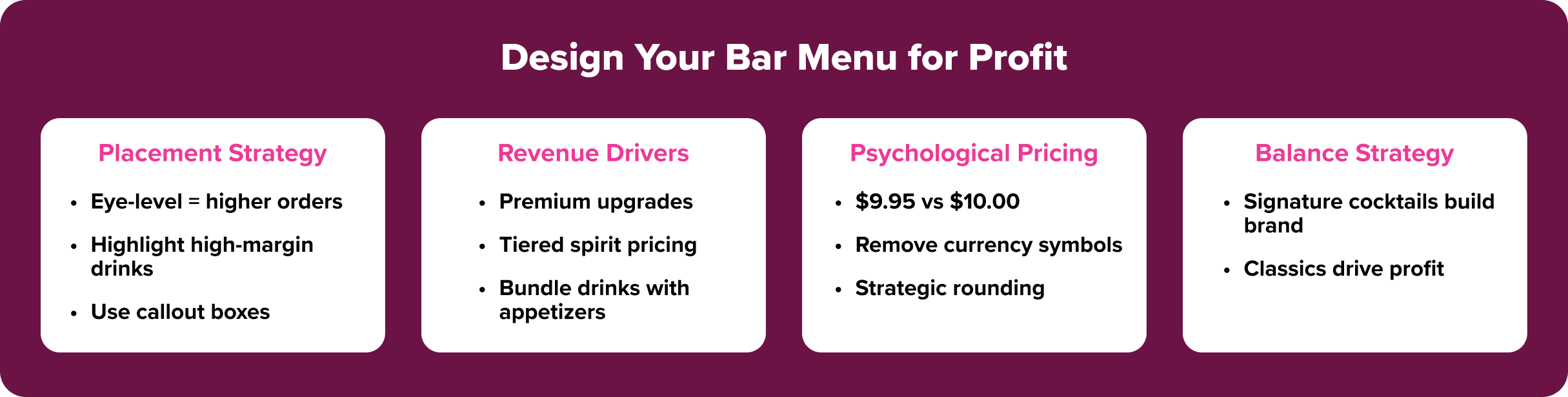
Putting things at eye level makes them more likely to be ordered. Use callout boxes or icons to draw attention to drinks that make money.
Digital menu boards can change the drinks that are shown to change behavior.
Bundling, Upselling, and Tiered Pricing
- For a small extra cost, offer premium upgrades.
- Put together drinks and snacks.
- Use different prices for different types of spirits
These strategies raise the average check amount without raising prices too much.
Psychological Pricing in Bar Menus
Small changes in price affect how people see things:
- $9.95 vs. $10.00
- Taking away currency symbols
- Strategic rounding for premium placement
These small tricks make your alcohol pricing strategy stronger.
Balancing Flagship Cocktails With Profit Drivers
Signature drinks help people remember your brand. High-margin classics are what make money. A balanced menu makes sure that creativity doesn’t cut into profits.
Common Liquor Pricing Mistakes Bars Should Avoid
Even experienced bartenders can make mistakes when it comes to setting prices for liquor.
Ignoring Variance and Over-Pouring
Pouring without control can raise the price of drinks by a few percent. It is important to keep track of your inventory and control your portions.
Failing to Adjust Prices as Costs Change
Prices from suppliers change. If the price of bottles goes up and the price of the menu stays the same, the margins get smaller.
Pricing Without Understanding Sales Mix
Not all drinks sell for the same price. Look at the contribution margin for each item, not just the cost of the pour.
Treating All Alcohol Categories the Same
You need different strategies for beer, wine, and cocktails. Using the same markups makes prices less accurate.
How Often Should Bars Review Liquor Prices?
Most operators should check the prices of alcohol every three months. Monthly reviews may be helpful for groups with a lot of members or multiple units, especially when suppliers are unstable.
Regular analysis makes sure that your prices are based on current costs and performance.
Final Thoughts
To learn how to price alcohol in a bar, you need to do more than just add a flat markup. It needs to be able to see the cost of pouring, the mix of sales, the difference in inventory, and how guests act.
When you do structured analysis and keep an eye on things, alcohol pricing becomes a strategic lever for making money instead of a guessing game.
Operators who use data, insights from purchases, and strict inventory controls are better able to protect their margins while giving guests a great experience.
Alcohol Pricing FAQs
What is a good pour cost for a bar?
Most profitable bars want to keep their pour costs for spirits and cocktails between 15% and 25%. Overall, drink costs should be between 18% and 24%, depending on the idea.
How much should bars mark up liquor?
Spirits are often priced 4–5 times the cost of a bottle, beer 2–3 times, and wine 2–3 times. But getting the right pour cost percentages is more important than fixed multipliers.
How do you price cocktails consistently?
Calculate the cost of each ingredient, use standard pour sizes, and set a consistent target pour cost percentage for the whole program.
How often should liquor prices be updated?
At least once every three months, look over. In markets that change a lot, checking monthly makes sure that margins stay in line with supplier prices.
How can bars increase profits without raising prices?
Improve portion control, cut down on shrinkage, find the best places to put menu items, fine-tune the sales mix, and negotiate buying programs. Price increases alone don’t always lead to better margins; operational precision is often what does.