

Nearly 45% of restaurant operators were not profitable in 2025, according to the National Restaurant Association’s 2026 State of the Industry Report, proving that running a successful kitchen today isn’t just about sales, it’s about how well you manage what happens behind the line.
If you’ve ever stepped onto a line five minutes before service, you already know this: managing a kitchen isn’t about one big thing. It’s about a hundred small things going right at the same time.
That’s why learning how to manage a restaurant kitchen comes down to building systems that hold up when things get busy, messy, and unpredictable. Because they will.
Let’s break down what actually works in real kitchens.
What a Well-Run Restaurant Kitchen Looks Like
You can feel it the second you walk in.
Tickets are moving, but no one’s yelling. The line is tight. Prep is stocked. Plates look the same whether it’s 5:30 or 8:45.
A well-run kitchen isn’t perfect. It’s consistent.
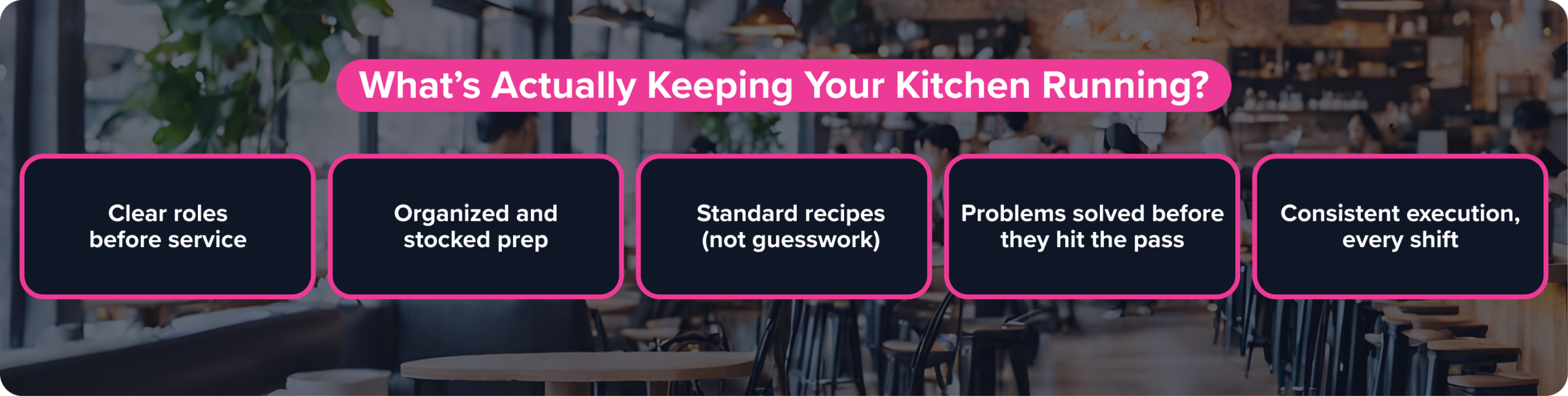
It’s a place where:
- Everyone knows their role before service starts
- The walk-in isn’t a guessing game
- Recipes don’t live in someone’s head
- Problems get solved before they hit the pass
At the end of the day, how to manage a restaurant kitchen isn’t about controlling people. It’s about creating an environment where things don’t fall apart under pressure.
Essential Systems Behind Every High-Performing Kitchen
Great kitchens aren’t built on talent alone. They’re built on repeatable systems that remove guesswork.
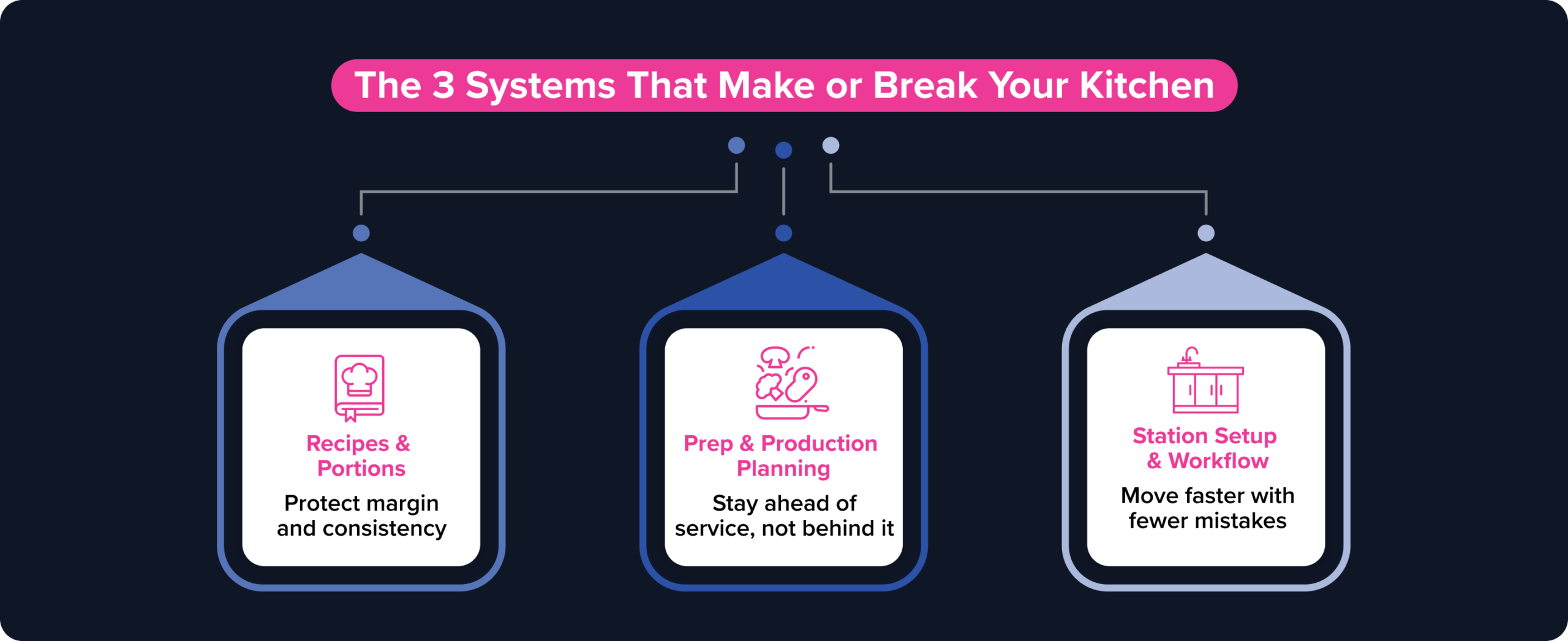
Standard Recipes and Portion Control
If your team is “eyeballing it,” you’re losing money. Period.
Standardized recipes do two things:
- Protect your food cost
- Protect your brand
Portion control isn’t about being strict for the sake of it. It’s about making sure every plate that leaves the kitchen delivers the same experience and the same margin.
Prep Lists and Production Planning
The smoothest services start hours before the first ticket prints.
Strong prep systems mean:
- No last-minute scrambling
- No over-prepping “just in case”
- No running out of key items mid-service
Daily prep lists tied to actual sales patterns make a huge difference. You’re not guessing. You’re planning.
Station Organization and Workflow
Every second matters during service.
When stations are organized properly:
- Movement is efficient
- Communication is cleaner
- Mistakes drop
If your team is constantly reaching, stepping over each other, or asking where things are, your setup is working against you.
How to Maintain Consistent Food Quality
Consistency is what keeps guests coming back.
You don’t get there by hoping for the best. You get there by tightening the process.
Start with:
- Clear plating guides
- Defined cook times and temps
- Regular line checks during service
And here’s the part people skip: accountability.
If something goes out wrong, it gets fixed immediately. Not later. Not “we’ll address it after service.” Right then.
That’s the difference between kitchens that improve and kitchens that repeat the same mistakes.
How to Control Kitchen Costs Without Sacrificing Standards
Cutting costs doesn’t mean cutting corners.
The operators who really understand how to manage a restaurant kitchen know that cost control comes from visibility, not guesswork.
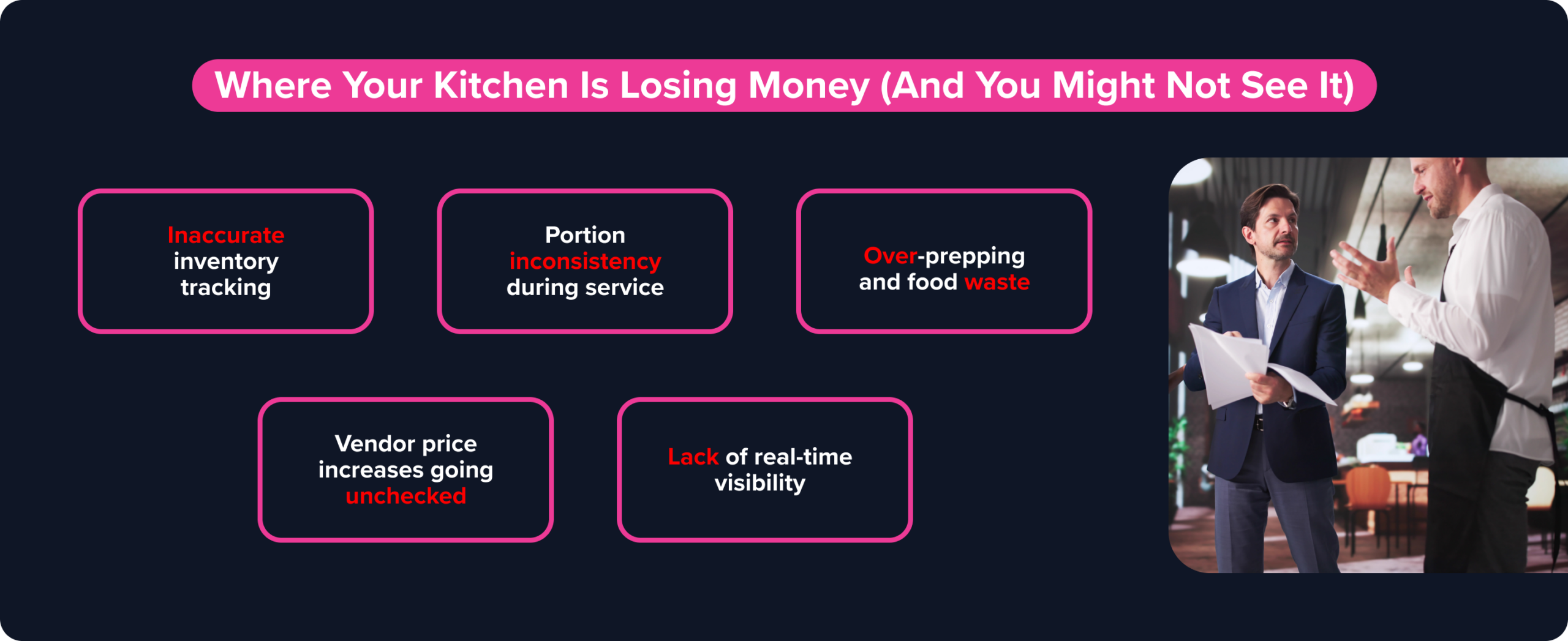
Focus on:
- Tracking inventory accurately (not once a month… consistently)
- Watching portion sizes during service
- Keeping an eye on vendor pricing changes
- Reducing waste before it happens
Most kitchens don’t have a cost problem. They have a tracking problem.
When you can see what’s happening, you can fix it.
How to Handle Common Kitchen Challenges
Every kitchen deals with the same issues. The difference is how quickly you respond.
Running out of product mid-service
Usually comes back to prep planning or inaccurate inventory.
Inconsistent dishes
Almost always tied to lack of standardization or training gaps.
Communication breakdowns
Happen when systems aren’t clear or the kitchen layout works against the team.
You don’t eliminate challenges. You build systems that make them easier to handle when they show up.
Building a Kitchen Team That Runs Smoothly
A strong kitchen isn’t just systems. It’s people who know how to work within them.
Creating Clear and Practical SOPs
If your SOPs live in a binder no one opens, they’re not doing anything.
Good SOPs are:
- Easy to follow
- Accessible during service
- Actually used in training
Think of them as tools, not paperwork.
Cross-Training Kitchen Stations
Cross-training gives you flexibility when things get tight.
It helps:
- Cover call-outs without chaos
- Improve team communication
- Reduce bottlenecks during service
And honestly, it builds a stronger team overall.
Developing Future Kitchen Leaders
Every strong kitchen has someone ready to step up.
That doesn’t happen by accident.
It happens when you:
- Give people ownership of responsibilities
- Teach them the “why,” not just the “how”
- Let them make decisions (and learn from them)
If everything depends on one person, the system is fragile.
How Technology Simplifies Restaurant Kitchen Management
This is where things have shifted.
You can absolutely run a kitchen with spreadsheets, clipboards, and memory. Plenty of operators still do.
But technology makes how to manage a restaurant kitchen a whole lot easier by removing the blind spots.
With the right tools, you can:
- Track inventory in real time
- Standardize recipes and costing
- Monitor purchasing and price changes
- See exactly where money is being lost
It’s not about replacing your team. It’s about giving them better information so they can make smarter decisions faster.
Conclusion
There’s no single trick to figuring out how to manage a restaurant kitchen.
It’s about building systems, training your team, and staying consistent even when things get hectic.
The kitchens that succeed aren’t the ones that avoid problems. They’re the ones that are built to handle them.
And when everything is working together—people, process, and visibility—you don’t just survive service.
You run it.
Restaurant Kitchen Management FAQs
How can I reduce mistakes during busy service?
Honestly, most mistakes aren’t happening because your team doesn’t care. They happen when people are rushing and trying to figure things out on the fly. The biggest fix is making sure everything is set before service even starts. Stations stocked, prep done, everyone clear on their role. Once service hits, it’s about keeping communication tight and not letting things spiral when it gets busy.
How do restaurants maintain consistent food quality?
It really comes down to not leaving things up to interpretation. If one cook is doing it one way and someone else is doing it differently, you’re going to see it on the plate. Strong kitchens lock in recipes, portions, and plating so there’s no guesswork. Then it’s just staying on top of it during service and correcting things in real time.
What is the best way to manage kitchen staff?
There’s no magic formula here. People just want to know what’s expected and feel like the kitchen isn’t chaos every shift. Clear direction, fair accountability, and actually supporting your team when things get tough goes a long way. If your team trusts the system and each other, everything runs smoother.
How can I control food costs in the kitchen?
Most operators think they have a cost problem when really they have a visibility problem. If you’re not tracking inventory regularly or paying attention to portions, things slip fast. Start there. Once you actually see where the money is going, it gets a lot easier to tighten things up without cutting quality.