

The hospitality industry has always been built on service, personalization, and consistency. But today’s hotel operators are navigating a much tougher operating environment. Labor remains tight. Costs are unpredictable. Guest expectations are higher than ever, and patience is shorter.
That’s where AI in hotels is starting to earn its keep. Not as a replacement for hospitality or human connection, but as a behind-the-scenes engine that helps hotels move faster, personalize smarter, and operate more efficiently without sacrificing service quality.
When applied thoughtfully, AI helps hotels deliver better guest experiences while protecting margins in an increasingly competitive market.
How AI Improves the Guest Experience
Hotel guests judge their stay on simple things: how fast they get answers, how smooth check-in feels, and whether the hotel seems to remember them. AI supports those moments by keeping small issues from turning into frustrations, especially when teams are stretched thin.
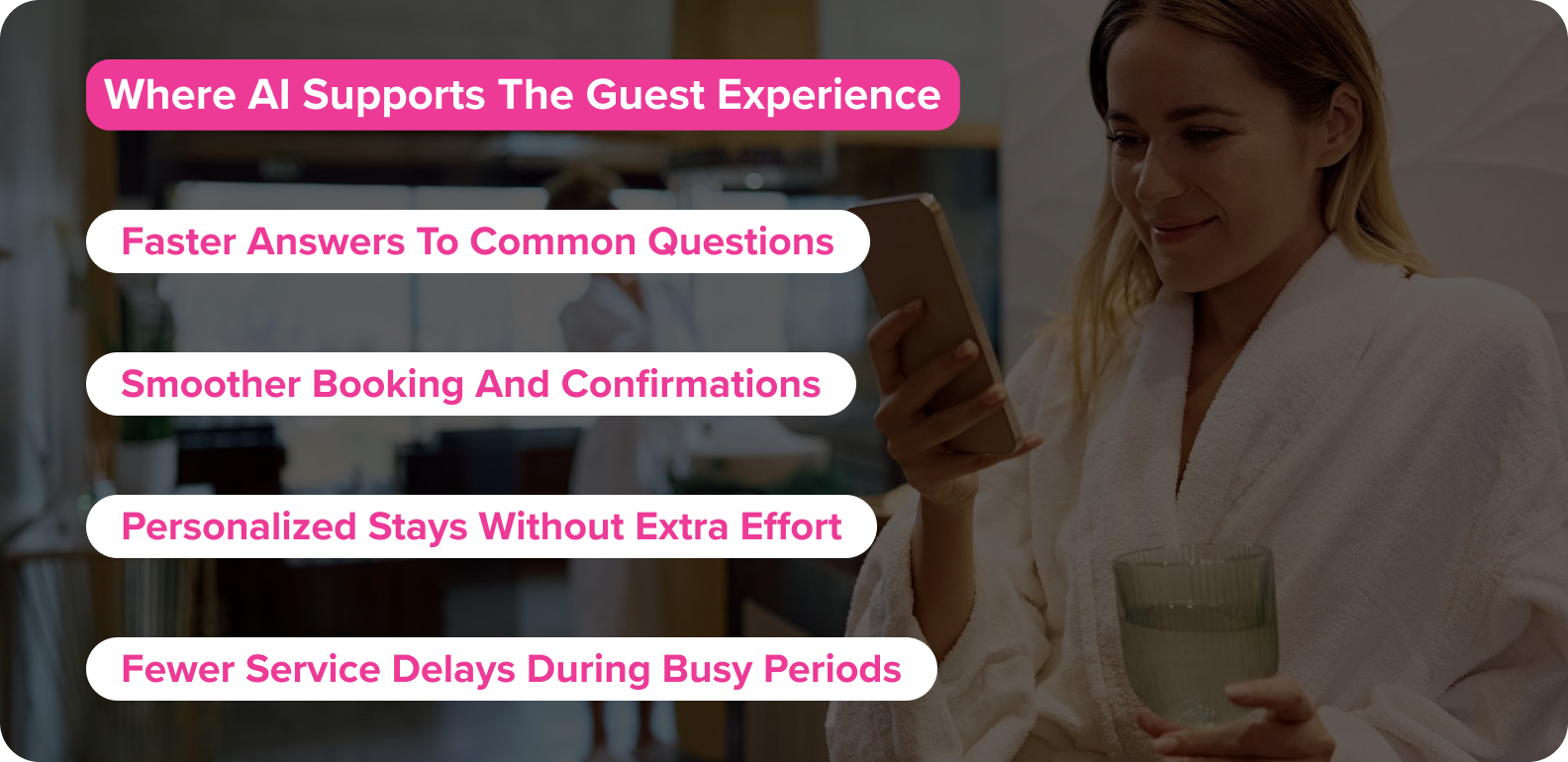
Guest Communication and Instant Support
Most guest questions are predictable. Check-in times, parking details, Wi-Fi access, late arrivals. AI tools handle those requests immediately so guests aren’t waiting for a callback and staff aren’t pulled away from in-person service.
Chatbots and Virtual Concierges for 24/7 Assistance
Guests don’t stop having questions just because it’s late. A virtual concierge gives them a way to get what they need right away, whether someone is standing at the desk or not.
Seamless Reservation and Booking Automation
Booking systems supported by AI reduce dropped reservations and manual follow-ups. Confirmations go out automatically, changes are processed faster, and fewer details slip through the cracks during busy booking periods.
Personalized Stay Experiences Through Digital Guest Profiles
Guests who come back notice when a hotel remembers them. AI keeps track of things like room type and communication style so that stays feel familiar without staff having to look through old notes or reservations.
Intelligent Room Customization Based on Preferences
You can set up simple changes like the temperature or lighting based on your last stay. These details help guests get settled in quickly and cut down on service calls without making extra work for the front desk or housekeeping.
Understanding AI in the Hotel Industry
When people talk about AI in hotels, they’re not talking about robots at the front desk. They’re talking about getting more value out of data hotels already have. Occupancy trends, purchasing history, staffing schedules, maintenance notes. None of it is new. What’s new is the ability to actually connect it without pulling five reports and a spreadsheet.
Instead of finding problems after guest scores drop or costs spike, teams can see patterns forming and make changes while there’s still time to fix them.
Transforming Hotel Operations with AI
Running a hotel means juggling a lot at once. Staffing. Supplies. Guest flow. Maintenance. Most days, you’re reacting to whatever is loudest or most urgent in the moment.
AI helps shift that balance. It gives you earlier signals, so fewer decisions feel rushed and fewer problems catch you off guard. You still make the calls. You just have better information when you make them.
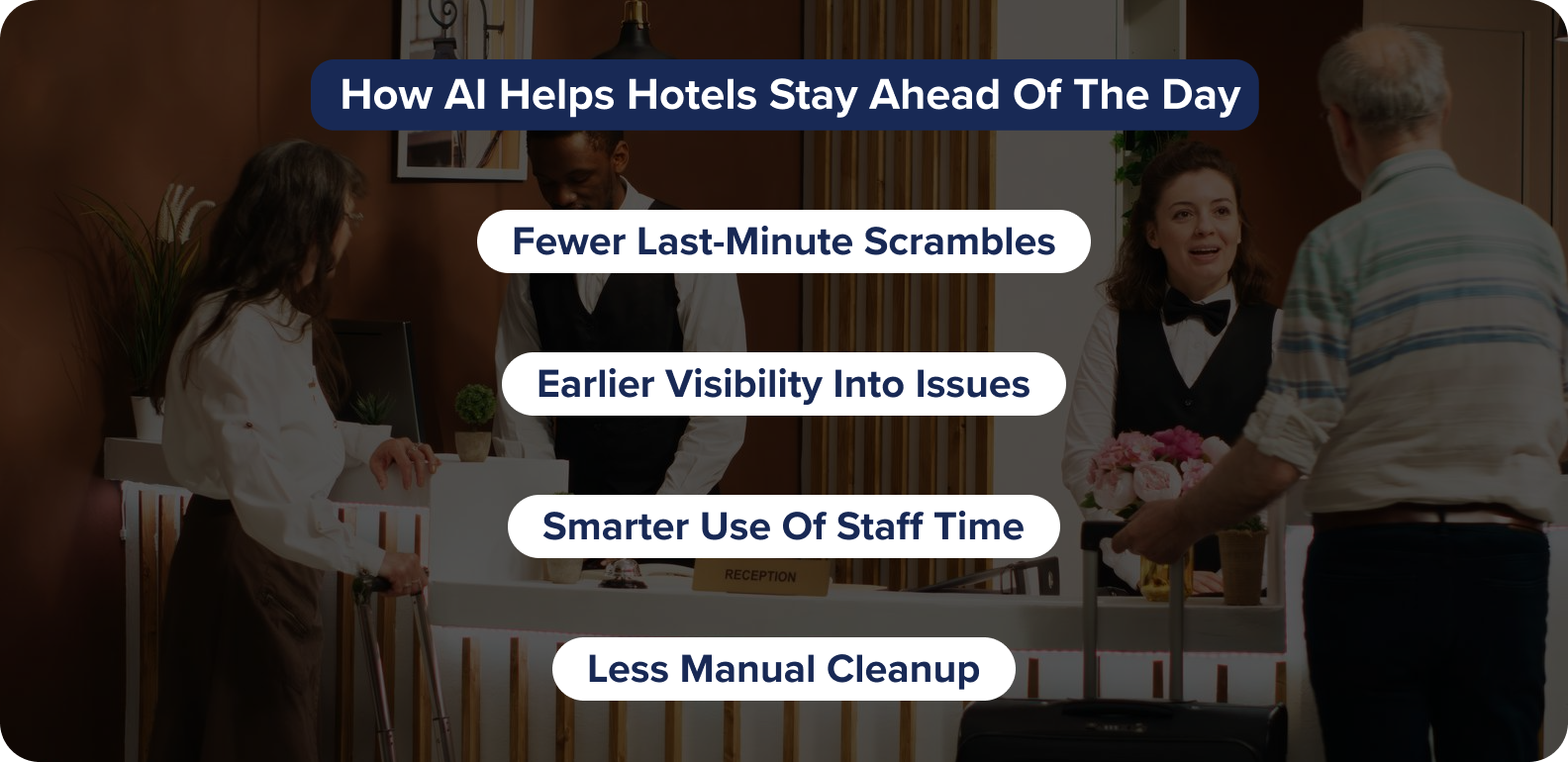
Workflow Automation
Daily tasks have a way of piling up. Schedules change. Priorities shift. Things get missed.
Workflow automation helps keep the basics moving without constant follow-up. Tasks get assigned. Updates move through the system. Managers spend less time checking in and more time actually managing.
Smart Inventory Management
Ordering isn’t hard. Ordering right is.
Most hotels buy the same things week after week, even when demand changes. AI helps flag when usage starts to shift, so orders adjust before you’re sitting on excess inventory or scrambling to fill a gap.
Reducing Operational Bottlenecks Using Predictive Systems
Crowded lobbies, delayed room turns, and supply shortages usually give off warning signs. They just aren’t always easy to spot in time.
Predictive systems help surface those pressure points earlier, so you can make small adjustments before guests feel the impact.
Automating Routine Administrative Tasks
Paperwork has a way of sneaking up on you. A few invoices here, a report there, and suddenly hours are gone. Automating that work cuts down on retyping and errors, so there’s less cleanup later.
Enhancing Staff Productivity
When teams aren’t chasing information or fixing preventable mistakes, they can focus on service. The work doesn’t change. It just gets less cluttered.
That’s where productivity actually improves.
AI in Housekeeping and Maintenance Management
Housekeeping and maintenance are where small delays turn into guest complaints fast. A late room. A missed repair. A service request that falls through the cracks.
AI helps bring more structure to those moving parts without adding more steps for already busy teams.
Optimized Housekeeping Scheduling
It’s rare for room turns to go exactly as planned. Early checkouts, late departures, and unexpected extensions all change the day.
AI helps change housekeeping schedules in real time based on how many people are in the building, so the right rooms are cleaned first and staff time is used where it matters most.
AI-Based Maintenance Alerts
Most maintenance issues don’t start as emergencies. They start as patterns. A unit running longer than usual. Repeated service notes. Slight performance drops.
AI-based alerts help flag those patterns earlier, giving teams a chance to fix issues before they impact guests or take rooms out of service.
Improving Room Service Quality
Room service only works when timing is right. Tracking what slows things down helps teams clean up small issues without adding pressure during the rush. The payoff is fewer mistakes and a smoother experience for guests.
Revenue Optimization Through AI in Hotels
Pricing is one of the toughest calls in a hotel. Push rates too soon and rooms sit empty. Wait it out and you realize later you could have captured more revenue.
AI helps by keeping pace with what’s actually happening in the market, not what last month’s forecast suggested.
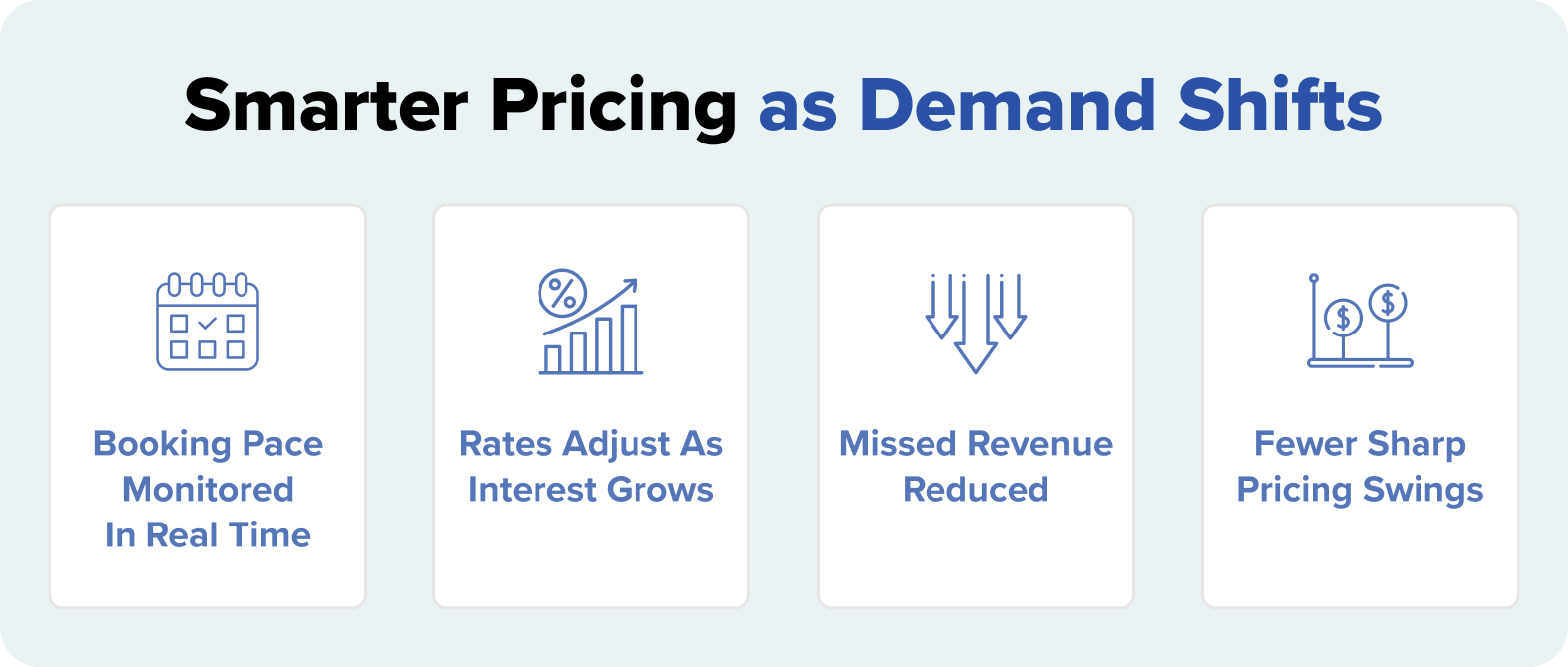
Dynamic Pricing Based on Demand Forecasting
Demand rarely flips overnight. It builds quietly, then suddenly accelerates.
AI watches booking pace and past patterns so pricing adjusts as interest grows, not after rooms are already filled or left unsold.
That means teams can:
- Catch booking momentum earlier
- Avoid sharp, last-minute rate changes
- Price rooms based on real demand instead of gut feel
Real-Time Rate Adjustments Using Market Intelligence
Markets move fast. Conferences get announced. Flights get added. Weather changes plans.
Real-time rate adjustments allow pricing to keep up without waiting for a manual review window.
Instead of reacting late, teams can:
- Adjust rates as demand changes
- Capture upside during short booking surges
- Reduce missed revenue during high-interest periods
Competitor Price Tracking and Strategic Positioning
Watching competitor pricing is easy to say and hard to do consistently.
AI tools track rate changes automatically, so hotels stay positioned without daily manual checks.
That visibility helps operators:
- Stay competitive without racing to the bottom
- Understand market movement at a glance
- Make pricing decisions with context, not guesswork
Seasonal and Event-Based Pricing Automation
Seasonality and local events drive demand more than most operators want to admit.
AI helps account for those patterns so pricing reflects opportunity, not outdated assumptions.
How Hotels Can Start Implementing AI Successfully
AI works best when it’s introduced deliberately. Not rushed. Not everywhere at once.
The goal is progress, not perfection.
Identifying Operational Gaps and AI Opportunities
The best place to start is by seeing where teams waste time or can’t see.
Some common signs are:
- Problems with service happening over and over
- Reporting by hand that takes hours
- Decisions made with incomplete information
Those gaps usually show you where to start.
Phased Implementation Strategy
The best hotels don’t do everything at once.
They focus on:
- One department
- One step
- One outcome that can be measured
That method cuts down on problems and builds trust before growing.
Staff Training and Change Management Planning
Technology only works if people trust it.
Clear communication, practical training, and realistic expectations help teams see AI as support, not oversight.
Measuring ROI and Performance Impact
Tracking results keeps momentum going.
Hotels that succeed with AI define success early, whether that’s:
- Time saved
- Errors reduced
- Revenue protected
- Costs stabilized
Benefits of AI in Hotels
When AI is used the right way, it doesn’t feel like some massive tech overhaul. It just quietly makes the operation run smoother, across the board.
Guests Feel It
Service feels easier. Fewer delays. Faster answers. Nothing showy — just the kind of experience that makes guests think, yeah, I’d stay here again.
Teams Keep Things Moving
With less manual work in the mix, teams spend less time fixing mistakes and more time doing the job well. Things move faster without anyone feeling rushed or stretched thin.
Costs Are Easier to Control
Better forecasting means fewer last-minute scrambles, less waste, and fewer “how did this happen?” expenses. Instead of reacting all the time, you can actually plan.
Revenue Decisions Make More Sense
Pricing and demand stay better aligned, so opportunities don’t slip by unnoticed. You’re adjusting in the moment, not realizing after the fact that you left money on the table.
Consistency Builds Loyalty
When guests get what they expect — and it’s good — trust builds naturally. And trust is what keeps them coming back.
Challenges of Implementing AI in Hotels
AI isn’t a quick fix you plug in and forget about. It takes time, trial and error, and a plan that actually fits how the hotel runs day to day.
The Cost Question
AI tools can get expensive fast, and that’s a real concern, especially for smaller properties. Starting small, testing impact, and building from there helps avoid spending big before seeing results.
Making It Work With What You Already Use
Hotels already juggle enough systems. When new tools don’t connect cleanly, they create more work instead of less. Thinking through integrations upfront saves a lot of frustration later.
Protecting Guest Information
Guests trust hotels with sensitive data. If that trust slips, it’s hard to earn back. Security and privacy have to be part of the conversation from the start, not something added later.
Getting Teams Comfortable With Change
New tech can feel intimidating. Staff need to understand why it’s being introduced and how it helps them, not just how to use it. Adoption takes time, not pressure.
Letting AI Assist — Not Take Over
AI is a tool, not a decision-maker. It works best when it supports human judgment, especially in situations where experience and nuance matter.
Future of AI in the Hotel Industry
AI in hotels will keep evolving, but its role won’t dramatically change.
It will continue helping teams:
- See issues sooner
- Respond faster
- Operate with more confidence
The hotels that benefit most won’t chase every new tool. They’ll use AI quietly and consistently to support great service. Click here to connect with our foodservice technology experts today and learn how Buyers Edge Platform is using AI to help the hotel industry.
FAQs
How does AI enhance guest experience?
By reducing wait times, personalizing stays, and preventing small issues from turning into larger frustrations.
Can AI improve hotel revenue management?
Yes. AI supports faster pricing decisions, better demand forecasting, and stronger market response.
Is AI replacing hotel staff?
No. AI reduces manual work and improves visibility so staff can focus on service.
What is the difference between AI and all-inclusive in hotels?
AI supports operations and guest experience. All-inclusive is a pricing and service model. They serve different purposes.