
AI, or artificial intelligence, isn’t just a thing of the future anymore. It’s already changing how the food business works. AI is helping operators, distributors, and manufacturers run their businesses more efficiently, cut down on waste, and make better, faster decisions. Technology is making things more visible and efficient on farms, in kitchens, and in supply chains in ways that seemed impossible before. The Buyers Edge Platform is powered by the same innovation. AI-powered tools help the foodservice industry work more efficiently, be more open, and make more money at every step.
Benefits of AI in the Food Industry
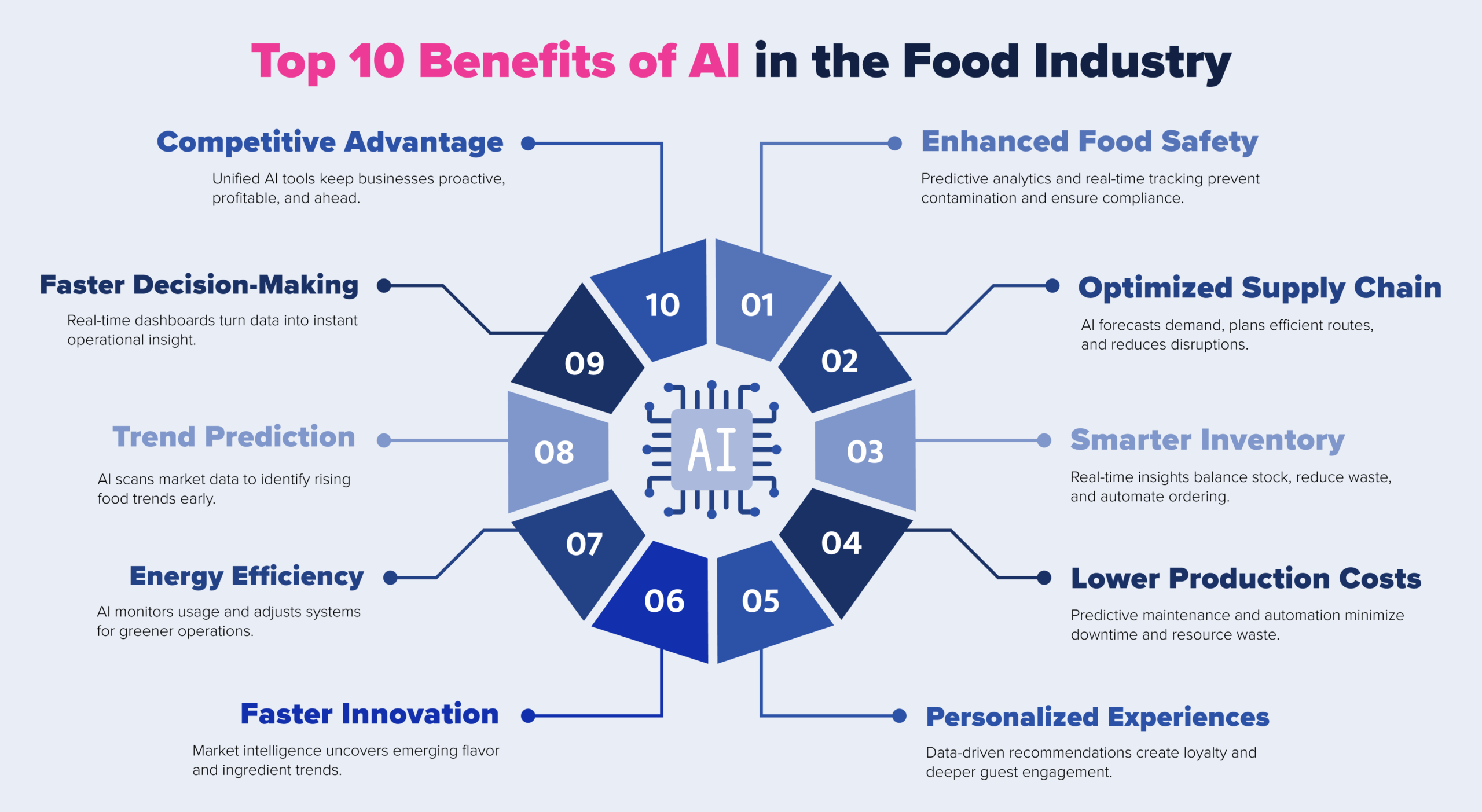
AI strengthens the food industry by improving safety, visibility, and efficiency across the supply chain while driving profitability and innovation for operators and partners.
1. Enhanced Food Safety
AI is changing how food safety is checked and kept up to date. It uses predictive analytics and real-time tracking to find risks and stop contamination before it happens.
How AI helps keep food safe:
- Looks for patterns in data to find contamination risks.
- Checks the temperature and the state of transportation in real time.
- Checks for compliance automatically to make sure that everything is correct and consistent.
Produce Alliance, which is a BEP Fresh Division brand, uses data to track produce from the field to the kitchen. This makes sure that it stays fresh, can be tracked, and is safe at all times.
2. Optimized Supply Chain Management
AI gives operators a clearer picture of what’s happening across their entire supply chain. When you can actually see how everything connects, it’s easier to plan ahead and keep things running smoothly. It also spots potential issues before they turn into real problems — and even offers ways to fix them.
How AI improves supply chains:
- Predicts demand so you don’t run out or waste.
- Maps out the best delivery routes to save money.
- Tells you about problems before they get worse.
Supply chain experts Restaurant Partners Procurement (RPP) uses data and analytics from Buyers Edge Platform to make it easier to check prices, manage contracts, and come up with sourcing strategies. This leads to better results.
3. Improved Inventory Management
Balancing your inventory can be the difference between making money and losing money. AI looks at sales history, seasonal trends, and usage data to suggest the best amounts to reorder, so you don’t have to guess.
How AI makes inventory better:
- Real-time tracking of inventory in all places.
- Finds waste, shrinkage, and ordering too much.
- Lessens the amount of work that goes into entering data by hand.
Tools like InsideTrack and Back Office help operators automatically manage their inventory. They turn data into insights that help avoid expensive stock mistakes and lower food costs.
4. Cost Reduction in Production
AI helps operators reduce costs by improving efficiency and eliminating unnecessary labor and energy use. Predictive maintenance minimizes downtime, while automation streamlines repetitive tasks.
Cost-saving impacts:
- Predicts equipment maintenance needs.
- Tracks resource use to prevent waste.
- Optimizes ingredient usage for better yield.
These data-driven efficiencies allow operators to stretch resources further, minimize waste, and reinvest savings into growth initiatives.
5. Personalized Customer Experience
Every restaurant wants its guests to feel like regulars — even on their first visit. That’s where AI can quietly make a difference. Instead of guessing what people might enjoy, it studies what they’ve actually ordered, what they’ve liked, and what they’ve said online. From there, it helps operators make smarter, more personal choices that guests actually notice.
You’ve probably experienced it yourself:
- The server who suggests something that ends up being exactly your taste.
- A loyalty reward that feels like it was made just for you.
- An email with an offer that makes sense, instead of another random promo.
The goal isn’t to replace that warm, human touch — it’s to support it. When restaurants understand their guests on a deeper level, every interaction feels a little more thoughtful. That’s what builds real loyalty and keeps people coming back.
6. Innovation in Product Development
A big “aha” moment doesn’t always lead to new ideas. Sometimes, it’s important to pay attention to what’s going on in kitchens, grocery stores, and conversations all over the world. That’s where AI does its best work without anyone noticing. It helps food and drink teams figure out what’s popular and what’s starting to fade by looking at market data and what people are saying.
That means behind the curtain:
- Finding early signs of flavor or ingredient trends before they become popular.
- Trying out combinations that don’t seem to go together to see what works.
- Before production starts, people play around with digital prototypes of recipes or packaging.
You could say that it’s like having an extra pair of eyes on every step of making a product. AI helps manufacturers take smarter risks, move faster, and launch products that really connect with customers, whether it’s a new plant-based protein or a new version of an old favorite.
7. Energy and Resource Efficiency
Every operator knows how quickly utility bills can pile up — the lights, the coolers, the constant hum of equipment. Keeping costs down without cutting corners takes real attention. These days, being sustainable and being smart with money go hand in hand.
AI helps by quietly watching where energy and water go. It can catch small issues before they turn into expensive ones and give operators a clearer picture of how their kitchens really run.
You might see it working through:
- Coolers and HVAC systems adjusting automatically when demand changes.
- Daily energy summaries that make waste easier to spot.
- Clear data operators can use to track progress toward sustainability goals.
It’s not about overhauling everything overnight — it’s about making little tweaks that add up. The payoff? Lower bills, less waste, and a kitchen that runs cleaner and more efficiently.
8. Predicting Food Trends
Anyone in foodservice knows trends move fast. One day everyone’s obsessed with hot honey, and the next it’s all about chili crunch. The trick is spotting those shifts early — before the rest of the market catches up.
That’s where AI can actually help. It pulls together clues from all over — what people are googling, what chefs are adding to menus, what ingredients are starting to run short. Over time, you start to see a pattern forming.
In plain terms, it can:
- Notice new ingredients getting more attention online.
- Flag items that might be harder to find soon.
- Watch prices to spot what’s heating up or cooling off.
Tools like ArrowStream’s CommodityONE take that same approach and turns it into action. It helps operators buy smarter, plan ahead, and stay ready for whatever trend hits next.
9. Faster Decision-Making
In foodservice, things change fast — prices shift, inventory moves, and one small delay can throw off an entire day. Having real-time information isn’t a luxury anymore; it’s a must. That’s where AI earns its keep. It takes all that scattered data and turns it into something you can actually use on the spot.
Here’s what that looks like day to day:
- Pulling info from different systems into one simple view.
- Showing live dashboards or sending alerts when something’s off.
- Running quick “what if” scenarios so you can plan before problems hit.
With tools like ArrowStream, Back Office, and InsideTrack, operators get the visibility they need to make decisions that are smart, fast, and backed by data — not guesswork.
10. Competitive Advantage
In foodservice, staying competitive isn’t just about cutting costs or running efficiently — it’s about thinking faster than the next guy. That’s where AI has become a real game-changer. It helps operators and suppliers work in sync, adapt to market shifts, and spot opportunities before anyone else does.
Here’s how that edge shows up in everyday operations:
- Making it easier for suppliers and operators to stay connected and share information.
- Speeding up how teams test new ideas or respond to changes in demand.
- Giving full visibility into contracts, pricing, and performance so nothing slips through the cracks.
Across the Buyers Edge Platform network, brands are already using AI-driven insights to do more than just keep up — they’re using them to lead. When you can see what’s happening in real time, you can make sharper moves, stay profitable, and keep your business one step ahead.

The Power of AI in Foodservice
AI is shaking up every part of the food industry — from how ingredients are sourced to how customers are served. It’s helping operators work smarter, make faster decisions, and protect their profits along the way.
At Buyers Edge Platform, AI isn’t just a buzzword. It’s the foundation of our digital procurement network. Our brands, including InsideTrack, ArrowStream, Back Office, Restaurant Partners Procurement, and Produce Alliance, use AI-driven insights to give foodservice operators the clarity, confidence, and control they need to stay competitive in an ever-changing market.