

Hospitality has always lived and died by the guest experience. What’s changed is how quickly those expectations shift. Travelers want rooms that feel tailored to them, faster answers when they have questions, and fewer bumps in the road from check-in to check-out. Operators are feeling the weight of it, especially with tight labor pools and rising operating costs. That pressure is pushing hotels, restaurants, and resorts to look at artificial intelligence in a new way. AI isn’t coming to replace hospitality, it’s showing up to handle the repetitive work and surface insights people can act on. From smarter scheduling to personalized recommendations, these tools are already helping teams serve guests the way they want to be served.
The Rise of AI in the Hospitality Industry
AI hasn’t just quietly slipped into hospitality—it’s become part of day-to-day operations because operators need a better way to keep up. Guests want quick answers and perfectly clean rooms, and they want it without waiting in line or calling the front desk three times. At the same time, hotels and restaurants are fighting margin pressure, unpredictable demand, and labor challenges that never seem to slow down.
This is where AI has started to show real value. Operators are using it to read booking patterns, track pace, and spot pricing opportunities without digging through spreadsheets. Others are using automated tools to schedule housekeeping based on actual occupancy instead of preset blocks of time. Marketing teams are pulling sentiment data from online reviews to understand what guests actually care about, not what they think they care about.
AI isn’t stepping in to replace people. It’s taking some of the busywork off their plate so staff can focus on what guests actually remember — real hospitality, conversation, and problem-solving.
Key AI Technologies Transforming Hospitality
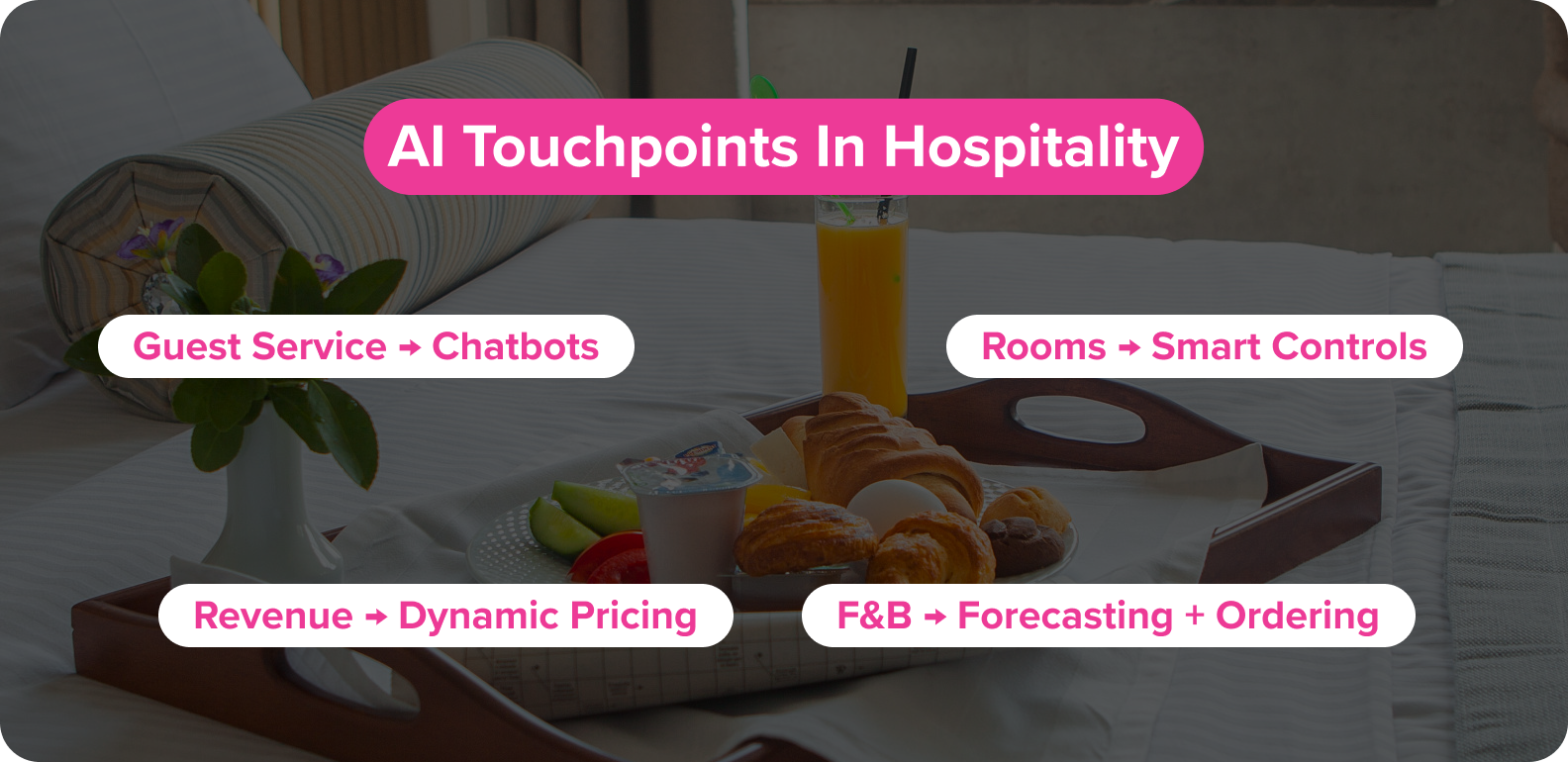
AI shows up everywhere in hospitality today, from revenue management platforms to digital room controls. These technologies help operators automate service, reduce manual tasks, and create more customized and profitable guest experiences.
Chatbots and Virtual Assistants
Many hotels now lean on chatbots as a first point of contact, especially during late hours when staffing is light. Guests can hop into a text conversation, ask a question about parking or towels, and get an instant response without calling the desk. Teams like them because they cut down on ringing phones, and guests appreciate the quick fix.
AI in Booking and Revenue Management
On the revenue side, operators are using AI platforms to study trends they used to chase manually—from fluctuating demand to what nearby hotels are charging. Instead of logging in every day to tweak pricing, these systems surface recommendations and push rate changes automatically. It gives revenue managers more breathing room and often leads to stronger results.
Smart Rooms and IoT Integration
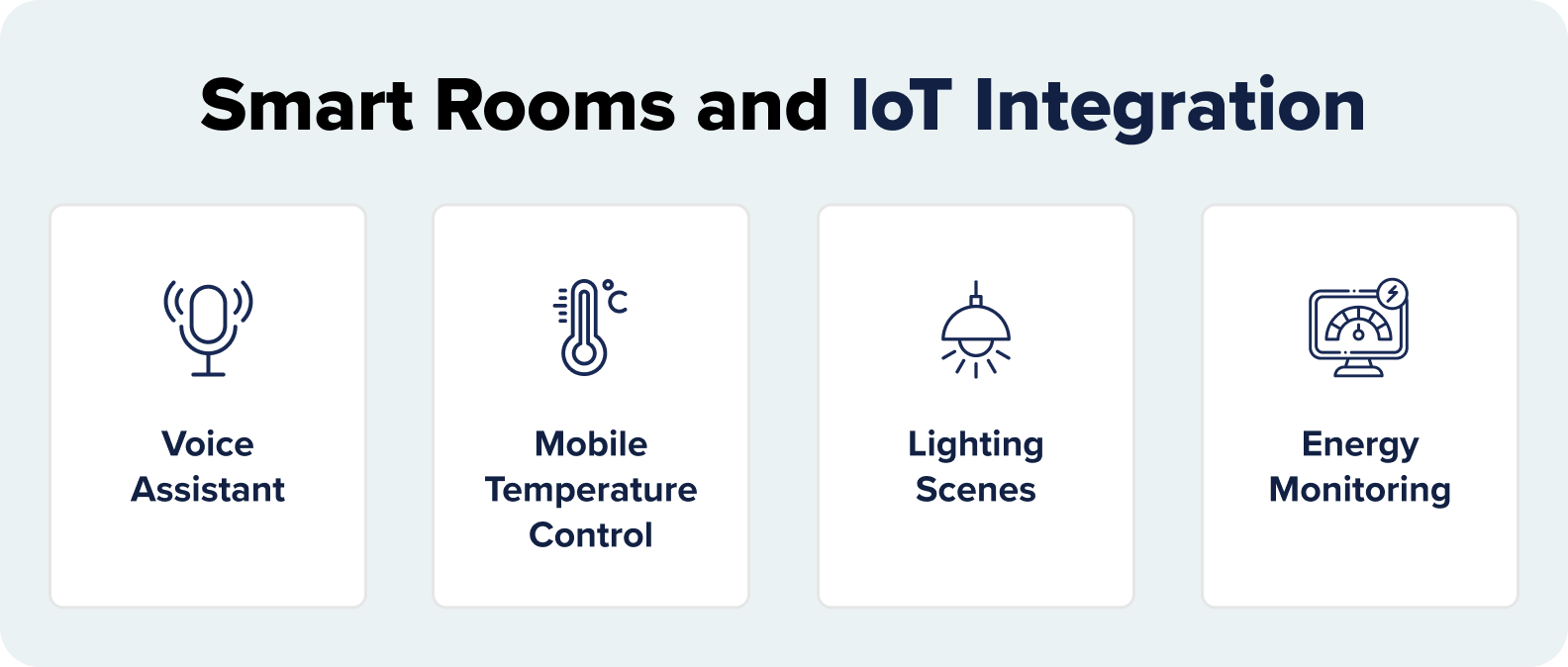
Smart room features are becoming a selling point. Guests can dim the lights from their phone, adjust the temperature before they arrive, or ask a voice assistant to play music. Hotels get a bonus benefit too: better control over energy use and clearer insight into room conditions.
AI in Food and Beverage Services
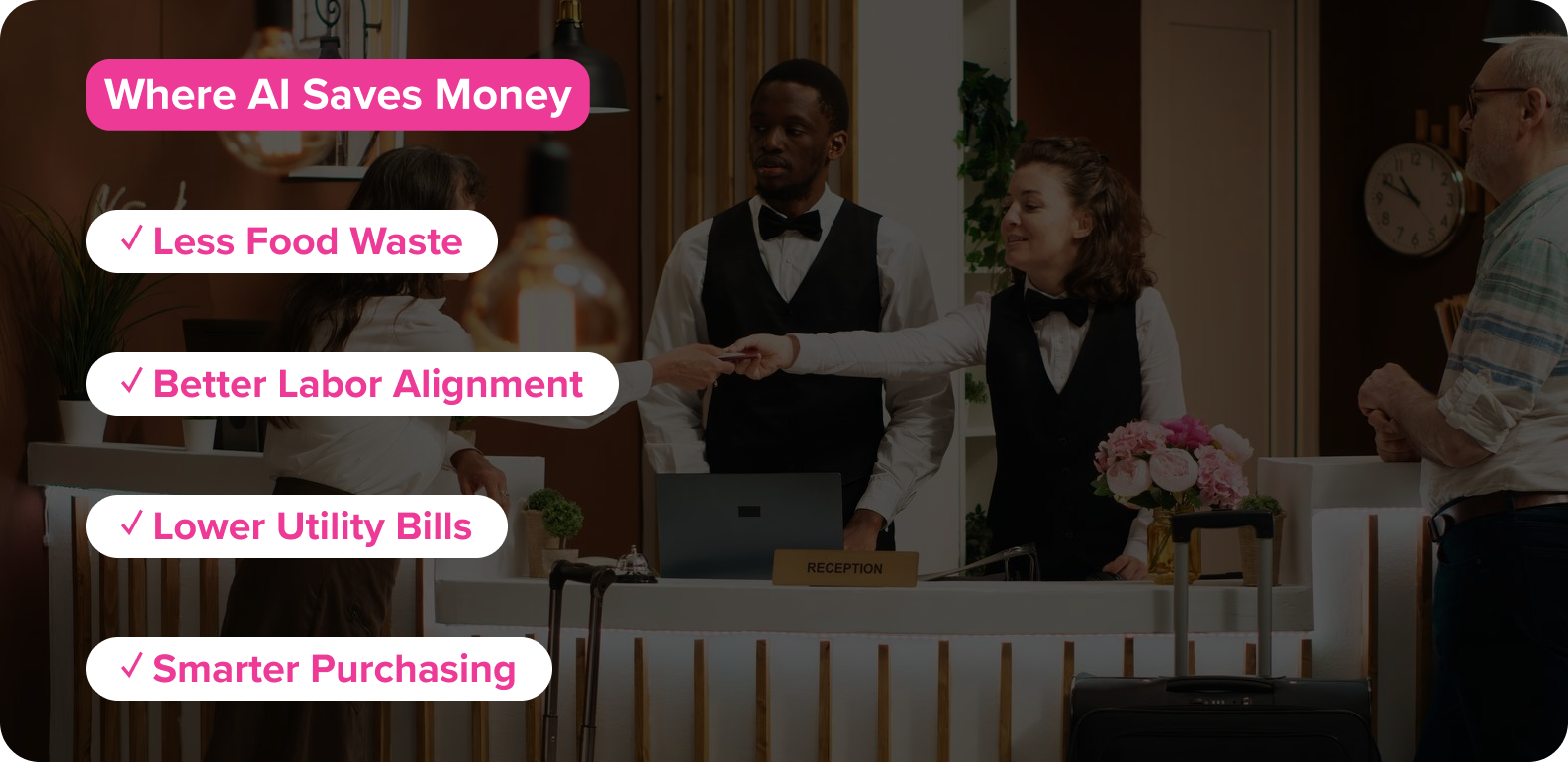
In most hotels and restaurants, AI shows up quietly in the food and beverage side of the business. Chefs and managers lean on forecasting tools to get a better sense of how much prep they actually need each day, which helps cut waste and avoid overspending on ingredients. The same systems also flag what’s moving on the menu and what’s not. That makes ordering feel less like guesswork. Instead of picturing robots on the cookline, think of it more as kitchen teams using better information to stay ahead.
Benefits of AI for Hospitality Businesses
In hospitality, operators are turning to AI because it helps them make smarter calls day to day. Instead of guessing, they can look at real numbers to see what’s working and what isn’t. That kind of visibility makes it easier to trim expenses, tighten up workflows, and hang onto an edge in a tough market.
Improved Operational Efficiency
AI takes care of routine service and administrative tasks, freeing up staff to spend more time with guests. Hotels use automation to make check-in faster, make cleaning rooms more efficient, and cut down on paperwork that needs to be done by hand. This better workflow lets leaders focus on planning and getting things done instead of putting out fires every day.
Cost Savings and Resource Optimization
Operators are leaning on forecasting tools to get a clearer idea of how much labor and product they actually need, instead of overordering or overscheduling out of fear. Some hotels even use energy systems that dial back lighting or room temperature when spaces sit empty, which cuts utility bills. Kitchens are also using data to order more accurately and avoid throwing out spoiled ingredients. All of it adds up to better margins.
Enhanced Customer Satisfaction
AI makes it possible for guests to get answers faster, get personalized recommendations, and have smoother service interactions. Smart room features make the space more comfortable, and virtual assistants answer questions right away. Most importantly, staff can focus on building relationships and being friendly instead of doing manual work.
Better Decision-Making
AI platforms gather and process information about guest behavior, spending, booking activity, and purchases. Operators get a better idea of trends, problems, and chances. This level of visibility helps you make better decisions about pricing, menu design, staffing, and budgeting.
Competitive Advantage
Hotels that use AI technology stand out because they offer better service and respond more quickly. They work better and can change to meet the needs of guests faster. As digital systems become the norm in the business world, early adopters will keep their customers and gain new market share.
Challenges and Considerations in Implementing
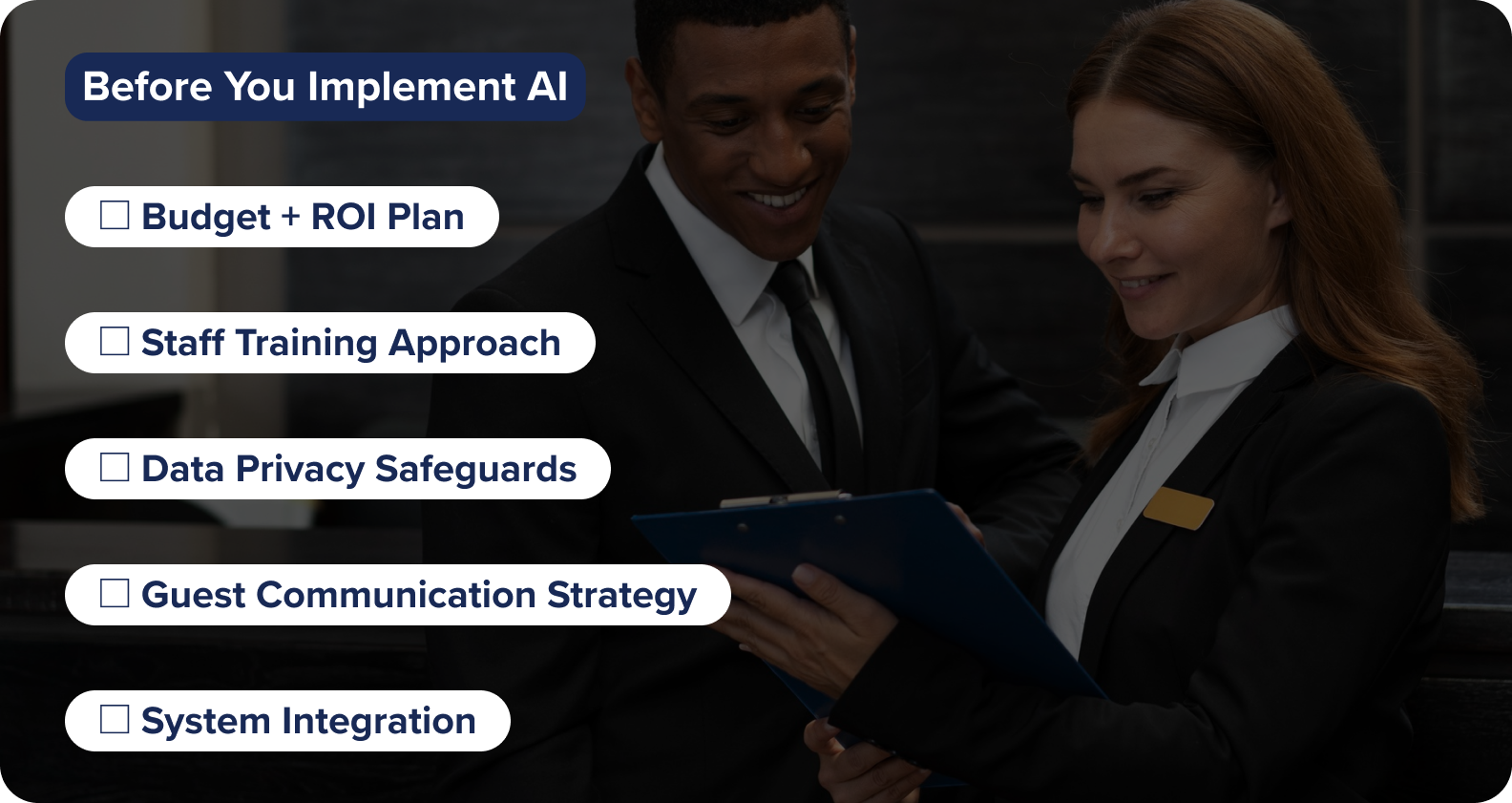
AI requires careful planning, investment, and staff alignment to be successful. Operators must evaluate budget expectations, choose the proper systems, and build trust around data usage before transitioning to a fully AI-supported business model.
Data Privacy and Security Concerns
Guests care deeply about how their personal information is stored and used. AI applications must follow strict data safety guidelines, protect guest identity, and meet regulatory compliance. Operators must invest in secure platforms and communicate clearly about privacy policies to maintain trust.
Staff Training and Adaptation
Introducing AI changes daily workflows. Staff need training and support to understand how these new tools help their jobs instead of replacing them. Strong leadership communication builds confidence, prevents resistance, and encourages teamwork during technology adoption.
Costs and Return on Investment
AI requires upfront system costs, software integration, and dedicated time from leadership. Operators should calculate ROI based on labor savings, efficiency improvements, and revenue potential. Long-term gains often outweigh the initial expense when implementation is managed strategically.
Future Trends: What Guests Can Expect Next
In the future, AI in hospitality will put a lot of emphasis on personalized service and predicting what guests will need. Soon, guests may be able to walk into a room that already knows how they like the lighting, the temperature for sleeping, and the entertainment they want. Ordering room service and having it delivered by robots could make it easier.
AI will be used to look at how people behave in small markets and suggest ways to promote that will increase occupancy. Big hotel chains are trying out facial recognition check-in, concierge robots that can work on their own, and smart elevators that can guess when the busiest times will be.
Food and beverage programs are going to feel a big shift as AI becomes more common. Many operators are already testing menu-planning tools that show what items are selling and which ones aren’t, so chefs can build menus with less waste and better margins. In hotel restaurants, the next wave will likely be even more personal: menus that change with the season, regional preferences, or the style of traveler walking through the door.
Looking ahead, technology won’t sit on its own island. AI, mobile apps, and real-time data will work together to smooth out the entire travel experience. Think fewer lines at the front desk, faster answers to basic questions, and room preferences already set before guests arrive. Instead of repeating their needs every visit, people will get service that feels familiar and personal. That mix of human hospitality and smart tech is what the future of travel is edging toward.
Why AI Matters for the Future of Hospitality
AI in hospitality is reshaping the way hotels and restaurants operate, helping them work smarter, serve faster, and deliver elevated guest experiences. While adopting new technology brings challenges, the long-term advantages are significant. With stronger forecasting, automated workflows, and personalized service models, AI offers operators a way to control costs and meet rising demand. Hospitality will always be centered around people, but AI gives businesses the digital support they need to stay ahead.
Ready to elevate your guest experience with smart tech? Click here to start exploring Buyers Edge Platform AI solutions today!